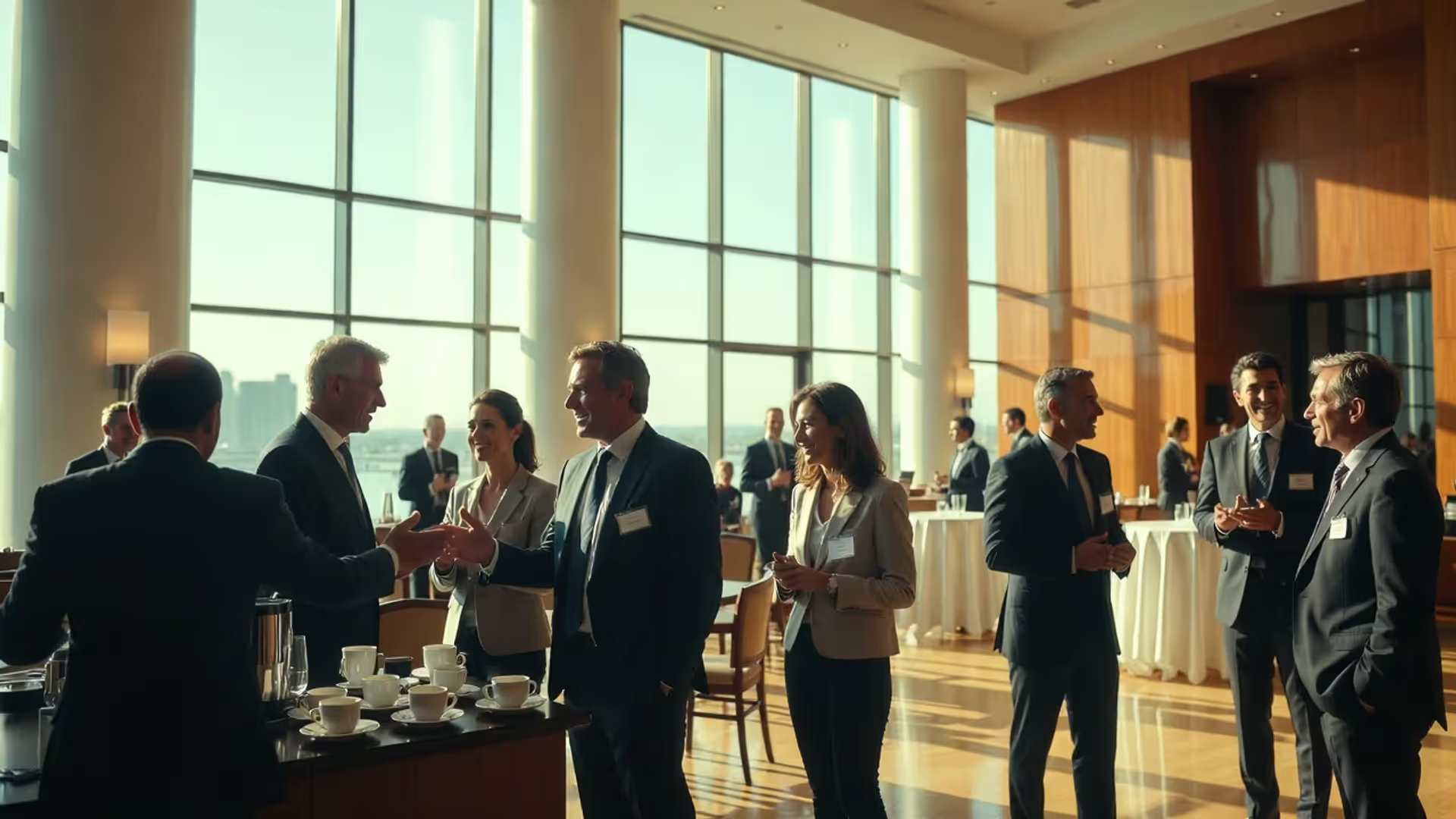

A shared moment can reset the whole company.
What Are the Benefits of Corporate Events?

Content
When Southwest Airlines gathered its entire workforce for a surprise celebration after reaching a major safety milestone, the airline didn't just hand out plaques. They transformed a routine achievement into a shared moment that employees discussed for months afterward. The investment? Significant. The ripple effect on pride, retention, and daily performance? Immeasurable through traditional HR metrics alone.
Corporate gatherings have evolved far beyond the tired holiday party formula. Organizations now approach these investments with the same rigor they apply to capital expenditures, asking hard questions about outcomes before signing venue contracts. The shift reflects a broader recognition: the quality of human connection inside a company directly influences its competitive position.
The companies seeing the strongest returns don't treat events as perks or afterthoughts. They design gatherings with clear objectives, measure specific outcomes, and integrate these experiences into broader talent and growth strategies.
Why Companies Invest in Corporate Gatherings
The business case for hosting corporate events has matured considerably. Where executives once viewed these line items as discretionary spending—first to cut during downturns—many now recognize them as strategic tools that address persistent organizational challenges.
Three forces are driving increased investment. First, distributed teams have become standard rather than exceptional. Even companies that never adopted remote work find employees scattered across multiple offices, time zones, and geographies. Bringing people together requires intentionality and budget. Second, the competition for skilled talent has intensified pressure to differentiate the employee experience beyond compensation. Third, research on workplace psychology has provided clearer evidence linking social connection to productivity, innovation, and retention.
The benefits of corporate events extend into tangible business outcomes when properly executed. A mid-sized software company tracked promotion rates and found that employees who attended their annual all-hands were 23% more likely to advance within 18 months compared to those who skipped it. The correlation wasn't causal on its own—high performers were more likely to attend—but the events created visibility and relationship capital that accelerated career progression.
Return expectations vary by company stage and industry. Startups often use events to establish cultural foundations and attract talent through employer brand. Mature enterprises focus on breaking down silos and refreshing engagement among long-tenured staff. Professional services firms treat client events as direct revenue drivers, measuring pipeline impact and deal velocity.
The most sophisticated organizations build event portfolios rather than relying on a single annual gathering. They mix large-scale conferences with intimate team offsites, formal recognition ceremonies with casual social hours, internal celebrations with external networking opportunities.
Strengthening Employee Engagement Through Shared Experiences
Employee engagement scores capture sentiment, but the mechanisms that move those numbers often involve memory and emotion. Events create reference points that employees carry forward—stories they tell new hires, inside jokes that build cohesion, moments of recognition that sustain motivation through difficult quarters.
Recognition Events That Boost Morale
Author: Sophie Bennett;
Source: isnvenice.com
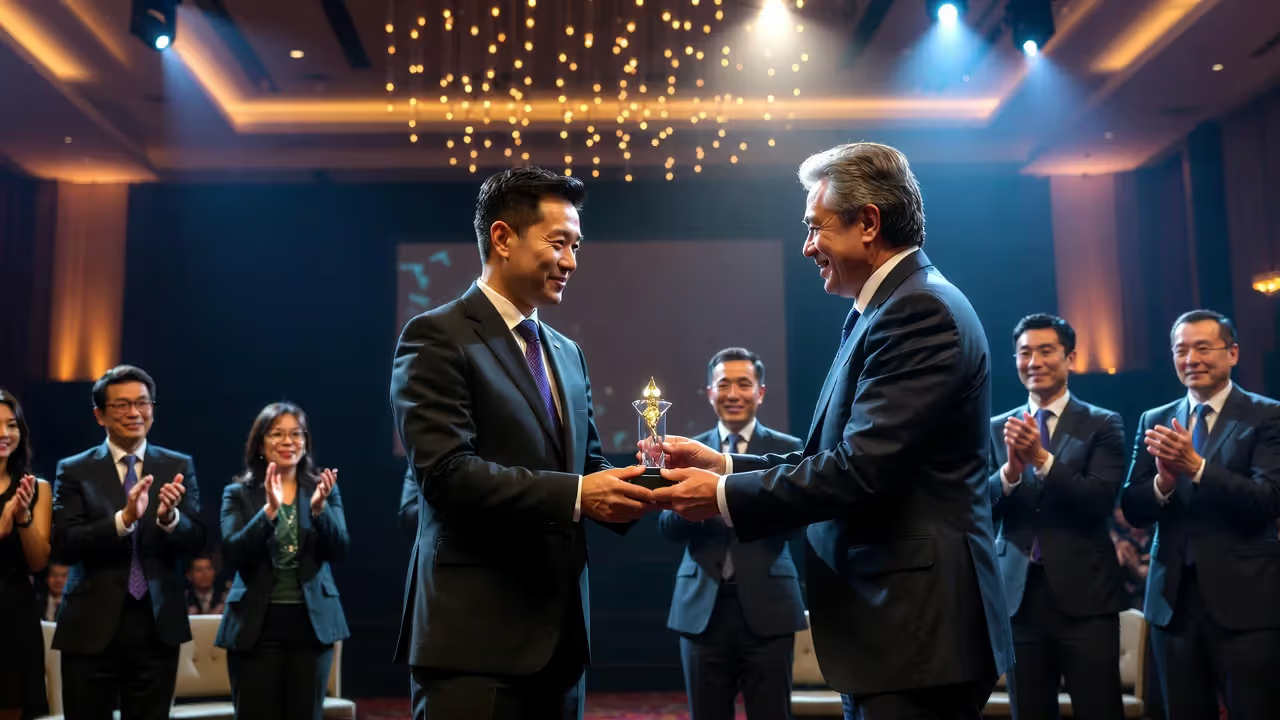
Public acknowledgment hits differently than a Slack message or email from leadership. When a sales team gathers to celebrate quota achievement, the applause and peer recognition trigger social rewards that private praise cannot replicate. The key is authenticity and specificity.
Generic "employee of the month" ceremonies often fall flat because they feel procedural. Contrast that with a quarterly innovation showcase where teams present projects to executives and peers, receiving real-time feedback and genuine celebration of creative problem-solving. The latter creates engagement because it connects individual contribution to company progress in a visible, social context.
Recognition events work best when they highlight behaviors the organization wants to see more of. A manufacturing company struggling with safety compliance shifted from punitive enforcement to quarterly safety celebrations honoring teams with zero incidents. Within two years, reportable accidents dropped 41%. The events didn't change protocols; they changed the social incentives around following them.
Voluntary vs. Mandatory Attendance: What Works Better
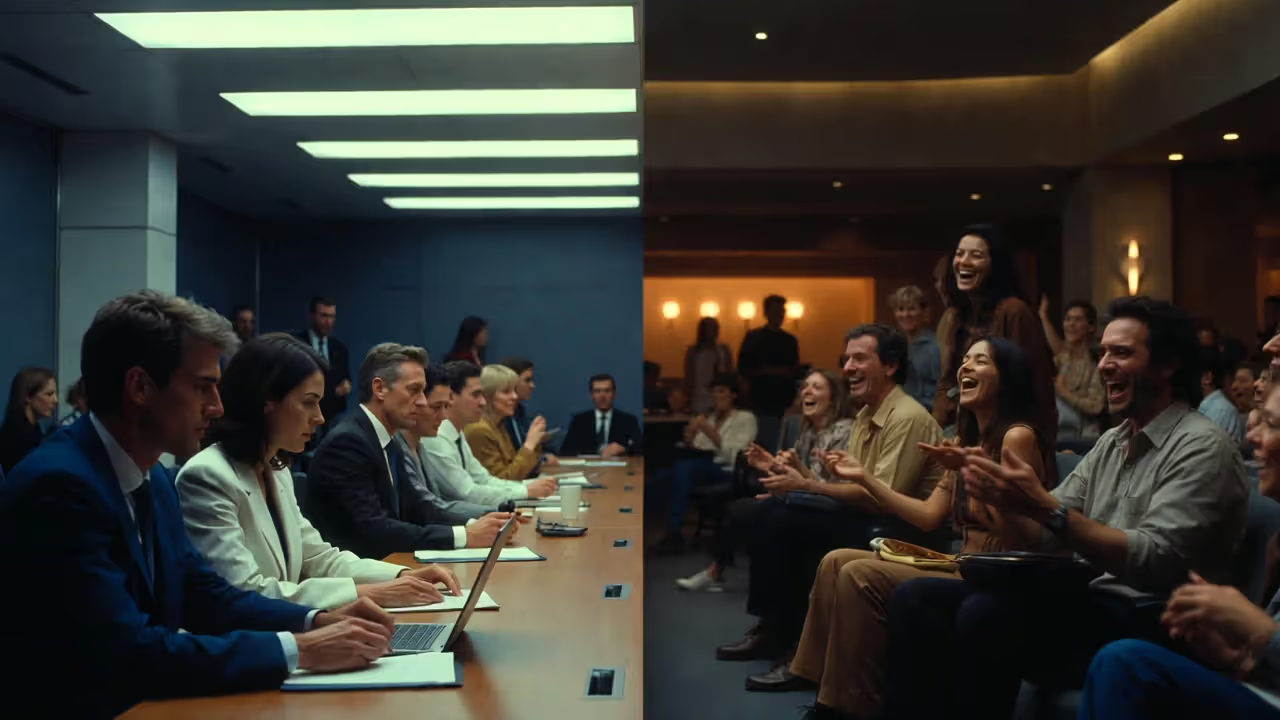
The attendance question reveals competing philosophies about engagement. Mandatory events guarantee participation but risk resentment, particularly when they consume personal time or require travel. Voluntary gatherings attract enthusiasts but may exclude precisely the employees who need connection most.
Hybrid approaches often work best. Make core business meetings mandatory but keep them efficient and valuable. Design social and developmental events as optional but compelling. A technology company solved this by running their annual conference during work hours with optional evening social activities. Attendance at the main program reached 94%, while evening events drew 60-70%—people who genuinely wanted to be there rather than felt obligated.
Watch for patterns in who opts out. If certain departments, demographics, or tenure groups consistently skip voluntary events, that signals either accessibility issues or a disconnect between event design and employee preferences. One financial services firm discovered that working parents rarely attended evening events but showed strong interest in lunch-and-learns with childcare provided. Adjusting the format tripled participation.
Author: Sophie Bennett;
Source: isnvenice.com
How Corporate Events Shape and Reinforce Company Culture
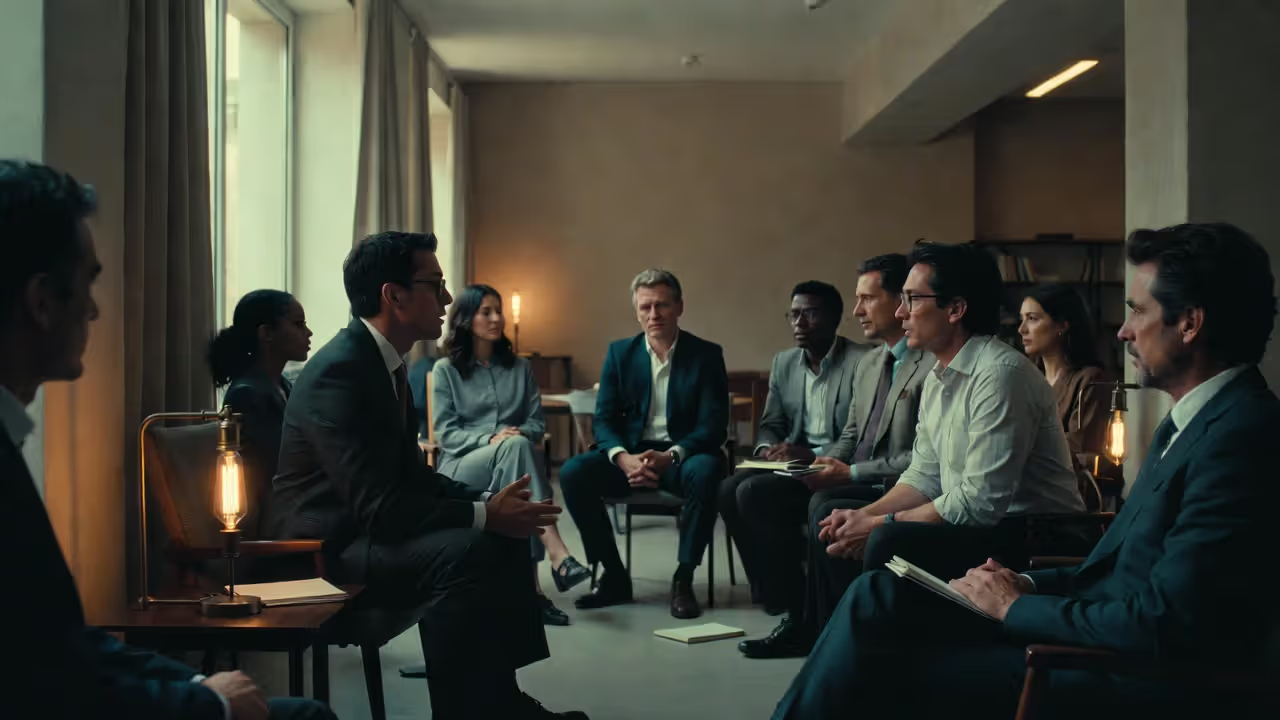
Culture lives in the stories people tell and the behaviors they observe. Events provide concentrated opportunities to demonstrate what the organization values, how leaders behave under informal conditions, and whether stated principles match lived reality.
Company culture events serve as both mirror and mold. They reflect existing culture back to employees while simultaneously shaping future norms. When a cost-conscious company hosts an extravagant party, employees notice the contradiction. When a collaboration-focused organization designs events that isolate departments, the message undermines the stated value.
The most effective cultural events create experiences that embody desired behaviors. A consulting firm committed to continuous learning hosts quarterly "failure forums" where partners share projects that went wrong and lessons extracted. These gatherings normalize vulnerability and experimentation in ways that policy documents never could.
Onboarding integration represents a particularly high-leverage application. New hires form impressions rapidly, and their early experiences disproportionately influence long-term engagement. Companies that incorporate new employees into existing events—rather than isolating them in orientation sessions—accelerate cultural assimilation. A retail chain invites all new hires to their monthly leadership town hall within their first two weeks, giving immediate exposure to executive communication styles and company priorities.
Cultural reinforcement requires consistency across event types. If leadership preaches transparency but hosts exclusive executive retreats without sharing outcomes, employees draw conclusions about who matters. Conversely, when senior leaders attend the same holiday party as entry-level staff and genuinely interact, it reinforces accessibility and egalitarianism.
Author: Sophie Bennett;
Source: isnvenice.com
Building Stronger Business Relationships Inside and Outside Your Organization
Relationships determine how work actually gets done. Formal org charts show reporting lines, but informal networks drive collaboration, problem-solving, and information flow. Events catalyze relationship formation in ways that transactional daily work cannot.
Internal Networking Across Departments
Silos emerge naturally as organizations scale. People default to working with familiar colleagues in their immediate function. Cross-departmental projects suffer from lack of trust, context, and established communication patterns.
Strategic events break these barriers by creating low-stakes interaction opportunities. A healthcare company struggling with tension between clinical and administrative staff launched quarterly "lunch roulette" gatherings, randomly pairing employees from different departments for casual meals. Within six months, cross-functional project teams reported smoother collaboration, attributing improvement to personal connections formed during these lunches.

Author: Sophie Bennett;
Source: isnvenice.com
The magic happens in unstructured time. Formal presentations and workshops have value, but the conversations during coffee breaks, meal service, and evening social hours often generate the most valuable connections. Smart event planners build in substantial unstructured time and design spaces that encourage mingling rather than clique formation.
Physical layout matters more than most organizers realize. Round tables facilitate conversation better than theater-style seating. Standing receptions create more mixing than seated dinners with assigned places. One manufacturing firm redesigned their annual meeting to include 90-minute "collaboration labs" where cross-functional groups tackled real business challenges together, replacing passive presentations. Post-event surveys showed a 3x increase in employees reporting new valuable connections compared to previous years.
Client and Partner Events That Drive Revenue
External events serve different objectives but follow similar principles. The goal is relationship depth, not just contact collection. Client appreciation events, user conferences, and partner summits create business relationships that withstand competitive pressure and economic uncertainty.
A B2B software company measures client event ROI through renewal rates and expansion revenue. Clients who attend their annual user conference renew at 96% versus 82% for non-attendees, and they purchase additional modules at twice the rate. The events don't just build goodwill; they educate clients on product capabilities and connect them with peers who share use cases, directly influencing product adoption and satisfaction.
Partner events align ecosystem participants around shared objectives. A logistics company hosts quarterly partner forums that bring together technology vendors, service providers, and major clients. These gatherings have generated multiple joint ventures and product integrations that none of the parties would have pursued independently. The neutral, social context allows exploratory conversations that formal business meetings don't accommodate.
The key is creating genuine value for attendees beyond sales pitches. Educational content, peer networking, and exclusive access to leadership make external events worth attending. When companies use these gatherings primarily for selling, attendance and engagement decline.

Author: Sophie Bennett;
Source: isnvenice.com
Improving Team Interaction and Cross-Functional Collaboration
Teams that know each other personally navigate conflict better, communicate more efficiently, and generate more creative solutions. The familiarity and trust built through shared experiences translates into daily work effectiveness.
Informal settings reveal different dimensions of colleagues. The quiet analyst who rarely speaks in meetings might be hilarious at the team dinner. The demanding executive might show vulnerability during an offsite exercise. These glimpses of full humanity reduce stereotyping and increase empathy when work gets stressful.
Problem-solving improves when teams interact outside their normal context. A product development team stuck on a design challenge took a half-day offsite to a cooking class. The collaborative, hands-on environment shifted their thinking patterns. Within a week, they'd cracked the problem that had stalled them for a month. The cooking class didn't provide the answer, but it changed the team dynamic in ways that allowed the answer to emerge.
Cross-functional collaboration requires both structure and spontaneity. Structured activities like team challenges or problem-solving workshops give people a reason to interact. Spontaneous conversations during breaks allow relationships to form naturally. Balance both elements rather than over-programming every minute.
Physical challenges and shared adversity build team bonds efficiently. A sales team that completed a mud run together reported stronger peer support and collaboration in subsequent quarters. The shared struggle created mutual respect and inside references that strengthened daily interactions. Not every team suits physical challenges, but the principle holds: moderate adversity in safe contexts builds cohesion.
Corporate Events as a Tool for Effective Communication
Cascade communication through organizational layers often distorts messages. By the time strategic priorities reach frontline employees, nuance and context have evaporated. Events provide direct communication channels that bypass the telephone game.
Leadership visibility matters enormously for trust and alignment. When executives only appear in formal presentations or video messages, they seem distant and scripted. Events that put leaders in casual, interactive settings humanize them and make their messages more credible. A CEO who takes questions during a town hall and admits uncertainty about a strategic decision builds more trust than one who only delivers polished keynotes.
Transparent dialogue requires psychological safety. Employees won't ask hard questions or raise concerns in settings where they fear repercussions. Event design influences candor levels. Anonymous Q&A tools, small group discussions, and dedicated feedback sessions signal that leadership wants honest input, not just compliance.
Strategic message cascading works best when delivered in person with opportunity for clarification. A financial services firm announces major strategic shifts at their annual all-hands, then breaks into department sessions where leaders explain specific implications and answer questions. This approach ensures consistent core messaging while allowing customization to different audiences.
Corporate communication through events also flows laterally. When different departments present their work to each other, it builds mutual understanding and reduces the "us versus them" dynamics that plague many organizations. A technology company dedicates one afternoon of their quarterly gathering to "department showcases" where each function shares recent wins, current challenges, and how other teams can help. This practice has reduced duplicative work and improved resource allocation.
Face-to-face interaction remains the most powerful way to build trust and alignment in organizations. Digital tools enable work, but shared experiences create commitment.
— Dr. Adam Grant, organizational psychologist and Wharton professor
Measuring the Return: Metrics That Matter for Corporate Events
Justifying event budgets requires demonstrating value beyond vague claims about morale. The most defensible investments tie to measurable outcomes, even when the causal chains are complex.
Different event types deliver different returns, and measurement approaches should match objectives:
| Event Type | Primary Goal | Key Engagement Metric | Typical Cost Range | Best For |
| Team-building retreat | Trust, collaboration | Post-event project efficiency, conflict resolution time | $300-800 per person | 10-50 person teams needing cohesion reset |
| Annual conference | Alignment, culture, recognition | Attendance rate, engagement survey scores, voluntary turnover (90-day post) | $200-500 per person | Companies 100+ employees, distributed teams |
| Holiday party | Appreciation, informal networking | Attendance rate, employee satisfaction scores | $75-150 per person | All company sizes, supplement to other events |
| Lunch-and-learn | Skill development, knowledge sharing | Content retention, application in work | $15-40 per person | Budget-conscious teams, regular cadence |
| Client appreciation event | Relationship depth, upsell opportunity | Net promoter score, renewal rate, pipeline influenced | $150-400 per attendee | B2B companies with high customer lifetime value |
Leading indicators appear quickly after events: attendance rates, participation levels, immediate feedback scores. These matter but don't tell the full story. Lagging indicators—retention rates, promotion velocity, cross-functional project success, client renewal rates—reveal deeper impact but require patience to measure.
A manufacturing company tracks "collaboration index" scores quarterly, measuring how often employees work across departmental boundaries. They consistently see 15-20% increases in the quarter following their annual gathering, suggesting the event catalyzes relationship formation that persists for months.
Employee surveys should ask specific questions rather than generic satisfaction ratings. "Did this event help you understand company strategy?" and "Did you form at least two new professional relationships?" provide more actionable data than "How would you rate this event overall?"
Watch for negative signals too. Declining attendance at voluntary events, low engagement during programming, or critical feedback about relevance all indicate that event design has drifted from employee needs. A technology startup discovered through exit interviews that their frequent "mandatory fun" events were driving turnover among introverted engineers who found them exhausting. Shifting to optional events with varied formats solved the problem.
Common Mistakes That Undermine Event Success
Even well-intentioned events fail when execution ignores human dynamics and organizational realities. Several patterns appear repeatedly:
Poor timing kills attendance and engagement. Scheduling events during peak business periods forces employees to choose between work obligations and participation. A retail company learned this the hard way by hosting their annual meeting during the holiday rush, resulting in 40% attendance and resentment from those who couldn't attend. Moving it to January tripled participation.
Lack of follow-up wastes the momentum events create. When employees return from an inspiring offsite and nothing changes, cynicism grows. Smart organizations build action items into event design and report progress publicly. After a leadership retreat identified communication gaps, one company launched a monthly all-hands meeting and explicitly connected it to retreat outcomes, demonstrating that leadership listened.
One-size-fits-all approaches ignore the reality that different employees have different preferences and needs. Extroverts thrive at large social gatherings; introverts find them draining. Parents struggle with evening events; single employees might prefer them. Offering variety across a year ensures broader inclusion. A consulting firm alternates between large quarterly gatherings and small monthly team activities, giving employees multiple ways to connect.
Excessive alcohol focus creates exclusion and liability. Events centered on drinking alienate non-drinkers, recovering alcoholics, and employees from cultures where alcohol isn't social currency. Providing compelling non-alcoholic options and activities that don't revolve around bars broadens participation.
Ignoring accessibility excludes employees with disabilities, dietary restrictions, or caregiving responsibilities. Venues without wheelchair access, menus without allergen information, and timing that assumes no family obligations all send messages about who belongs. A financial services firm now includes accessibility and inclusion checklists in their event planning process, catching issues before they exclude colleagues.
Over-programming every minute prevents the organic interactions that create value. When event schedules run back-to-back with no breathing room, people can't process information or form connections. Build in white space intentionally.
Frequently Asked Questions About Corporate Event Benefits
Corporate events represent a rare intersection of employee experience, business performance, and organizational culture. When approached strategically rather than as obligatory line items, they create disproportionate value relative to investment.
The companies extracting the most benefit share common practices: they design events around clear objectives, measure outcomes rigorously, and integrate gatherings into broader talent and business strategies. They recognize that the benefits of corporate events compound over time as relationships deepen, culture strengthens, and organizational memory forms around shared experiences.
Success requires moving beyond the "check the box" mentality that treats events as perks or traditions. The question isn't whether to host events but how to design gatherings that solve specific organizational challenges—whether that's breaking down silos, reinforcing strategic priorities, building client relationships, or creating the human connections that make distributed work sustainable.
Start by auditing your current approach. Which events generate genuine enthusiasm versus obligation? What outcomes do you need to influence? Where are relationship gaps hindering collaboration? Use those answers to build an event portfolio that serves your organization's actual needs rather than copying what other companies do.
The investment will never show up cleanly in a spreadsheet cell, but neither do most of the factors that separate thriving organizations from struggling ones. The companies that recognize this reality and commit resources accordingly will continue building competitive advantages that competitors can't easily replicate.