

A strategic framework turns chaos into clarity.
Corporate Event Planning Guide

Content
Sixty-three percent of corporate events fail to meet their stated objectives. That's not a typo—more than half of the business events happening right now will disappoint stakeholders, waste budget, and leave attendees wondering why they bothered showing up.
The culprit isn't usually catastrophic failure. Venues don't collapse. Catering companies show up. The problem runs deeper: most organizations treat event planning as a logistical checklist rather than a strategic initiative. They book a room, order lunch, and hope engagement happens organically.
It doesn't.
Successful business event planning requires a framework that connects every decision—from venue selection to post-event surveys—back to measurable business outcomes. This guide walks through that framework, covering the systems and strategies that separate forgettable meetings from events that drive real organizational change.
Why Most Corporate Events Fail (And How to Avoid Common Mistakes)
The Event Marketing Institute's research reveals that 42% of event planners cite "lack of clear objectives" as their primary challenge. When you don't know what success looks like, you can't design an event to achieve it.
Three failure patterns emerge consistently:
Reverse-engineering from constraints instead of goals. A director says, "We have $15,000 and the conference room is available in May." The event gets built around those limitations rather than what the business actually needs. The result? An event that fits the budget but misses the strategic mark entirely.
Underestimating logistics complexity. A 200-person conference involves roughly 1,200 individual decisions and coordination points. Registration systems must talk to badge printers. Dietary restrictions need to reach caterers. AV techs need load-in times that don't conflict with venue setup. Miss one dependency, and you're troubleshooting on event day instead of engaging with attendees.
Ignoring the attendee experience outside main sessions. Your keynote speaker might be brilliant, but if registration takes 20 minutes, lunch runs out, and the WiFi crashes during the product demo, that's what people remember. Event management means sweating the details that happen between your planned programming.
The events that fail are the ones where planning starts with 'What room can we get?' instead of 'What behavior change do we need?' Everything else is just decoration on a fundamentally flawed premise.
— Sarah Mitchell, CMP and VP of Strategic Events at Pinnacle Corporate Solutions
The fix starts with treating event planning as a business initiative that happens to involve a physical gathering, not a party that happens to involve business people.
Building Your Event Planning Framework: 6 Essential Phases
A planning framework creates decision-making structure. It tells you what to tackle when, what information you need before moving forward, and where dependencies exist.
Discovery and Goal Setting
Start by defining success in measurable terms. "Improve team collaboration" isn't measurable. "Establish cross-functional project teams between sales and product, with at least three active initiatives launched within 30 days post-event" is.

Author: Sophie Bennett;
Source: isnvenice.com
Ask four questions:
- What business problem does this event solve?
- What should attendees know, feel, or do differently afterward?
- How will we measure whether that happened?
- What's the cost of not holding this event?
If you can't answer all four, you're not ready to book a venue. One healthcare company discovered this the hard way after planning a compliance training conference without identifying specific regulatory gaps. They spent $80,000 on an event that covered material most attendees already knew.
Document your answers. Share them with stakeholders. Get written agreement. This document becomes your north star when inevitable compromises arise during planning.
Budget Allocation and Resource Planning
Money runs out faster than timelines. The typical corporate event budget gets consumed by five major categories, but the allocation varies dramatically based on event type and goals.
Start with total available budget, then work backward. If you have $50,000 and venue quotes are coming in at $35,000, you've learned something important: you can't afford that venue, or you need more budget.
Resource planning extends beyond money. Who owns each workstream? A single coordinator can manage a 50-person meeting. A 500-person conference needs a team with clear divisions of responsibility: venue and logistics, content and speakers, registration and communications, sponsor relations, technology and AV.
Identify your resource gaps early. If nobody on your team has negotiated hotel blocks before, you'll either need to learn fast, hire a consultant, or partner with someone who has.
Vendor Selection and Venue Sourcing
Venue selection drives dozens of downstream decisions. Choose a location without adequate AV infrastructure, and you'll pay premium rates to bring everything in. Book a space with restrictive catering contracts, and your food costs just increased 40%.
Create a venue scorecard with weighted criteria:
- Capacity (with different setup configurations)
- Location and accessibility (airport proximity, parking, public transit)
- Technical infrastructure (WiFi capacity, power distribution, built-in AV)
- Catering flexibility (exclusive contracts vs. outside vendors)
- Sleeping rooms (if overnight event)
- Load-in/load-out restrictions
- Cancellation terms
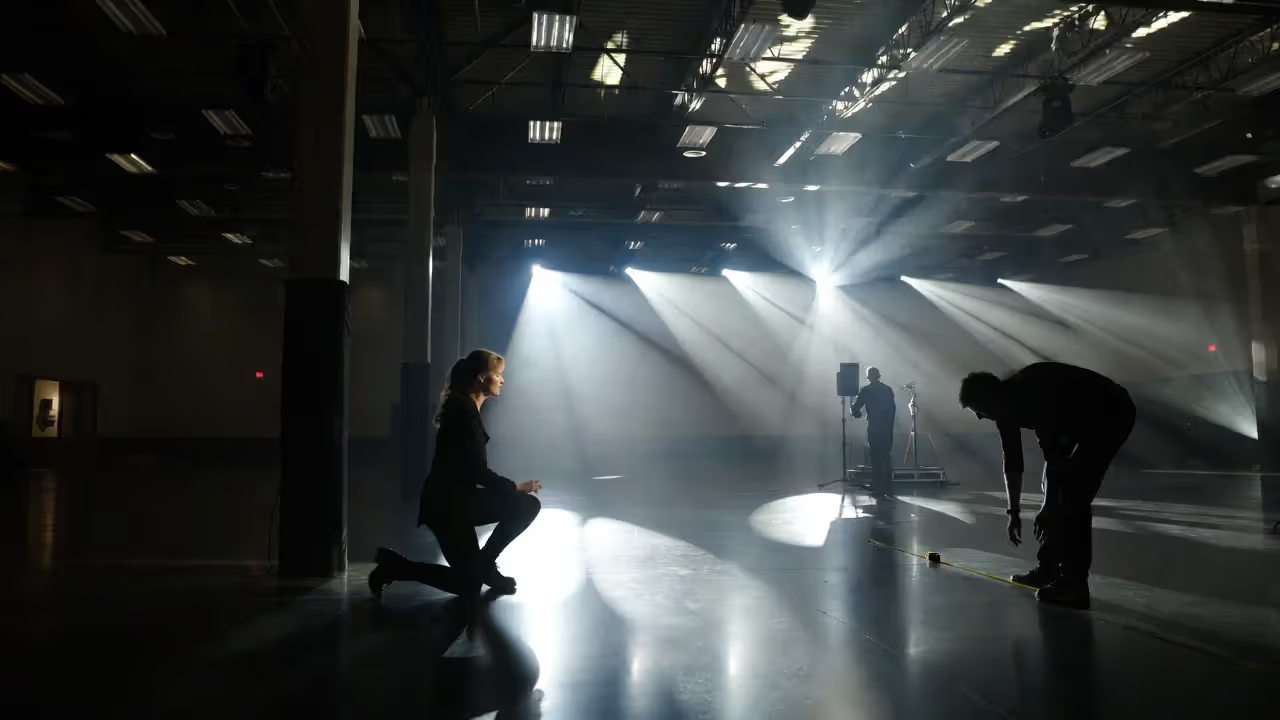
Tour venues in person. Photos lie. That "spacious ballroom" might have support columns that block sightlines. The "state-of-the-art AV" might be a projector from 2012.
For vendors beyond venue—caterers, AV companies, transportation services, photographers—check references specifically about their corporate event experience. The company that does beautiful weddings might struggle with the precision timing required for a conference schedule.
Author: Sophie Bennett;
Source: isnvenice.com
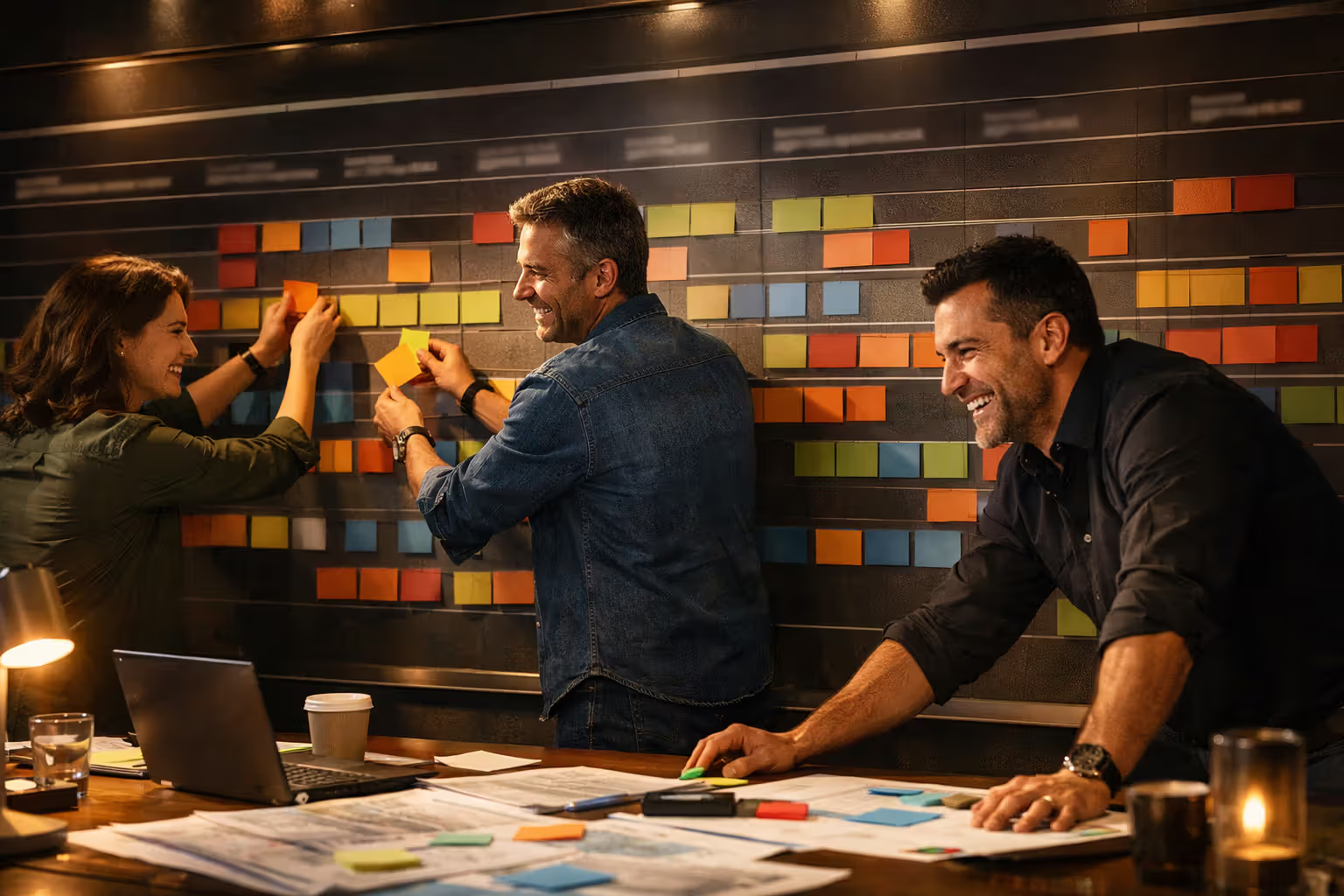
Timeline Development and Milestone Tracking
Work backward from event date. A 50-person meeting needs 6-8 weeks of lead time. A 500-person conference requires 6-9 months. A multi-day event with international attendees? Start 12-18 months out.
Critical path milestones:
- 6-9 months before: Venue contracted, core team assigned, preliminary budget approved
- 4-6 months before: Speaker confirmations, registration system live, hotel blocks secured
- 2-3 months before: Marketing push begins, AV requirements finalized, catering numbers estimated
- 1 month before: Final agenda published, attendee communications intensify, vendor confirmations complete
- 1 week before: Run-of-show finalized, staff briefings held, contingency plans reviewed
Build buffer time. Speakers cancel. Vendors miss deadlines. Stakeholders request changes. If your timeline has no slack, you're already behind.
Communication Strategy for Stakeholders
Different audiences need different information at different times. Your executive sponsor wants high-level updates monthly. Your planning team needs daily status during crunch periods. Attendees want just enough information to prepare without overwhelming their inbox.
Create a communication matrix:
- Executives: Monthly dashboard (budget status, registration numbers, risk items)
- Planning team: Weekly meetings until 30 days out, then daily standups
- Speakers/presenters: Onboarding packet immediately after confirmation, tech check reminder one week before, detailed logistics three days before
- Attendees: Save-the-date (3+ months before), registration open (2-3 months before), agenda published (1 month before), logistics reminder (1 week before), day-of instructions (morning of event)
Over-communication beats under-communication. Nobody ever complained that an event was too well-organized.
Post-Event Analysis and ROI Measurement
The event isn't over when attendees leave. Post-event analysis closes the loop, validating whether you achieved your stated objectives and identifying improvements for next time.
Deploy surveys within 24 hours while the experience is fresh. Ask specific questions tied to your goals. If your objective was knowledge transfer, test comprehension. If it was relationship building, ask how many new connections attendees made.
Analyze against your success metrics from the discovery phase. Did those cross-functional teams form? Did compliance scores improve? Did the product launch generate the target number of qualified leads?
Calculate actual ROI. Total costs (including staff time) divided by measurable business outcomes. A sales kickoff that costs $100,000 but generates $2 million in closed deals has delivered 20x ROI. A team building event that costs $50,000 but produces no measurable change in collaboration metrics has delivered nothing.
Document lessons learned while they're fresh. What worked? What didn't? What would you do differently? This institutional knowledge prevents repeating mistakes.

Author: Sophie Bennett;
Source: isnvenice.com
Professional Event Logistics: Managing the Moving Parts
Logistics is where planning meets reality. You can have perfect strategy and miss execution on operational details that derail the entire experience.
Registration and check-in systems need to handle your volume without creating bottlenecks. One registration desk for 300 people means 30-minute wait times. Budget for multiple check-in stations, pre-printed badges, and self-service kiosks for pre-registered attendees. Have a separate "issues" desk for registration problems so they don't clog the main flow.
Catering coordination extends beyond food selection. When do meals get served? Where? How long is the service window? A buffet for 200 people needs 30-45 minutes to get everyone through the line. If your next session starts 30 minutes after lunch service begins, half your audience will miss the opening.
Build in 15-minute buffer periods between sessions for transitions. People need bathroom breaks, phone checks, and conversations with colleagues. Respect that reality instead of packing your agenda so tight that everyone's stressed.
AV requirements deserve their own planning workstream. Create a technical rider for each session: screen size, microphone type (lavalier vs. handheld vs. podium), confidence monitors, internet connectivity, video recording requirements, lighting needs. Share this with your AV vendor 30 days before the event, not the morning of.
Test everything the day before. Have speakers do tech checks with the actual equipment they'll use. Learn that the HDMI adapter doesn't work now, not during the keynote.
Transportation and parking become critical for off-site venues. If your venue doesn't have adequate parking, arrange shuttles from overflow lots or nearby hotels. Provide clear directions that account for GPS failures. One company learned this lesson when 40% of attendees arrived late because Google Maps routed them to a closed entrance.
Create a master logistics checklist:
- Registration materials (badges, lanyards, welcome packets, signage)
- Food and beverage (meal counts, dietary accommodations, service timing, bar setup)
- AV and technology (equipment list, WiFi capacity, charging stations, tech support contact)
- Room setup (seating configuration, staging, lighting, temperature control)
- Signage and wayfinding (directional signs, room identifiers, sponsor recognition)
- Staffing (registration desk coverage, session monitors, roaming problem-solvers)
- Emergency contacts (venue manager, AV tech, catering lead, medical services)
Assign an owner to each category. Empower them to make real-time decisions on event day without requiring approval for every minor adjustment.
Author: Sophie Bennett;
Source: isnvenice.com
Corporate Conference Design That Drives Engagement
Content quality matters, but format determines whether anyone absorbs it. A brilliant speaker delivering a 90-minute lecture to a room full of people checking email has wasted everyone's time.
Session formats should match content type and learning objectives. Keynotes work for inspiration and big-picture strategy. Workshops enable skill development. Panel discussions expose multiple perspectives. Breakout sessions allow deeper dives on specific topics.
Vary your formats throughout the day. Three keynotes in a row numbs your audience. Mix in interactive elements: small group discussions, live polling, Q&A sessions, hands-on demonstrations.
The 90-minute attention span is a myth. For most corporate audiences, engagement drops significantly after 45 minutes. Design sessions in 45-60 minute blocks with breaks between. If content genuinely requires more time, build in an interactive element at the 45-minute mark to reset attention.
Breakout strategies let attendees self-select based on interest and need. Offer 3-4 concurrent sessions on different topics at the same time. This requires more speaker coordination but dramatically increases relevance for each attendee.
Provide clear session descriptions so people can make informed choices. "Marketing Strategies" is vague. "Account-Based Marketing Tactics for Enterprise SaaS Sales Cycles Over $100K" tells people exactly whether that session applies to them.
Networking opportunities don't happen by accident. Structured networking—facilitated introductions, topic-based roundtables, speed networking sessions—generates more valuable connections than "there's a cocktail hour, go mingle."
Create physical spaces that encourage conversation: lounge areas with seating clusters, standing tables in hallways, outdoor spaces for walking meetings. The best conversations at conferences often happen outside formal sessions.
Build networking time into your agenda. Don't pack sessions so tightly that people rush from room to room. Thirty-minute breaks between morning and afternoon sessions give people time to connect, process what they've learned, and handle urgent work issues so they can focus on the next session.
Business Event Planning: Budget Breakdown and Cost Control Strategies
Money disappears faster than you expect. Understanding typical cost allocation helps you build realistic budgets and identify where you have flexibility.
| Category | Small Corporate Meeting (50 people) | Mid-Size Conference (200 people) | Large Corporate Event (500+ people) |
| Venue | 25% | 30% | 35% |
| Catering | 30% | 25% | 20% |
| AV/Technology | 15% | 20% | 25% |
| Marketing/Communications | 5% | 10% | 10% |
| Speakers/Entertainment | 10% | 8% | 5% |
| Staffing/Labor | 10% | 5% | 3% |
| Contingency | 5% | 2% | 2% |
These percentages shift based on your specific event. A conference with high-profile keynote speakers might allocate 20% to that category. A product launch with elaborate staging might push AV costs to 35%.
Venue costs include more than room rental. Ask about setup fees, security requirements, cleaning charges, insurance mandates, and overtime fees if your event runs past standard hours. That "$5,000 venue" might actually cost $8,000 once you add required services.
Negotiate. Everything is negotiable, especially if you're booking during off-peak periods or committing to multiple events. Ask about complimentary upgrades, waived fees, or included services.
Catering represents the easiest place to overspend. Venue-provided catering typically costs 30-50% more than outside caterers, but exclusive contracts might not give you a choice. If you have flexibility, get competitive bids.
Cost-saving tactics without sacrificing quality:
- Breakfast: continental breakfast costs 60% less than hot breakfast and most people prefer it
- Lunch: boxed lunches cost less than buffets and eliminate service time
- Breaks: coffee and light snacks, not elaborate spreads
- Bar: beer and wine only, not full open bar; or drink tickets instead of unlimited service
AV and technology costs scale with complexity. Basic projection and sound might run $2,000. Multi-camera video production with livestreaming and professional lighting could hit $25,000. Be honest about what you actually need versus what would be nice to have.
Rent equipment instead of buying unless you're running frequent events. Partner with the venue's preferred AV vendor when possible—they know the space and can often offer better rates than bringing in outside vendors.
Marketing and communications budgets depend on whether you're attracting external attendees or notifying internal employees. External events need broader promotion: email campaigns, social media advertising, industry partnerships. Internal events might just need good email copy and calendar invites.
Build contingency into your budget. Things go wrong. Attendance runs higher than expected and you need more meals. A speaker cancels and you need to pay rush fees for a replacement. Equipment fails and you need emergency rentals. Five percent contingency for small events, scaling down to 2% for larger ones where you have more predictability.
Track actual spending against budget weekly. Waiting until the end to discover you're 30% over budget leaves no room to adjust.
Author: Sophie Bennett;
Source: isnvenice.com
Event Management Technology Stack: Tools That Actually Work
Technology should solve problems, not create them. The right tools streamline registration, simplify communication, and provide data for post-event analysis. The wrong tools add complexity, require extensive training, and fail at critical moments.
For events under 100 people: Simple tools work fine. Eventbrite or Google Forms handle registration. Mailchimp manages communications. A shared spreadsheet tracks tasks and deadlines. Total cost: $0-200.
For events 100-500 people: You need more robust solutions. Cvent, Bizzabo, or Whova provide integrated platforms handling registration, agenda management, attendee networking, and mobile apps. Expect to pay $3,000-8,000 depending on features and attendee count.
For events over 500 people: Enterprise platforms become necessary. Cvent, Aventri, or proprietary solutions offer advanced features: complex registration workflows, housing management, sponsor portals, lead retrieval, detailed analytics. Budget $10,000-50,000+ depending on event complexity.
Integration considerations matter more than individual tool features. Can your registration system export data to your badge printing software? Does your mobile app sync with session changes in real-time? Will your survey tool import attendee data automatically?
Disconnected tools create manual work. If you're copying data between systems, you're wasting time and introducing errors.
Mobile event apps improve the attendee experience when done well. They provide agenda access, venue maps, speaker bios, networking features, and live updates. They become annoying when they're buggy, require excessive permissions, or duplicate information readily available elsewhere.
Only deploy an app if you'll maintain it properly. An outdated app with wrong information is worse than no app.
Virtual and hybrid considerations have become standard since 2020. Even in-person events often include remote attendees. Zoom, Hopin, or specialized hybrid platforms enable participation from anywhere.
Hybrid events double your complexity. You're essentially running two events simultaneously: one for in-person attendees and one for virtual participants. Budget accordingly for streaming technology, remote engagement tools, and staff to manage the virtual experience.
Start simple with technology. Add complexity only when you've mastered the basics and have a clear use case for additional features.
FAQ: Corporate Event Planning Questions Answered
Corporate event planning stops being overwhelming when you treat it as a strategic business initiative with clear objectives, structured planning phases, and measurable outcomes. The framework outlined here—from discovery through post-event analysis—provides the foundation for events that deliver real business value.
Start with objectives, not logistics. Know what success looks like before you book a single vendor. Build realistic timelines that account for the complexity of coordinating multiple workstreams. Invest in the details that shape attendee experience: smooth registration, quality catering, reliable technology, and content that respects people's time and attention.
The best corporate events don't happen by accident. They result from disciplined planning, thoughtful design, and relentless execution. Use this framework as your starting point, adapt it to your specific context, and measure results so you can improve with each event.
Your next corporate event can be the one that attendees remember, stakeholders celebrate, and your business benefits from long after everyone goes home.