
Networking Preparation Guide to Research Materials and Conversation Planning
Networking Preparation Checklist

Content
Walking into a room full of strangers while clutching a lukewarm drink and hoping someone will talk to you isn't networking—it's social roulette. The professionals who consistently build valuable connections don't rely on luck or charisma alone. They prepare systematically, transforming nervous energy into strategic advantage before they ever step through the door.
Preparation separates those who collect business cards from those who build careers. When you know who you're meeting, what you want to accomplish, and how you'll present yourself, networking stops feeling like performance anxiety and starts feeling like opportunity.
This networking preparation guide walks you through every phase of getting ready: from initial research to day-of execution. You'll learn what to investigate beforehand, which materials to bring, how to structure conversations, and how to show up mentally sharp when it matters most.
Why Most People Fail at Networking Events (And How Preparation Fixes It)
Most networking failures happen before the event begins. People show up without clear objectives, unprepared to articulate their value, and unaware of who else will be in the room. They default to surface-level conversations because they haven't planned anything deeper.
The unprepared networker asks "So, what do you do?" for the fifteenth time that evening. The prepared one says, "I saw your company just expanded into healthcare logistics—how's that transition been?" One conversation dies in thirty seconds. The other creates genuine connection.
Professional preparation addresses three common failure points:
Visibility problems: You blend into the crowd because you haven't crafted memorable ways to describe your work or interests. Without prepared stories or frameworks, you sound like everyone else.
Relevance gaps: You can't connect your expertise to others' needs because you haven't researched attendees or thought through how your skills solve real problems.
Follow-through failures: You collect contacts but never reconnect because you didn't establish genuine rapport or identify clear next steps during the initial conversation.
Preparation doesn't guarantee every conversation will spark magic, but it dramatically improves your batting average. Spending two hours preparing for a three-hour event can generate opportunities that unfold over years.
Ninety percent of success in networking comes before you shake a single hand. The prepared networker doesn't just attend events—they orchestrate outcomes.
— Keith Ferrazzi, author of Never Eat Alone
Research Phase: What to Learn Before You Arrive
Good networking readiness starts with intelligence gathering. You're not stalking people—you're doing your homework so conversations can move past small talk into substance.
Attendee and Speaker Background Checks
Start with the event's confirmed attendee list if available. Many professional conferences, industry mixers, and formal networking events publish speaker rosters or attendee previews. Even if you can't access a full list, you can usually identify key participants.
For each high-priority person you hope to meet:
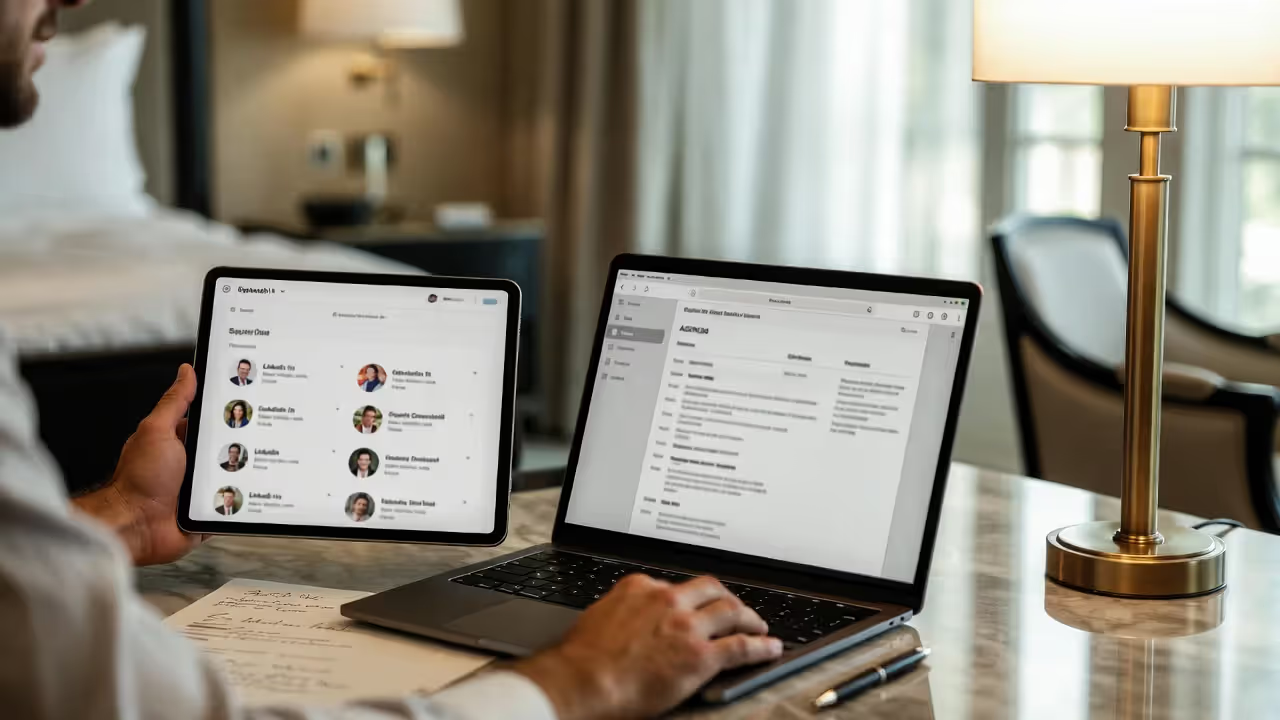
Check their LinkedIn profile for recent posts, job changes, shared connections, and career trajectory. Note any mutual contacts who could make introductions. Look at what they're sharing—it reveals what they care about right now.
Author: Lucas Hayes;
Source: isnvenice.com
Google their name plus their company to find recent press mentions, interviews, or articles they've written. A five-minute search often uncovers a recent product launch, award, or challenge their company faces.
Review their company's news section for the past three months. Knowing they just opened a new office or launched a service line gives you relevant conversation hooks.
Spend 10-15 minutes per person you specifically want to meet, and 2-3 minutes each on five to ten secondary targets. This isn't about memorizing their resume—it's about finding connection points and conversation starters that show genuine interest.
Company and Industry Intel Worth Knowing
Beyond individual research, understand the broader context. If you're attending an industry-specific event, review:
Recent industry news: What regulations, mergers, or technology shifts are people talking about? Demonstrating awareness of sector-wide issues positions you as informed and current.
The host organization's priorities: If a company or association is hosting, understand their current initiatives. Mentioning their recent white paper or community program shows you're engaged, not just collecting free appetizers.
Competitive landscape awareness: Know the major players in your space and theirs. You don't need encyclopedic knowledge, but understanding who competes with whom prevents awkward mistakes.
Set a timer for 30 minutes the week before an event. Scan three to five industry news sources, the event host's recent announcements, and key attendees' profiles. That's often enough to move from uninformed to conversationally competent.
Building Your Event Preparation Checklist
A comprehensive event preparation checklist prevents last-minute scrambling and ensures you have everything needed to make strong impressions. Think through both what you'll bring and what you'll leave behind.

Author: Lucas Hayes;
Source: isnvenice.com
Essential materials to pack:
- Business cards (bring 50% more than you think you'll need—you can't exchange what you don't have)
- Portfolio or work samples if relevant to your field (keep it compact; a tablet with examples works better than a heavy binder)
- Small notepad and quality pen for jotting notes during conversations
- Portable phone charger (dead phones kill follow-up opportunities)
- Breath mints or gum (coffee breath ends conversations early)
- A professional bag that holds materials without looking overstuffed
Tech preparations:
- Update your LinkedIn profile with a current photo and headline that clearly states what you do
- Generate your LinkedIn QR code for easy mobile connections
- Clear space on your phone for new contact photos (taking a quick photo helps you remember people later)
- Test any digital portfolio links or websites you plan to share
- Silence notifications that might interrupt conversations
What to leave home:
Large bags or backpacks that make you look like you're passing through town. Excessive promotional materials that make you seem desperate. Anything that requires two hands to manage while holding a drink.
Physical vs. Digital Networking Materials: What to Bring to Events
| Material Type | Physical Option | Digital Option | Best Use Case | Pros/Cons |
| Contact sharing | Traditional business cards | LinkedIn QR code / digital card apps | Physical: Formal events, older demographics Digital: Tech industry, younger professionals | Physical Pros: Tangible reminder, works without tech Physical Cons: Can run out, easy to lose Digital Pros: Instant connection, eco-friendly Digital Cons: Requires devices, feels impersonal to some |
| Work samples | Printed portfolio / product samples | Tablet portfolio / website links | Physical: Creative fields, tactile products Digital: Design, writing, software | Physical Pros: Memorable, no tech issues Physical Cons: Bulky, limited quantity Digital Pros: Unlimited examples, easy updates Digital Cons: Screen glare, battery dependence |
| Note-taking | Notepad and pen | Phone notes app | Physical: Formal settings, older contacts Digital: Casual events, personal preference | Physical Pros: Shows attentiveness, no screen barrier Physical Cons: Can't search later Digital Pros: Searchable, syncs to cloud Digital Cons: Looks like you're texting |
| Calendar scheduling | Suggest times verbally | Calendar app for immediate booking | Physical: Initial meeting Digital: Confirmed follow-ups | Physical Pros: Less presumptuous Physical Cons: Requires follow-up Digital Pros: Locks in commitment Digital Cons: Can feel pushy |
The best approach combines both. Bring physical cards but also have digital backup. Carry a small notepad but transfer notes to your CRM afterward. Flexibility beats dogma.
Conversation Planning: Preparing Your Stories and Questions
Strategy planning for conversations doesn't mean scripting every word—that creates robotic interactions. Instead, prepare flexible frameworks and stories you can adapt to different situations.
The Three Stories Every Professional Should Have Ready
Think of these as your conversational toolkit. Practice them enough that they flow naturally, but not so much they sound rehearsed.
Your "what I do" story (30 seconds): This isn't your job title—it's the problem you solve or the value you create. Instead of "I'm a marketing consultant," try "I help B2B companies figure out why their content isn't generating leads, then fix the gaps in their funnel." Make it concrete and benefit-focused.

Author: Lucas Hayes;
Source: isnvenice.com
Your "current project" story (45-60 seconds): Have one interesting thing you're working on that you can describe vividly. Include a small challenge you're navigating or a surprising insight you've discovered. This gives people something specific to remember and creates natural follow-up questions.
Your "why I'm here" story (20 seconds): What you hope to gain from this specific event. "I'm exploring how other companies handle remote team culture" is more engaging than "networking." It gives others a way to help you and signals you're purposeful, not just collecting contacts.
Write these out, then say them aloud five times. Adjust anything that sounds stiff or unnatural. Record yourself if you want brutal honesty about how you actually sound.
Question Framework for Different Networking Scenarios
Conversation planning means having questions ready that move beyond weather and traffic. Prepare questions in three categories:
Opening questions that invite substantive answers: - "What brought you to this event specifically?" - "What's the most interesting project you're working on right now?" - "How did you get into [their field/company]?"
These beat "What do you do?" because they invite stories rather than titles.
Deepening questions that build on their answers: - "What's been the hardest part of that?" - "How did you approach solving that problem?" - "What surprised you most about that experience?"
These show you're actually listening and want to understand, not just waiting for your turn to talk.
Bridge questions that create connection points: - "Who else should I talk to about this?" - "What resources helped you learn that?" - "Are you seeing similar trends in your work?"
These naturally lead to follow-ups, introductions, or shared interests.
Prepare five questions in each category. You won't use all of them, but having options prevents the panic of conversational dead ends.
Mental and Strategic Readiness for High-Stakes Networking
Physical preparation matters, but mental readiness determines whether you actually execute when pressure hits. Professional preparation includes getting your head right.

Author: Lucas Hayes;
Source: isnvenice.com
Set specific, measurable goals: "Network more" is useless. "Have substantive conversations with three people in adjacent industries" or "Get introduced to someone at Company X" gives you clear targets. Write down three goals before every event.
Visualize successful interactions: Spend five minutes imagining yourself having engaging conversations, remembering names, and making others feel valued. Athletes do this because it works—mental rehearsal builds confidence and reduces anxiety.
Manage your energy strategically: Networking is performance. Don't schedule it after exhausting days if you can avoid it. Eat protein beforehand. Limit alcohol to one drink maximum. Arrive slightly early when your energy is highest, not after you're already drained.
Prepare your exit strategies: Knowing how to gracefully end conversations reduces anxiety about getting trapped. Practice phrases like "I don't want to monopolize your time—I know there are other people you want to connect with" or "Let me grab your card before we both circulate more." Having these ready removes a major stress point.
Reframe nervousness as readiness: Your racing heart isn't fear—it's your body preparing you to be alert and engaged. Research shows that reframing physical anxiety symptoms as helpful rather than harmful improves performance. Tell yourself you're excited, not scared.
For introverts, accept that networking will drain you and plan recovery time afterward. You don't need to stay for the entire event. Two hours of quality engagement beats four hours of forcing it.
Day-Of Strategy Planning: Timeline and Execution
Your preparation pays off when you have a clear day-of plan. Here's a timeline that works for evening events (adjust for morning or afternoon gatherings):
4-5 hours before: Review your research notes on key attendees. Refresh yourself on their companies and recent news. Skim your prepared stories and questions—don't memorize, just remind yourself they exist.
2-3 hours before: Lay out everything you're bringing. Check your phone charge. Review your goals for the event. Eat something with protein and complex carbs that will sustain your energy.
1 hour before: Get dressed, giving yourself time to adjust anything uncomfortable. Do a five-minute confidence visualization. Review the venue location and parking situation.
30 minutes before: Arrive. Yes, early. This gives you time to orient yourself, visit the restroom, grab a drink, and meet a few people before the crowd arrives. Early arrivers are often organizers or other intentional networkers—exactly who you want to meet.
First 15 minutes: Don't immediately dive into your phone. Stand somewhere visible with open body language. Make eye contact and smile at people entering. Join a small group rather than interrupting a deep two-person conversation.
During the event: Aim for quality over quantity. Three meaningful 15-minute conversations beat fifteen shallow 3-minute exchanges. Take brief notes after each conversation—name, company, one memorable detail, and your follow-up plan.
Last 30 minutes: Circle back to anyone you promised to reconnect with. Thank the organizers. Don't stay until the bitter end unless you're still having valuable conversations—knowing when to leave is part of strategy planning.
Within 24 hours after: Send personalized follow-up messages to key connections while the conversation is fresh. Reference something specific you discussed. Suggest a concrete next step if appropriate.

Author: Lucas Hayes;
Source: isnvenice.com
Common Networking Preparation Mistakes That Cost You Opportunities
Even people who prepare make predictable errors that undermine their efforts.
Over-preparing your pitch until it sounds robotic: Rehearsing is good; memorizing scripts is bad. If you sound like you're reciting, people tune out. Prepare frameworks and talking points, not word-for-word speeches.
Researching people so thoroughly it becomes creepy: Mentioning someone's recent LinkedIn post is smart. Referencing their daughter's soccer tournament from three years ago is alarming. Keep your research professional and recent.
Bringing too much stuff: That giant portfolio case makes you look like you're desperately selling something. Bring samples only if specifically relevant to your field and keep them minimal.
Preparing only to talk, not to listen: Your stories and questions matter, but so does genuine curiosity. If you're so focused on what you'll say next that you miss what they're saying now, your preparation backfires.
Setting goals around numbers rather than quality: "Meet 20 people" encourages shallow interactions. "Have three conversations that lead to follow-up meetings" focuses on value.
Skipping the post-event follow-up plan: You prepared for the event but not for after. Decide in advance how you'll capture notes, when you'll follow up, and what your follow-up messages will say. Without this, you waste the connections you made.
Preparing for the event you wish you were attending: If it's a casual happy hour, your formal presentation materials are overkill. Match your preparation to the actual event format and culture.
Frequently Asked Questions About Networking Preparation
Ready to Network With Purpose
Preparation transforms networking from anxious obligation into strategic opportunity. When you research attendees, plan conversations, pack the right materials, and show up mentally ready, you're not just attending events—you're creating the conditions for meaningful professional relationships.
Start with your next networking event. Block two hours for preparation: one hour for research and planning, thirty minutes for materials and logistics, thirty minutes for mental readiness and story practice. Track what works and refine your approach each time.
The professionals who build valuable networks don't have magical charisma or endless confidence. They have systems. They prepare consistently, learn from each event, and show up ready to create value for others while advancing their own goals.
Your networking preparation guide is now complete. The only question left is whether you'll use it.