

Professionals networking in small groups at a business conference.
Networking Statistics and Trends

Content
Professional networking carries a reputation problem. Some executives swear their entire career trajectory hinged on relationships built at conferences. Others attend dozens of events and walk away with nothing but business cards they'll never use. The difference between these outcomes isn't luck—it's understanding what the data actually shows about effective networking.
Research from the past five years paints a clear picture: networking works, but only when done correctly. The gap between successful and unsuccessful networkers often comes down to measurable behaviors that most people get wrong.
How Effective Is Professional Networking? The Numbers Behind Career Growth
Networking statistics reveal a stark reality: professionals who actively network earn substantially more and advance faster than those who don't. A 2023 study tracking 3,200 mid-career professionals over five years found that those who maintained active networking habits earned 22% more than peers with similar qualifications but limited professional connections.
The job market dependency on networking has intensified. According to LinkedIn's workforce report, 85% of positions are filled through networking and referrals, though only 15-20% of job seekers actively use networking as their primary strategy. This mismatch explains why many qualified candidates struggle while others seem to land opportunities effortlessly.
Career advancement data shows even stronger correlations. Professionals who attend at least one industry event quarterly are 2.7 times more likely to receive promotions within two years compared to those who network sporadically or not at all. The salary differential compounds over time—by year ten of a career, active networkers average $47,000 higher annual compensation than isolated workers in equivalent roles.
The professional studies examining networking ROI consistently identify specific patterns. Professionals who schedule follow-up conversations within 48 hours of initial meetings convert 70% of new contacts into ongoing professional relationships. Those who wait a week or longer see conversion rates drop to 12%. The timing isn't arbitrary—it aligns with memory retention curves and demonstrates genuine interest before the initial interaction fades from both parties' minds.
Networking insights from Fortune 500 executives reveal another pattern: 78% credit at least one major career breakthrough directly to a professional relationship, yet only 34% of early-career professionals invest time in systematic relationship building. This creates opportunity for those who start early and maintain consistency.
Author: Madison Cole;
Source: isnvenice.com
In-Person vs. Virtual Networking: Success Rate Comparison
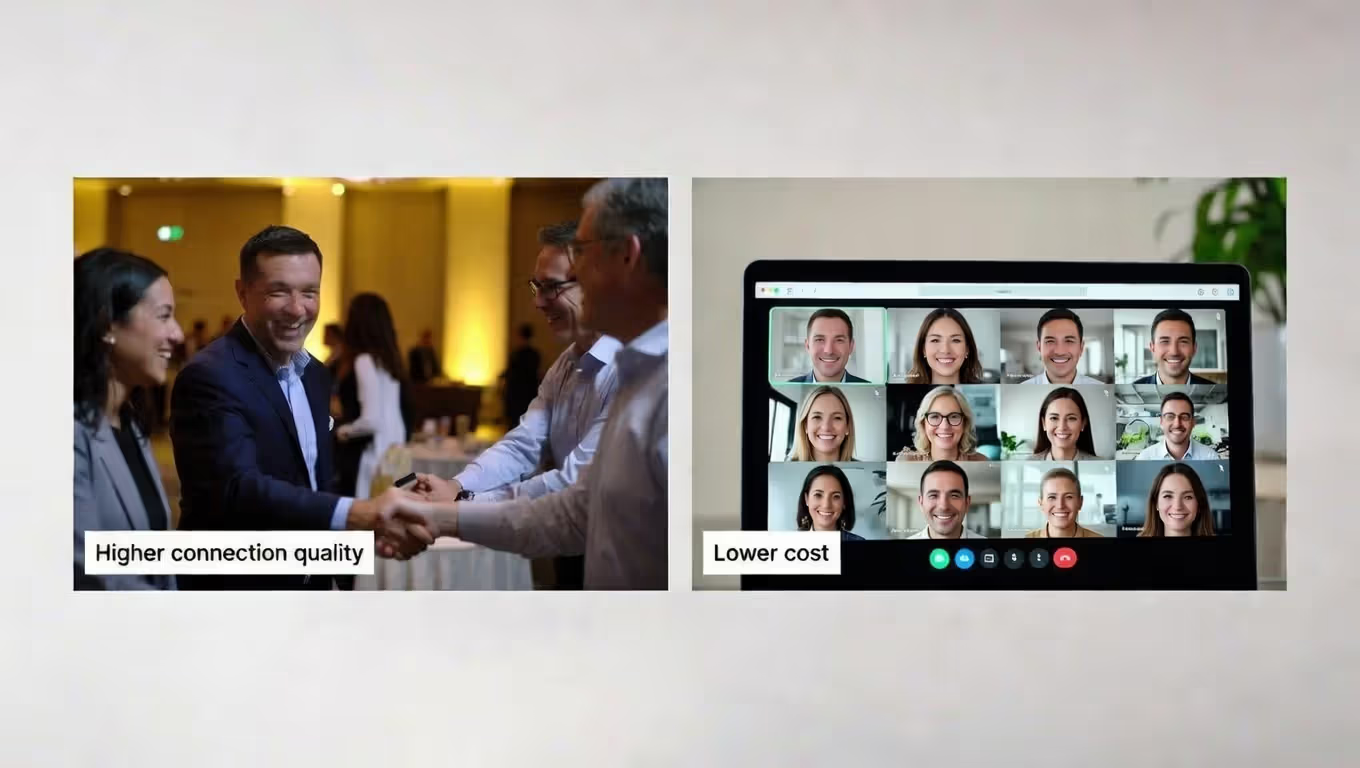
The pandemic forced a massive experiment in virtual networking, generating substantial networking data comparing format effectiveness. The results challenge assumptions on both sides of the debate.
| Metric | In-Person Rate | Virtual Rate | Data Source |
| Connection quality score (1-10 scale) | 7.8 | 5.2 | Harvard Business Review, 2023 |
| Follow-up response rate | 64% | 41% | LinkedIn Networking Study, 2024 |
| Meaningful relationship conversion | 47% | 28% | American Marketing Association, 2023 |
| Average cost per connection | $127 | $23 | Event Marketing Institute, 2024 |
| Time investment per quality connection | 3.2 hours | 1.8 hours | Professional Convention Management Association, 2023 |
These connection success rates tell a nuanced story. In-person networking produces stronger relationships, but virtual networking offers efficiency advantages that can't be ignored. The cost differential is particularly striking—in-person networking requires travel, accommodation, event fees, and opportunity costs that add up quickly.
The networking statistics reveal format strengths that suggest strategic combinations rather than either-or choices. In-person events excel at building trust quickly and creating memorable interactions. Virtual networking allows for higher volume outreach and removes geographic barriers entirely.
Response timing differs significantly between formats. In-person follow-ups sent within 24 hours receive responses 72% of the time. Virtual networking follow-ups peak at 48% response rates regardless of timing, suggesting the initial connection carries less weight.
One surprising finding: professionals who combine both formats strategically—using virtual networking for initial outreach and in-person meetings for relationship deepening—report 31% higher satisfaction with their professional networks than those who rely exclusively on either format.
What Event Research Tells Us About Networking ROI
Author: Madison Cole;
Source: isnvenice.com
Event research has matured significantly, moving beyond attendance counts to measure actual relationship formation and business outcomes. The networking data reveals substantial variation in effectiveness across event types and industries.
Conference Networking Outcomes by Industry
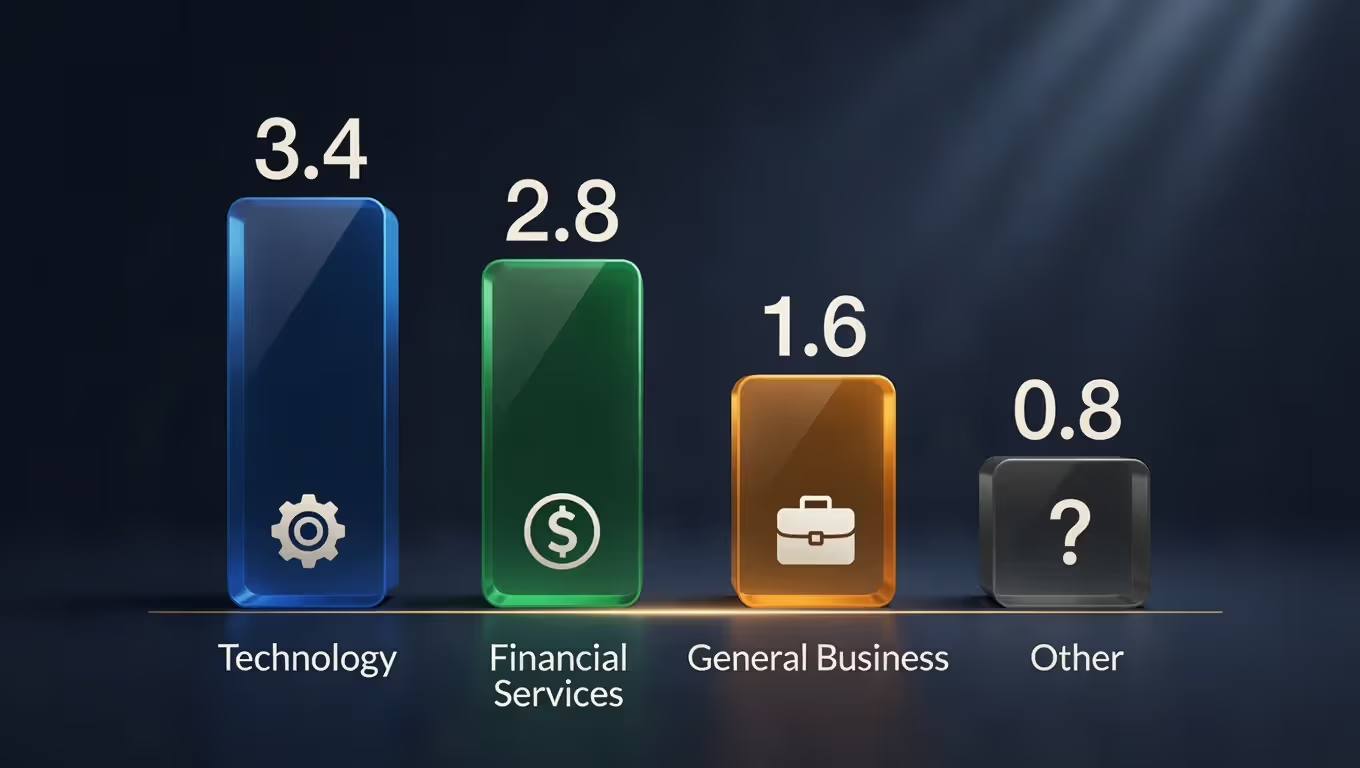
Technology conferences lead in measurable networking ROI, with attendees reporting an average of 3.4 meaningful professional relationships formed per event. Financial services conferences follow at 2.8, while general business conferences average just 1.6 meaningful connections per attendee.
The disparity stems from several factors. Technology professionals tend to be more comfortable with direct outreach and have clearer frameworks for mutual benefit (potential partnerships, technical knowledge exchange, hiring opportunities). Financial services events attract decision-makers with immediate transactional possibilities. General business conferences often lack the specificity that facilitates natural connection points.
Professional studies tracking conference attendees for 18 months post-event found that 23% of technology conference connections resulted in tangible business outcomes—job offers, partnerships, client relationships, or significant knowledge transfer. Healthcare conferences showed 19% conversion, while marketing conferences lagged at 11%.
Industry-specific networking insights reveal timing patterns too. Enterprise software conferences generate immediate connections but slow conversion to business outcomes (6-9 months average). Consumer product conferences show faster conversion (2-4 months) but lower overall success rates.
Small Events vs. Large Conferences: Which Produces Better Connections?
Event size dramatically impacts connection success rates in counterintuitive ways. Events with 50-150 attendees produce the highest quality networking outcomes, outperforming both intimate gatherings (under 30 people) and large conferences (over 500 attendees).
Small events under 30 people often suffer from limited diversity and awkward social dynamics—if you don't connect with someone, you're stuck in an uncomfortable situation. Large conferences create the opposite problem: too many options lead to shallow interactions and decision fatigue.
The 50-150 person sweet spot provides enough variety to find relevant connections without overwhelming choice paralysis. Attendees report feeling comfortable approaching strangers while maintaining focus on quality conversations rather than maximizing business card collection.
Networking data from 847 professional events across 2023 found that mid-sized events generated follow-up conversations at a 58% rate, compared to 31% for large conferences and 44% for small gatherings. The conversion to ongoing professional relationships followed similar patterns: 39% for mid-sized events, 18% for large conferences, and 27% for small events.
Workshop-style events with structured interaction time outperform traditional conferences regardless of size. Events incorporating collaborative activities, structured networking sessions, or small group discussions show 2.3 times higher relationship formation rates than events relying solely on unstructured mingling time.
The Follow-Up Gap: Where Most Networking Attempts Fail
Author: Madison Cole;
Source: isnvenice.com
The networking statistics on follow-up behavior expose the primary failure point for most professionals. Seventy-two percent of networking event attendees fail to follow up within one week, and 48% never follow up at all. This single behavior accounts for more lost networking opportunities than all other factors combined.
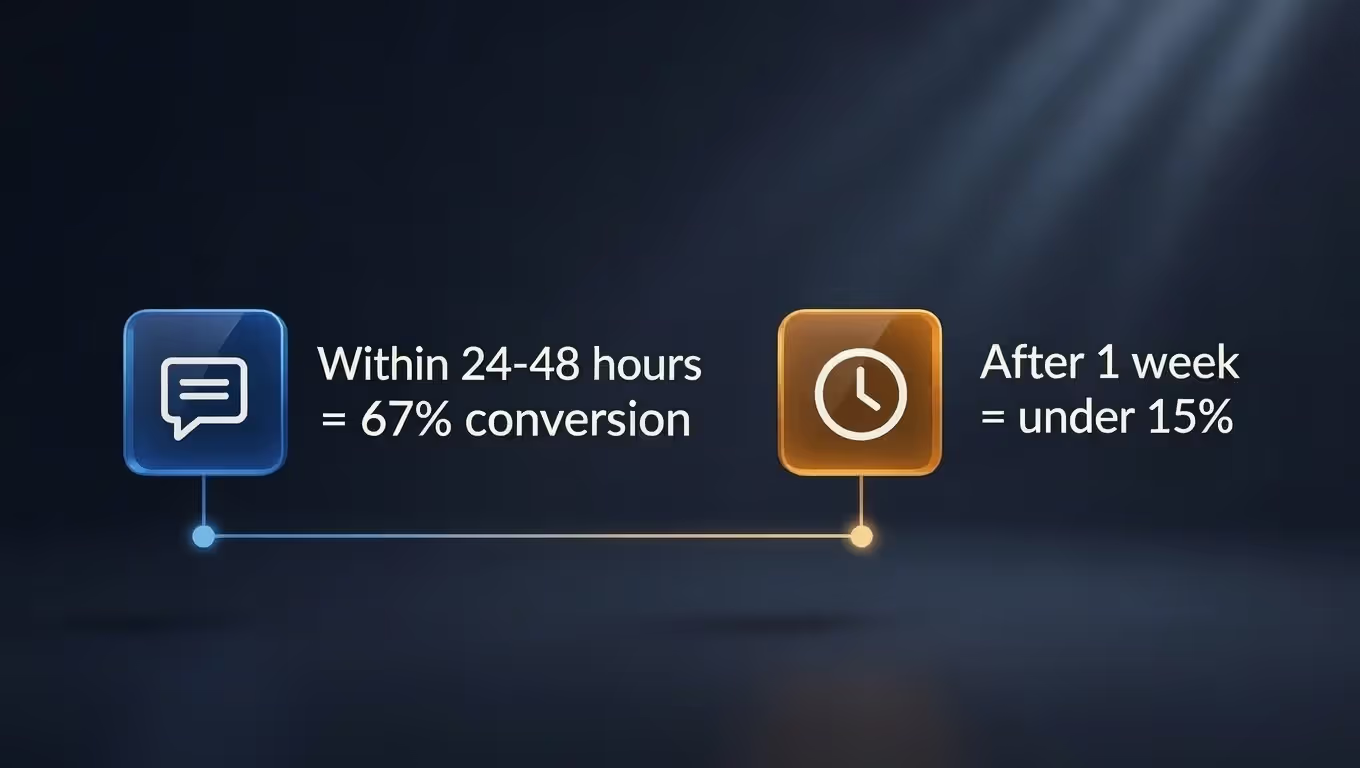
Connection success rates correlate directly with follow-up timing and quality. Personalized follow-ups sent within 24-48 hours convert to ongoing relationships 67% of the time. Generic "nice to meet you" messages sent in the same timeframe convert at only 29%. Delayed follow-ups (one week or more) rarely exceed 15% conversion regardless of message quality.
The content of follow-up messages matters substantially. Messages that reference specific conversation points and suggest concrete next steps (coffee meeting, introduction to a third party, sharing a relevant article) receive responses 3.4 times more frequently than vague "let's stay in touch" messages.
Networking insights from behavioral studies reveal that most people overestimate how memorable they are to new contacts. Without prompt follow-up, you become one of dozens of similar interactions that blur together. Within 72 hours, new contacts retain clear memory of your conversation. After a week, you're competing with dozens of other interactions for mental space.
The second critical gap appears in sustained follow-up. Professionals who reach out to connections at least once per quarter maintain active relationships with 64% of their network. Those who only contact people when they need something maintain relationships with just 11% of contacts—and those relationships tend to be transactional rather than genuinely supportive.
LinkedIn and Digital Networking by the Numbers

Author: Madison Cole;
Source: isnvenice.com
LinkedIn has generated extensive networking data that reveals platform-specific patterns for connection success rates. Connection request acceptance rates average 42% when requests include personalized messages versus 28% for generic requests. The gap widens for cold outreach to senior professionals: 31% with personalization, 9% without.
Message response rates on LinkedIn hover around 23% for initial outreach to new connections, climbing to 47% for messages to existing connections. These numbers vary significantly by approach. Messages asking for advice or offering specific value (relevant article, introduction, industry insight) receive responses 2.1 times more frequently than messages asking for jobs or sales opportunities.
Profile views convert to opportunities at surprisingly low rates. The average professional receives 1-3 meaningful opportunities per 1,000 profile views. Optimized profiles with clear specialization, regular content sharing, and strategic keyword usage can push this to 8-12 opportunities per 1,000 views.
The timing of LinkedIn activity impacts visibility substantially. Posts shared between 7-9 AM and 5-6 PM on weekdays receive 3.7 times more engagement than posts shared during business hours. Tuesday through Thursday consistently outperform Monday and Friday for professional content engagement.
LinkedIn's algorithm favors genuine engagement over vanity metrics. Posts that generate comments receive 5-8 times more total reach than posts that only accumulate likes. This creates a strategic imperative for content that prompts discussion rather than passive consumption.
Demographics and Networking: Who Networks Most Successfully?
Author: Madison Cole;
Source: isnvenice.com
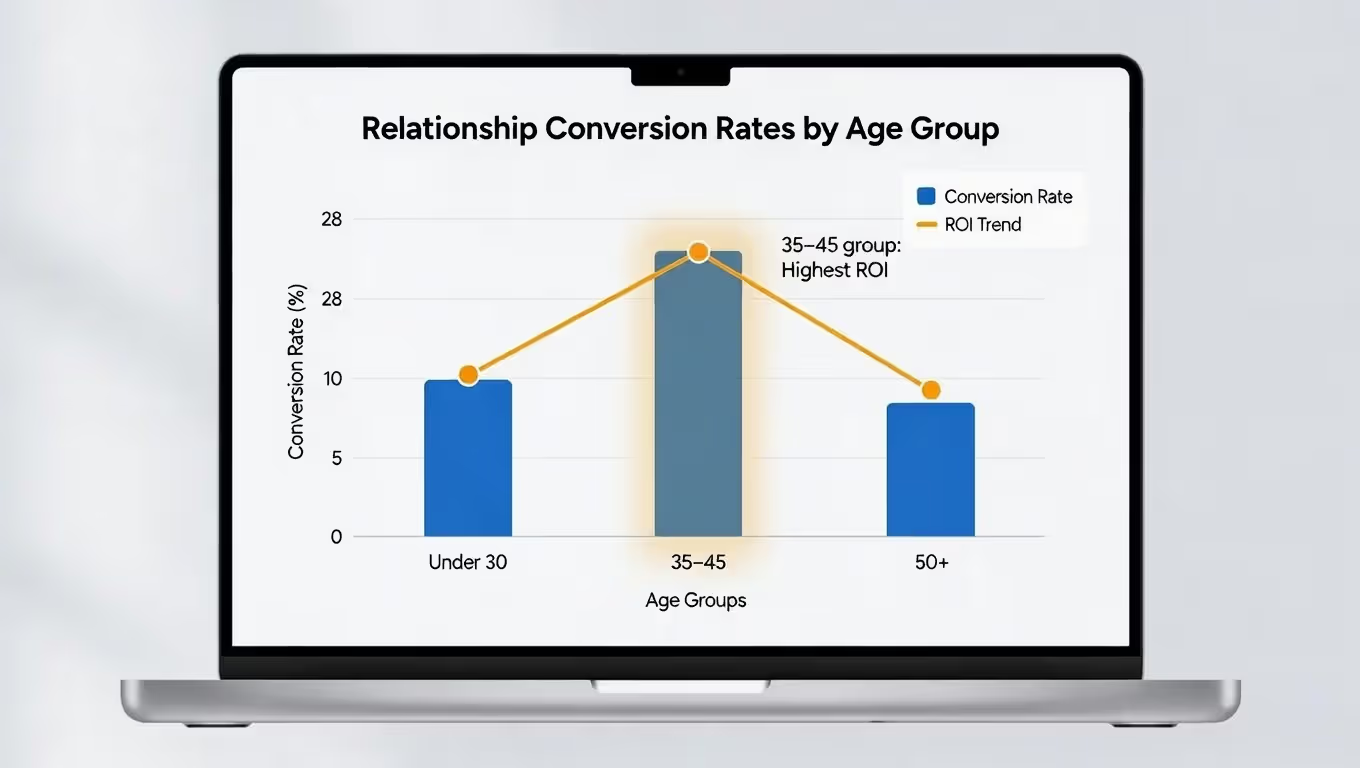
Professional studies examining networking effectiveness across demographics reveal patterns that challenge common assumptions. Age correlates with networking success, but not linearly. Professionals aged 35-45 show the highest networking ROI, outperforming both younger and older colleagues.
The 35-45 age group benefits from a sweet spot: enough career experience to offer value while maintaining energy and openness to new connections. They've typically developed industry expertise worth sharing but haven't yet become so senior that accessibility becomes an issue.
Professionals under 30 network frequently but struggle with conversion—they average 4.2 new connections per month but convert only 18% to meaningful relationships. The 35-45 group averages 2.7 new connections monthly but converts 43%. The difference lies in strategic focus and ability to offer reciprocal value.
Gender differences in networking approach and outcomes persist despite increasing awareness. Men initiate networking contacts 1.8 times more frequently than women but receive lower response rates (38% versus 51%). Women build smaller networks with stronger ties; men build larger networks with weaker connections. Neither approach is universally superior—effectiveness depends on industry and career goals.
Industry variation in networking success rates shows clear patterns. Sales professionals unsurprisingly lead in networking activity and conversion rates. Technology, consulting, and finance professionals show strong networking ROI. Healthcare, education, and government sectors show lower networking frequency but stable relationship quality.
Networking insights from personality research reveal that introverts and extroverts succeed through different mechanisms. Extroverts initiate more contacts and thrive at large events. Introverts build fewer but deeper relationships and excel in one-on-one settings. Long-term career outcomes show no significant difference—both personality types achieve similar networking ROI when playing to their strengths.
The most successful professionals don't network more—they network differently. Our research shows that quality of connections matters far more than quantity. People with 50 strong ties consistently outperform those with 500 weak connections across every career metric we measured.
— Dr. Marissa King
Common Networking Mistakes Backed by Data
Networking statistics identify specific behaviors that consistently undermine relationship building. The most common mistake is treating networking as transactional—reaching out only when you need something. Professionals who only contact their network during job searches or when seeking favors maintain active relationships with just 8% of their contacts.
The "spray and pray" approach to connection requests fails consistently. Sending 100 generic LinkedIn requests yields fewer quality relationships than 20 personalized outreach efforts. Quantity does not compensate for lack of targeting and personalization.
Failing to maintain relationships between asks represents another critical error. The networking data shows that professionals who provide value to their network regularly (sharing relevant information, making introductions, offering help) can successfully ask for assistance 73% of the time. Those who only take receive positive responses 22% of the time.
Poor timing undermines many networking attempts. Reaching out to senior executives on Monday mornings or Friday afternoons reduces response rates by 40% compared to mid-week, mid-day outreach. Sending connection requests during major holidays or industry crisis periods shows similarly poor results.
Networking insights reveal that many professionals waste time at events by clustering with colleagues rather than meeting new people. Groups from the same company account for 34% of conversation time at industry events—time that produces zero new relationships.
The failure to research contacts before meetings represents easily avoidable inefficiency. Professionals who spend 10-15 minutes reviewing a contact's background, recent work, and potential connection points before meetings report 2.4 times higher relationship formation rates than those who go in cold.
Over-formal communication styles reduce response rates, particularly among younger professionals and in creative industries. Messages that sound like corporate press releases receive 38% fewer responses than conversational, authentic communication.
FAQ: Understanding Networking Research and Data
The networking statistics from the past five years reveal clear patterns: professional networking delivers measurable career benefits, but only when executed strategically. The difference between successful and unsuccessful networkers comes down to specific, data-backed behaviors—prompt follow-up, personalized outreach, consistent relationship maintenance, and strategic event selection.
The most encouraging finding across all the research is that networking success is entirely learnable. Unlike innate talents, the behaviors that drive networking ROI can be systematically developed. Professionals who implement even basic improvements—following up within 48 hours, personalizing connection requests, maintaining quarterly contact with key relationships—see substantial improvements in outcomes within months.
The data also reveals that networking doesn't require extroversion, excessive time investment, or natural charisma. It requires consistency, genuine interest in others, and willingness to provide value before asking for it. Professionals who approach networking as relationship building rather than transactional contact collection consistently outperform those chasing quantity metrics.
For professionals still skeptical about networking's value, the statistics are unambiguous: networking isn't just helpful for career advancement—it's the primary driver of opportunity for most professionals across most industries. The question isn't whether to network, but how to network effectively based on what the data actually shows works.