

Two professionals shaking hands during a business meeting with a laptop and notebooks on the table.
What Is Networking and How It Builds Your Career?

Content
Here's something most professionals don't realize until it's almost too late: the strength of your career often depends less on what you know and more on who knows what you can do. That colleague who texts you about an opening before it's posted? The former boss who becomes your champion during a critical reference check? The industry peer who warns you about a company's toxic culture before you waste time interviewing? None of these relationships appear magically when you suddenly need them.
Building these connections takes time, intention, and a willingness to invest in people long before you need anything from them.
Networking Definition: Breaking Down the Basics
Professional networking means building and maintaining relationships with other professionals where both people can potentially benefit from knowing each other. It's that simple—and that complicated.
Here's what separates professional networking from just having work friends: there's a mutual, unspoken agreement that these relationships might help both of you advance professionally. Maybe you'll exchange industry knowledge. Perhaps you'll make introductions. Possibly one of you will refer the other for a job opportunity. This understanding doesn't make the relationship fake or purely transactional. The strongest professional networks include people you genuinely like and respect.
A lot of folks think they're networking when they're really just accumulating LinkedIn connections. Hitting "connect" on someone's profile after meeting them at a conference? That's step one. Actual networking happens in the months and years after—when you share useful articles with them, ask thoughtful questions about their projects, make relevant introductions, or grab coffee to catch up.
Think quality, not quantity. Would you rather have 50 people who genuinely understand your strengths and would recommend you without hesitation, or 500 contacts who vaguely remember your name? The answer shapes how you should spend your networking energy.
The relationship building basics come down to consistent, authentic engagement over time. You're not collecting business cards. You're cultivating genuine professional relationships that can withstand career changes, industry shifts, and years of periodic contact.
Why Professional Networking Matters for Your Career
Author: Lucas Hayes;
Source: isnvenice.com
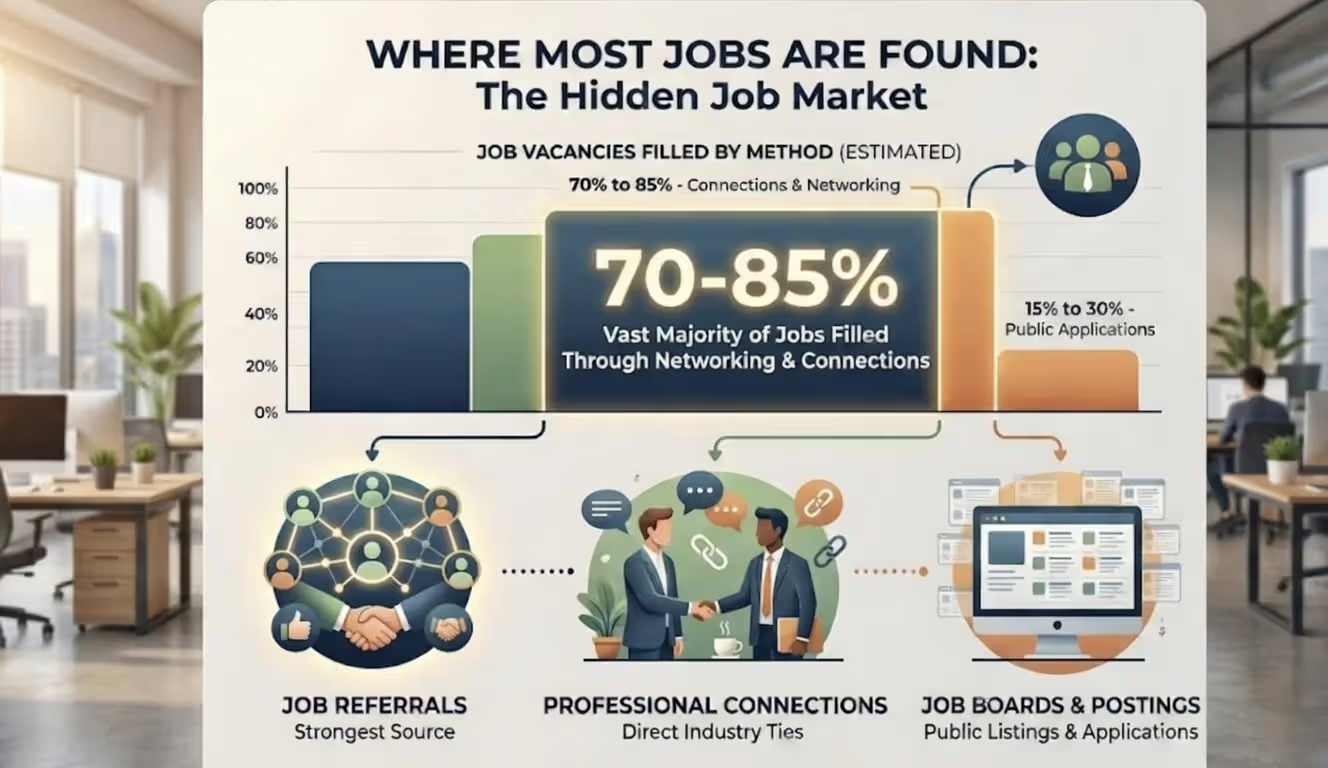
Research consistently shows that 70-85% of jobs get filled through personal and professional connections rather than through job boards. But the impact of a strong network extends far beyond job hunting.
Your network functions as an early warning system. When someone in your circle mentions their company is adopting a new platform or creating a new department, you're learning about trends months before they hit mainstream awareness. This intelligence gives you time to acquire relevant skills, position yourself strategically, or pursue emerging opportunities.
Networks also compress your learning curve dramatically. Why spend three weeks researching whether a certification is worth pursuing when you can ask three people who've already earned it? Instead of fumbling through trial-and-error with unfamiliar software, a 20-minute call with someone experienced can save you dozens of hours.
The Hidden Job Market Reality
The hidden job market isn't some secret conspiracy—it's basic human nature. Hiring managers trust referrals because they reduce risk and save time. When your reliable employee enthusiastically recommends their former colleague, that endorsement carries more weight than any resume.
Many positions get filled before companies bother posting them publicly. Sometimes a hiring manager gets budget approval and immediately thinks, "Oh, I should reach out to Sarah—she'd be perfect for this." If you're not in anyone's mental Rolodex, you'll never even know these opportunities existed.
Without relationships inside companies you want to work for, you're competing in the public job market where hundreds of applicants fight for positions that might already have an internal favorite.
Long-Term Career Insurance
Over a 30-40 year career, you'll almost certainly face layoffs, industry disruptions, company restructurings, or other unexpected transitions. Your network becomes crucial insurance during these moments.
Well-connected professionals typically land new roles 40-50% faster after job loss compared to those starting their search from scratch. But the benefits go deeper than speed. Networks provide mentorship that fundamentally shapes career trajectories. A mentor who's already navigated the path you're on can help you avoid expensive mistakes, negotiate compensation effectively, and spot opportunities you wouldn't have considered.
These mentorship relationships often prove more valuable than any single job or promotion.
Types of Professional Networking You Should Know

Author: Lucas Hayes;
Source: isnvenice.com
Different networking approaches serve different purposes. Understanding these distinctions helps you invest your time wisely.
Face-to-face networking at conferences, association meetings, and industry events creates high-bandwidth communication. You observe body language, catch conversational nuances, and create memorable moments that cement relationships quickly. There's something about sharing a meal or sitting through a presentation together that accelerates relationship development.
Digital networking through LinkedIn, industry forums, Slack communities, and video calls offers scalability and convenience. Geography becomes irrelevant. You can maintain relationships with former colleagues who moved across the country and connect with niche experts you'd never encounter otherwise. Remote work has normalized virtual coffee chats that once seemed impersonal.
Structured networking happens at events explicitly designed for making connections—conferences, chamber meetings, alumni reunions. Everyone expects networking conversations, which eliminates much of the awkwardness around initiating contact. Informal networking occurs during normal work life, volunteer activities, or hobby groups where connection-building is secondary but often more authentic.
Industry-focused networking keeps you current in your field and connected to potential employers or clients in your sector. Cross-industry networking broadens your perspective and can unlock unexpected opportunities when you pivot careers or need expertise outside your domain.
| Aspect | Face-to-Face Networking | Digital Networking |
| Advantages | Creates stronger initial bonds, enables spontaneous conversations, allows reading body language, generates memorable moments | Removes geographic barriers, offers flexible scheduling, scales easily, allows research before connecting |
| Disadvantages | Requires significant time blocks, involves travel expenses, limits geographic reach, demands immediate social comfort | Makes standing out harder, easier for contacts to ignore, lacks nonverbal communication, can feel distant |
| Works Best For | Establishing deep relationships quickly, making strong first impressions, connecting in local markets | Sustaining existing relationships, reaching specialized experts, connecting globally, supporting remote professionals |
| Time Required | 3-5 hours per event including travel, typically monthly or quarterly attendance | 15-30 minutes daily for consistent engagement and relationship maintenance |
| Financial Investment | Event registration ($50-$500), travel costs, potential accommodation expenses | Usually free, occasionally premium memberships ($30-$100 monthly) |
| Connection Depth | Typically develops deeper initial connections through face-to-face interaction | Demands more sustained effort to achieve comparable relationship depth |
How Networking Actually Works: The Relationship Building Process
Author: Lucas Hayes;
Source: isnvenice.com
Successful networking operates on a give-before-you-get principle. You can't make withdrawals from relationships you haven't made deposits into. The most effective networkers lead with generosity—they share relevant resources, facilitate introductions, offer feedback, or simply remember to check in during someone's career milestone.
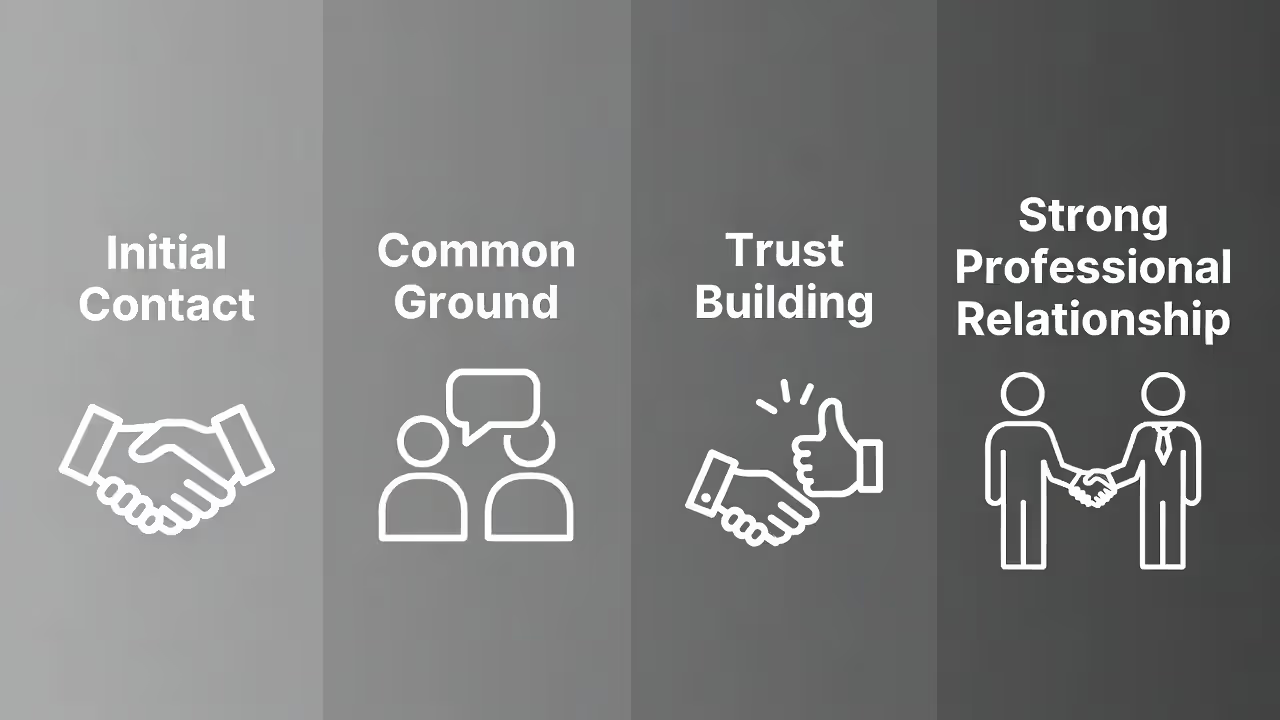
Professional relationships usually develop through predictable stages. Initial contact establishes basic recognition. You might exchange messages or chat briefly at an event. Stage two involves discovering common ground—overlapping interests, shared connections, or complementary skills. Most networking attempts stall here if neither person invests further.
Stage three marks the transition from acquaintance to genuine connection. You've had multiple substantive conversations, maybe helped each other with small asks, and established trust. At this point, people will make introductions or recommendations for you. Stage four represents robust professional relationships where both parties actively seek opportunities to support each other's success.
Authentic networking prioritizes generosity over self-interest. This mindset separates genuine relationship-building from the transactional approaches that make networking feel manipulative to many people.
— Keith Ferrazzi
Authenticity matters because insincerity is transparent. Faking interest in someone's work while you're really just angling for a job referral builds relationships that collapse when tested. Genuine curiosity about others' experiences and challenges creates durable connections that survive career changes and industry upheavals.
Follow-through distinguishes serious networkers from business card collectors. After meeting someone interesting, send a brief note within 48 hours mentioning a specific conversation detail. This demonstrates you were genuinely engaged and reinforces the connection. Schedule reminders to reconnect every few months with people you want to stay close to—forward a relevant article, congratulate them on an achievement, or simply ask how things are going.
Common Networking Mistakes That Hold People Back
Author: Lucas Hayes;
Source: isnvenice.com
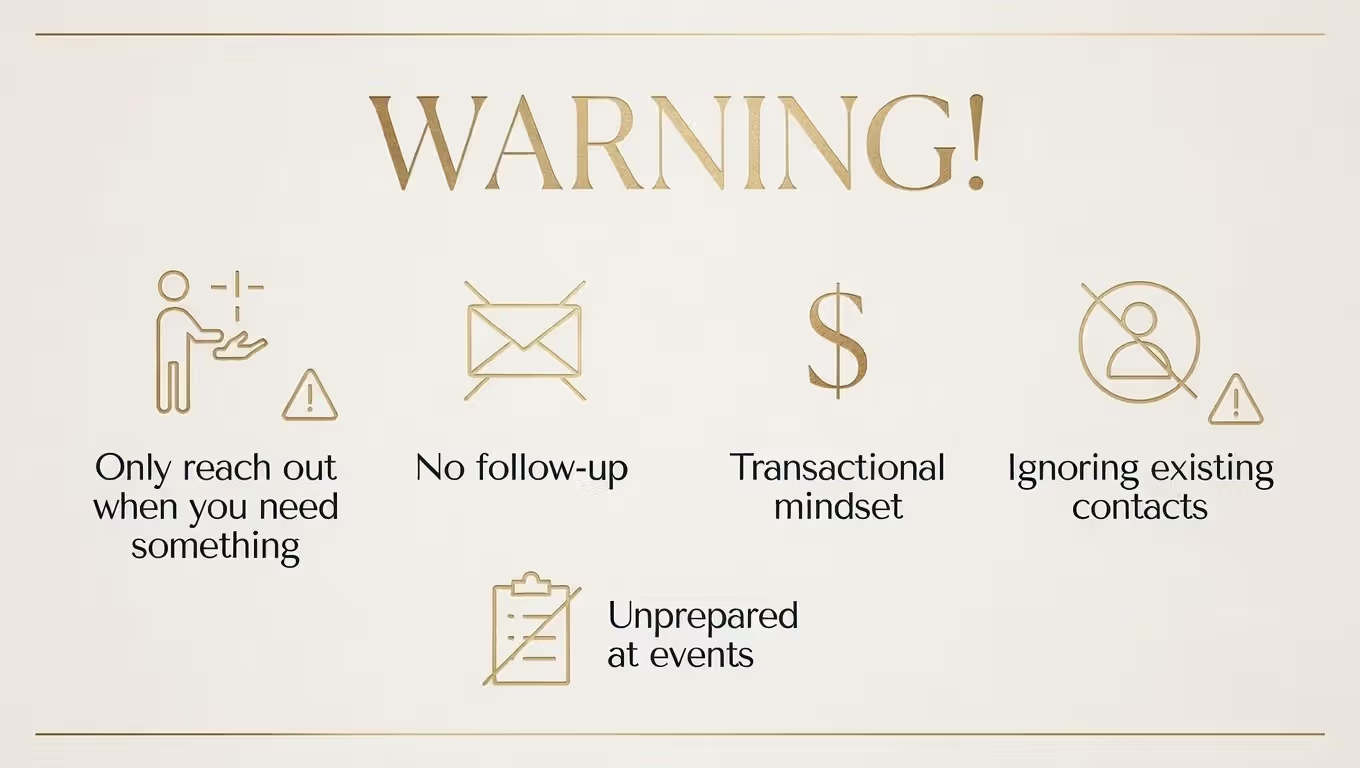
The single biggest networking error is only reaching out when you need something. If someone hasn't heard from you in two years until you're suddenly job hunting, you're not networking—you're imposing on goodwill you haven't earned.
Stay in touch during good times so those relationships exist during difficult ones.
Failing to follow up after initial meetings wastes all the effort of attending events. You invest hours meeting people, then let those potential connections evaporate because you never send a LinkedIn request or follow-up email. Create a simple rule: every meaningful conversation gets a follow-up within 48 hours.
Approaching networking like sales prospecting repels people instantly. If you enter every conversation calculating "what can this person do for me," that energy radiates outward. Reverse the mindset: "what can I learn from this person" or "how might I help them" generates much better interactions and outcomes.
Ignoring existing connections while constantly chasing new ones is inefficient. Former colleagues who've witnessed your work firsthand make your best advocates. Someone who's seen you handle a crisis or lead a project can vouch for you far more credibly than a new contact who's only heard your elevator pitch. Nurture your current network before expanding it.
Showing up unprepared to networking events signals you don't value others' time. Develop a clear, concise explanation of your work without industry jargon. Research attendees beforehand when possible. Prepare several thoughtful questions that show genuine interest. These small preparations dramatically improve conversation quality.
Getting Started: Your First Steps in Career Networking

Author: Lucas Hayes;
Source: isnvenice.com
Start by inventorying your existing network. List everyone you've worked with, studied alongside, volunteered with, or met through professional contexts. Include former managers, colleagues, clients, professors, and alumni connections. Most people discover they have 30-50 solid contacts before attending a single networking event.
Set realistic goals that match your personality and schedule. If you're introverted, aim for one meaningful networking conversation weekly. If you're extroverted, perhaps target three events monthly. Consistency beats intensity—regular small efforts compound better than occasional bursts of frantic activity.
Pick 2-3 networking channels to focus on initially. Spreading yourself across LinkedIn, Twitter, industry associations, local meetups, conferences, and alumni groups leads to burnout and shallow engagement. Choose channels where your target connections actually spend time. Tech professionals might focus on GitHub and specific Slack communities. Consultants might emphasize industry conferences and LinkedIn.
Develop your introduction before you need it under pressure. You should explain what you do in 15 seconds without buzzwords or jargon. Rehearse until it sounds conversational rather than scripted. Include enough specificity that people understand your work, but leave openings for questions. "I help mid-sized manufacturers reduce supply chain costs" communicates more clearly than either "I'm a consultant" or a jargon-filled methodology description.
Block specific networking time on your calendar. Treat it like any other investment in your professional development. Reserve 30 minutes twice weekly to engage on LinkedIn, send follow-up messages, or research upcoming events. Without protected calendar time, networking gets perpetually postponed for seemingly urgent tasks.
Begin with warm outreach to existing contacts. Message five people you haven't spoken with recently. Ask about their current projects, share something relevant to their work, or simply express appreciation for past help. These low-pressure interactions rebuild dormant connections and remind you that networking is essentially professional friendship maintenance.
Frequently Asked Questions About Networking
Networking isn't a project you complete and cross off your list. It's an ongoing practice woven throughout your professional life. Relationships you invest in today might not yield visible returns for years, but when they do, they often prove career-defining. Start small, stay authentic, emphasize giving value, and maintain consistency. Your future self will be grateful for the network you're cultivating now.