

The hardest part is starting.
Networking Challenges and Solutions

Content
Most professionals know they should network. Fewer actually do it consistently. The gap between intention and action isn't laziness—it's a cluster of real obstacles that make connecting with others feel like walking through mud.
Career advancement depends on relationships, yet building those relationships triggers anxieties most people don't discuss openly. You're not alone if you've skipped an industry mixer, deleted a draft LinkedIn message, or convinced yourself that "networking isn't for people like me." These patterns have explanations, and more importantly, practical solutions that don't require personality transplants.
The Real Reasons Networking Feels Impossible
The standard advice—"just put yourself out there"—ignores why networking challenges exist in the first place. Understanding the root causes changes how you approach the problem.
Introversion gets blamed too often. Being introverted doesn't mean you're bad at networking; it means you process social interaction differently. Introverts often build deeper one-on-one connections than extroverts manage in group settings. The exhaustion you feel after events is real, but it's about energy management, not incompetence.
Fear of rejection operates on autopilot. Your brain treats professional rejection similarly to physical threats. When someone doesn't respond to your message or seems disinterested at an event, your nervous system reacts as if you're in danger. This isn't dramatic—it's neuroscience. The anticipation of rejection often stops you before you even try.
Imposter syndrome distorts your value assessment. You assume everyone else belongs in the room except you. This makes initiating conversations feel presumptuous. The irony: research shows that approximately 70% of people experience imposter feelings at some point, meaning the person you're afraid to approach likely shares your doubts.
Time constraints are legitimate, not excuses. Between work demands, family obligations, and basic life maintenance, networking gets categorized as "extra." When you're already stretched thin, adding coffee meetings and events feels impossible. The guilt about not networking then becomes another weight.
Not knowing where to start creates paralysis. Should you attend conferences, cold-message people on LinkedIn, join associations, or something else entirely? The abundance of options, combined with uncertainty about what works in your specific field, leads to doing nothing.

Author: Lucas Hayes;
Source: isnvenice.com
7 Common Networking Problems That Sabotage Your Efforts
Recognizing specific failure points helps you target solutions instead of vaguely trying to "be better at networking."
Starting Conversations With Strangers
The opening moments determine everything, yet most people either overthink or underthink this part. Overthinking produces rehearsed-sounding scripts that die after the first exchange. Underthinking leads to generic questions that go nowhere.
The mistake: treating the first sentence as if it needs to be brilliant. It doesn't. "How do you know the host?" or "What brings you to this event?" work because they're genuine questions with varied answers. The goal isn't to impress immediately—it's to establish basic rapport so a real conversation can develop.
Watch for the person's response length and energy. If they give one-word answers while scanning the room, they're not interested. If they elaborate and ask you something back, continue. Reading these signals prevents the common error of trapping someone in unwanted conversation, which makes you memorable for wrong reasons.

Author: Lucas Hayes;
Source: isnvenice.com
Following Up Without Seeming Desperate
You met someone promising. Now what? Waiting too long makes you forgettable. Reaching out too eagerly or frequently triggers discomfort.
The window: 24-48 hours after meeting someone. Reference a specific detail from your conversation in your message—not just "nice to meet you," but "I've been thinking about what you said regarding the shift to remote project management in your industry." This proves you actually listened and aren't mass-messaging your entire contact list.
Common mistake: asking for too much too soon. "Can we schedule a call to discuss opportunities at your company?" in the first follow-up puts pressure on a barely-formed connection. Instead, offer something: an article related to your discussion, an introduction to someone in your network, or simply continuing the conversation without asking for anything.

Author: Lucas Hayes;
Source: isnvenice.com
Building Authentic Relationships vs. Transactional Contacts
People sense when you're collecting contacts like trading cards. The transactional approach—only reaching out when you need something—creates shallow networks that don't activate when you actually need help.
Authentic relationships require contact between favors. This doesn't mean forced check-ins. It means occasionally sharing relevant information, congratulating someone on a visible achievement, or asking about a project they mentioned months ago. These touches maintain connection without demanding anything.
The trade-off: authentic networking produces fewer total contacts but higher-quality relationships. You're building a smaller circle of people who actually know you, remember you, and want to help you. This matters more than having 500+ LinkedIn connections who vaguely recall meeting you once.
Networking When You're Between Jobs
Job searching amplifies every networking anxiety. You feel like you're approaching people from a position of need, which triggers shame and reluctance. Meanwhile, networking becomes most critical precisely when you're unemployed.
The reframe: you're not begging for jobs; you're conducting research and building relationships during a transition period. Instead of "I'm looking for a job—can you help?" try "I'm exploring opportunities in [specific area] and would value your perspective on where the field is heading."
This shifts the dynamic. You're asking for insight, not a favor. Most professionals enjoy sharing their knowledge and experience. They're far more likely to remember you positively—and mention you when opportunities arise—if your interaction was a genuine conversation rather than a job plea.
Social Barriers That Make Professional Connections Harder
Connection struggles often stem from structural issues, not personal failings. Recognizing these external barriers prevents you from internalizing problems that aren't about you.
Remote work isolation has fundamentally changed networking dynamics. The casual conversations that once happened naturally—before meetings, in hallways, over lunch—don't occur on Zoom. You can't read a room's energy through a screen. The spontaneous connection opportunities that traditionally built professional relationships have largely disappeared for remote workers.
Industry gatekeeping operates through informal networks and unwritten rules. Certain fields maintain insider cultures where opportunities flow through existing connections. Breaking in requires access to people who already belong, creating a circular problem. This affects career changers and people entering industries where they lack family or educational connections.
Geographic limitations still matter despite digital tools. Many industries concentrate in specific cities. If you're not in New York, Los Angeles, San Francisco, or a few other hubs, accessing certain professional networks requires extra effort. Virtual networking helps but doesn't fully replace being physically present where decisions happen.
Neurodivergence affects how people process social interaction. Individuals with ADHD, autism, or other neurological differences often struggle with networking expectations that assume neurotypical social processing. Reading subtle social cues, maintaining small talk, or managing sensory overload at crowded events presents genuine challenges that standard networking advice ignores.
Cultural differences in communication styles create misunderstandings. Direct versus indirect communication, appropriate relationship-building timelines, and professional boundary expectations vary significantly across cultures. What feels appropriately friendly in one cultural context might seem presumptuous or cold in another. First-generation professionals and immigrants often navigate these differences without guidance.
How Professional Fears Block Your Networking Success
Anxiety about networking isn't irrational—it's based on real social risks. Naming specific fears reduces their power.
Fear of bothering people assumes your contact is an imposition. This fear intensifies when reaching out to senior professionals or people you don't know well. You imagine them annoyed by your message, rolling their eyes at another networking request.
Reality: most successful professionals remember when they needed help and are willing to offer it. The key is respecting their time. A specific, brief request is easier to accommodate than a vague "pick your brain" ask. People are more bothered by unclear expectations than by genuine, well-framed requests.
Fear of being judged makes you hyperaware of how you present yourself. You worry about saying something stupid, not being impressive enough, or revealing gaps in your knowledge. This often leads to either over-preparing (which makes you sound rehearsed) or avoiding networking entirely.
The perspective shift: everyone feels inadequate sometimes. The people who seem effortlessly confident have simply learned to act despite discomfort. They've accepted that occasional awkwardness is the price of building relationships.
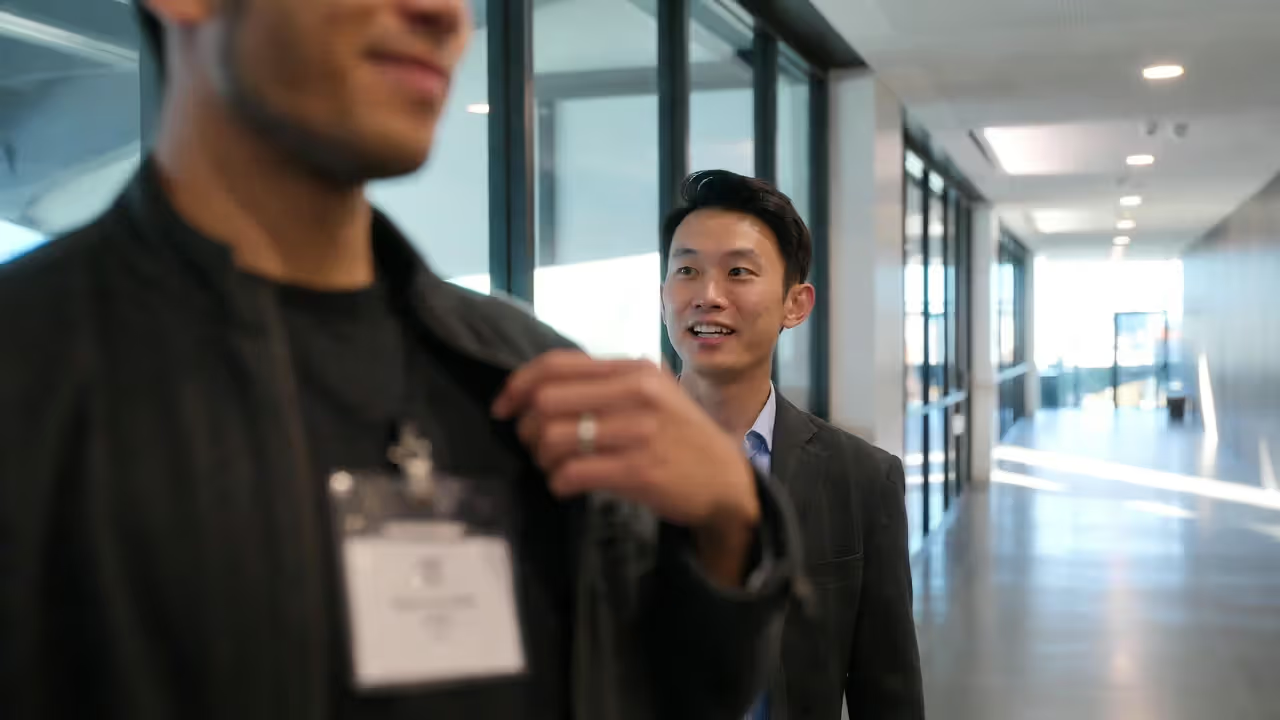
Author: Lucas Hayes;
Source: isnvenice.com
Fear of saying the wrong thing creates second-guessing that disrupts natural conversation flow. You're so busy monitoring your words that you stop listening effectively, which ironically makes conversation harder.
Career expert Keith Ferrazzi addresses this directly: "The currency of real networking is not greed but generosity. Networking is about establishing genuine relationships, and that requires vulnerability and the willingness to give without keeping score."
Fear of not being impressive enough assumes you need to prove your worth immediately. This leads to subtle bragging or name-dropping that pushes people away. The paradox: trying too hard to seem impressive makes you less appealing.
Vulnerability in asking for help feels like admitting weakness. You've been taught to be self-sufficient and not impose on others. Asking for introductions, advice, or opportunities requires acknowledging you can't do everything alone, which conflicts with professional independence narratives.
Networking Solutions That Actually Work for Different Personality Types
Generic networking advice fails because people have different strengths, preferences, and constraints. Matching strategies to your actual personality and situation produces better results.
For introverts: prioritize depth over breadth. Instead of working a room at large events, focus on meaningful one-on-one conversations. Suggest coffee meetings, phone calls, or video chats where you can have substantive discussions without the drain of group dynamics. Prepare a few thoughtful questions in advance so you're not improvising everything in the moment.
For extroverts: your challenge isn't initiating contact—it's following through. You easily collect contacts but may struggle with consistent follow-up. Create systems: immediately after events, note details about people you met. Schedule specific times for outreach. Your natural enthusiasm is an asset; channel it into building ongoing relationships, not just making initial impressions.
Digital-first approaches work when in-person networking feels overwhelming. Engage thoughtfully in LinkedIn discussions, contribute to industry forums, or write content that demonstrates your expertise. This creates visibility and gives people reasons to reach out to you. The trade-off: digital networking takes longer to build trust than face-to-face interaction.
One-on-one settings allow for deeper connection and reduce social anxiety. Informational interviews, coffee meetings, or virtual calls let you focus on one person without the complexity of group dynamics. These work particularly well for people who process conversations better without multiple simultaneous interactions.

Author: Lucas Hayes;
Source: isnvenice.com
Group settings and events provide efficiency—you can meet multiple people quickly. They work best for those comfortable with surface-level conversation and quick relationship initiation. The skill is moving promising connections from event acquaintances to actual relationships through timely follow-up.
Industry-specific tactics matter because networking norms vary. Tech networking often happens through GitHub contributions, Twitter, and hackathons. Academic networking centers on conferences and publications. Creative fields may emphasize portfolio sharing and collaborative projects. Research how established professionals in your specific field actually build relationships.
| Strategy Type | Best For | Time Investment | Comfort Level | Expected Results Timeline |
| LinkedIn outreach | Introverts, remote workers, specific target contacts | 30-60 min/week | Low pressure, asynchronous | 2-3 months for meaningful connections |
| Industry conferences | Extroverts, career changers, broad exploration | 2-3 days + travel | High energy, can be overwhelming | Immediate contacts, 3-6 months for relationships |
| Informational interviews | Thoughtful planners, career explorers, relationship builders | 1-2 hours per interview + prep | Moderate, structured format | 1-2 months per solid connection |
| Professional associations | Long-term commitment, industry specialists | 3-5 hours/month | Moderate, recurring familiar faces | 6-12 months for leadership visibility |
| Social mixers | Extroverts, casual networkers | 2-3 hours per event | High social demand | Quick surface contacts, variable depth |
| Online communities | Digital natives, niche specialists, introverts | Flexible, 30 min - 2 hours/week | Low pressure, build gradually | 3-6 months for recognition and trust |
When to Push Through vs. When to Change Your Approach
Not all networking discomfort signals you should quit. Some indicates growth. But persistent misery suggests misalignment between method and personality.
Push through when: the discomfort is temporary and situational. First events always feel awkward. Initial outreach messages get easier with practice. If you're seeing small improvements—conversations lasting longer, follow-ups getting responses, anxiety decreasing slightly—you're building skills. Discomfort with growth feels different than discomfort with fundamental mismatch.
Change your approach when: you're forcing yourself into situations that consistently drain you without producing results. If you've attended networking events for six months and still leave feeling defeated every time, that format probably doesn't suit you. If cold LinkedIn messages never get responses, perhaps warm introductions through mutual connections work better for your field.
Recognizing ineffective patterns requires honest assessment. Are you networking in places where your target connections don't actually spend time? Are you following up inconsistently, then wondering why relationships don't develop? Are you asking for too much too soon? Sometimes the issue isn't networking itself but specific tactical mistakes.
Traditional networking isn't right for every field. Some industries value credentials and portfolios over personal connections. Others prioritize demonstrated expertise through publications or projects. If you're in a highly specialized technical field, contributing to open-source projects or publishing research might build your professional reputation more effectively than attending general networking events.
Alternative relationship-building methods include teaching (workshops, webinars, courses), writing (blogs, articles, books), creating resources others find valuable, collaborating on projects, or joining working groups focused on specific problems. These approaches let your work speak first, with relationships developing naturally around shared interests.
Networking isn’t about collecting contacts — it’s about building relationships before you need them. The strongest opportunities come from connections that were never rushed.
— Dorie Clark — marketing strategist and author of Stand Out and The Long Gam
Frequently Asked Questions About Connection Struggles
Moving Forward With Realistic Expectations
Networking challenges don't disappear completely. Even experienced professionals face rejection, awkward conversations, and uncertainty about approaching new contacts. The difference is they've accepted discomfort as part of the process rather than evidence they're doing something wrong.
Start with one approach that feels manageable given your personality and constraints. If events overwhelm you, begin with digital outreach. If writing messages paralyzes you, try attending smaller gatherings. Progress comes from consistent small actions, not dramatic personality overhauls.
Track what works specifically for you. Notice which types of interactions energize versus drain you, which follow-up methods get responses, and which connections develop into genuine relationships. Your effective networking strategy will likely differ from generic advice because you're working with your actual strengths and circumstances.
The goal isn't becoming someone who loves networking. It's building sufficient professional relationships to access opportunities and support your career growth—using methods that don't make you miserable. That's achievable, even if it looks different than traditional networking narratives suggest.