
Building Meaningful Networking Opportunities at Events
What Is Event Networking for Building Connections?

Content
Networking remains one of the most significant aspects of any successful event, whether it's a corporate conference, workshop, social gathering, or trade show. The art of connecting people goes beyond just providing a space for mingling. Instead, it involves creating intentional opportunities for collaboration, relationship building, and meaningful engagement among participants. This article delves into the nuances of fostering networking opportunities at events, with actionable strategies to design experiences that leave a lasting impression on attendees. In today's hyper-connected yet often isolated professional landscape, the value of face-to-face networking has paradoxically increased as digital communication becomes ubiquitous, with research from Harvard Business Review demonstrating that in-person connections create stronger, more enduring professional relationships than purely digital interactions. The challenge for event organizers is creating environments and experiences that facilitate these valuable connections naturally rather than forcing awkward interactions that feel obligatory rather than organic.
In a world where personal connections can lead to professional growth and mutual success, the emphasis on networking is greater than ever. Discover how expert event planning services can help elevate your event by incorporating customized solutions to create impactful networking experiences that go beyond superficial interactions to foster genuine relationships that benefit participants long after events conclude. The most successful events are those where networking feels effortless and natural, where connections happen organically because the environment, programming, and facilitation all work together to create conditions conducive to meaningful interaction.
The Importance of Networking at Events
Networking is more than just exchanging business cards or LinkedIn connections; it is the process of building relationships that could lead to future collaborations, partnerships, career opportunities, knowledge exchange, and personal growth that extends far beyond the immediate transactional benefits. Events offer a unique environment where people from diverse backgrounds, industries, and perspectives come together, united by a common purpose or shared interest, creating conditions for serendipitous connections that wouldn't occur in more homogeneous settings. Whether it's sharing ideas that spark innovation, solving problems through collective expertise, exploring mutual interests that lead to partnerships, or simply finding kindred spirits who understand your professional challenges, networking serves as a bridge for meaningful connections that can transform careers and businesses. According to research from LinkedIn, 85% of jobs are filled through networking, and professionals who actively network are more likely to be promoted, find new opportunities, and report higher career satisfaction than those who work in isolation.
For businesses, networking opportunities at events can lead to client acquisition that generates immediate revenue, industry partnerships that create competitive advantages, talent recruitment that strengthens organizational capabilities, market intelligence that informs strategy, and brand visibility that enhances reputation. For individual attendees, these connections provide access to knowledge that accelerates learning, resources that would otherwise remain hidden, opportunities that match their skills and aspirations, mentorship that guides career development, and professional community that provides support through challenges. Crafting networking-focused events requires intentional planning and an understanding of what attendees seek from these interactions—not just what organizers hope will happen, but what participants actually need and value. Event industry research consistently shows that networking ranks as one of the top reasons professionals attend events, often valued more highly than content sessions or keynote speakers, yet many events fail to prioritize networking design with the same rigor they apply to programming, resulting in missed opportunities and attendee dissatisfaction.
The benefits of effective networking extend beyond individual transactions to create network effects that benefit entire communities and industries. When professionals connect at events, they don't just benefit personally—they create channels for knowledge flow, innovation diffusion, and collaborative problem-solving that strengthen entire sectors. Events that successfully facilitate networking become hubs within their industries, attracting high-quality participants who know valuable connections await them, creating virtuous cycles that increase each subsequent event's value. Understanding this broader impact helps event organizers recognize that investing in networking infrastructure and design isn't an optional luxury but a core value proposition that determines whether events thrive or merely survive in increasingly competitive attention economies.
Understanding Your Audience: The First Step to Effective Networking
Before designing networking opportunities, it's crucial to understand the audience you are catering to, as networking strategies that work brilliantly for one group may fall completely flat for another due to differences in communication styles, professional norms, comfort levels, and objectives. Attendees' goals and expectations vary widely based on the nature of the event and their personal objectives, with some seeking specific transactional outcomes like finding clients or investors, others pursuing learning and knowledge exchange, and still others simply hoping to feel less isolated in their professional journeys by meeting others who understand their challenges. Conducting surveys, focus groups, or pre-event registration questionnaires can provide valuable insights into key demographic and psychographic factors that should shape your networking design. Survey tools like SurveyMonkey or Typeform make gathering this information straightforward, allowing you to ask targeted questions that reveal attendee expectations, preferences, and potential barriers to networking.
Consider researching demographics including age ranges that influence communication styles and technology comfort levels, industries represented that determine common ground and potential synergies, job roles and seniority levels that affect what people can offer and what they seek, and experience levels that impact confidence and networking sophistication. Understanding goals is equally important—are attendees looking to expand their professional network broadly, find potential clients or customers specifically, identify vendors or service providers, learn from others in their field through knowledge exchange, find mentors or mentees for developmental relationships, explore career opportunities or recruit talent, or simply break out of professional isolation by meeting peers? These different objectives require different networking formats and facilitation approaches. Preferences also vary significantly—do attendees prefer structured networking sessions with clear formats and facilitation, casual meet-and-greets where interactions happen organically, technology-assisted introductions using apps or matchmaking algorithms, or small group discussions around specific topics? Some professionals thrive in large group settings while others feel overwhelmed, preferring intimate conversations that allow for depth over breadth.
By aligning networking opportunities with the audience's preferences and adapting approaches to match their specific needs and comfort levels, event planners can create an environment that feels natural and welcoming rather than forced or awkward. Tailored experiences that cater to specific audience segments are more likely to result in meaningful connections, as they respect how different groups actually prefer to interact rather than imposing one-size-fits-all approaches. Consider creating different networking zones or formats within a single event to accommodate diverse preferences—perhaps a quiet conversation area for introverts who prefer one-on-one discussions, a lively reception space for extroverts who gain energy from crowd interactions, structured speed networking for those who appreciate format and guidance, and informal lounges for people who want to let connections develop organically. This segmentation allows attendees to self-select into environments where they'll be most comfortable and successful, increasing overall networking satisfaction. Personality assessments research shows that different personality types have radically different networking preferences, with what feels energizing and natural to extroverts potentially feeling exhausting and artificial to introverts, making accommodation of diverse styles essential for inclusive networking design.
Designing Spaces for Organic Connections
The physical layout of your event plays a significant role in facilitating networking, with spatial design either encouraging or inhibiting interaction through subtle environmental cues that attendees may not consciously recognize but definitely respond to behaviorally. Thoughtfully designed spaces encourage organic interactions and make it easier for attendees to connect by removing barriers, creating inviting gathering points, and using environmental psychology principles to promote engagement. A well-planned environment fosters a sense of comfort, making people more likely to engage in meaningful conversations rather than remaining in defensive, closed postures that signal unavailability. Research in environmental psychology demonstrates that physical space profoundly influences social behavior, with factors like furniture arrangement, lighting quality, noise levels, and visual openness affecting people's willingness to initiate conversations and form connections. Here are comprehensive strategies to optimize your event's layout for networking success:
[InContent]
1. Comfortable Lounge Areas
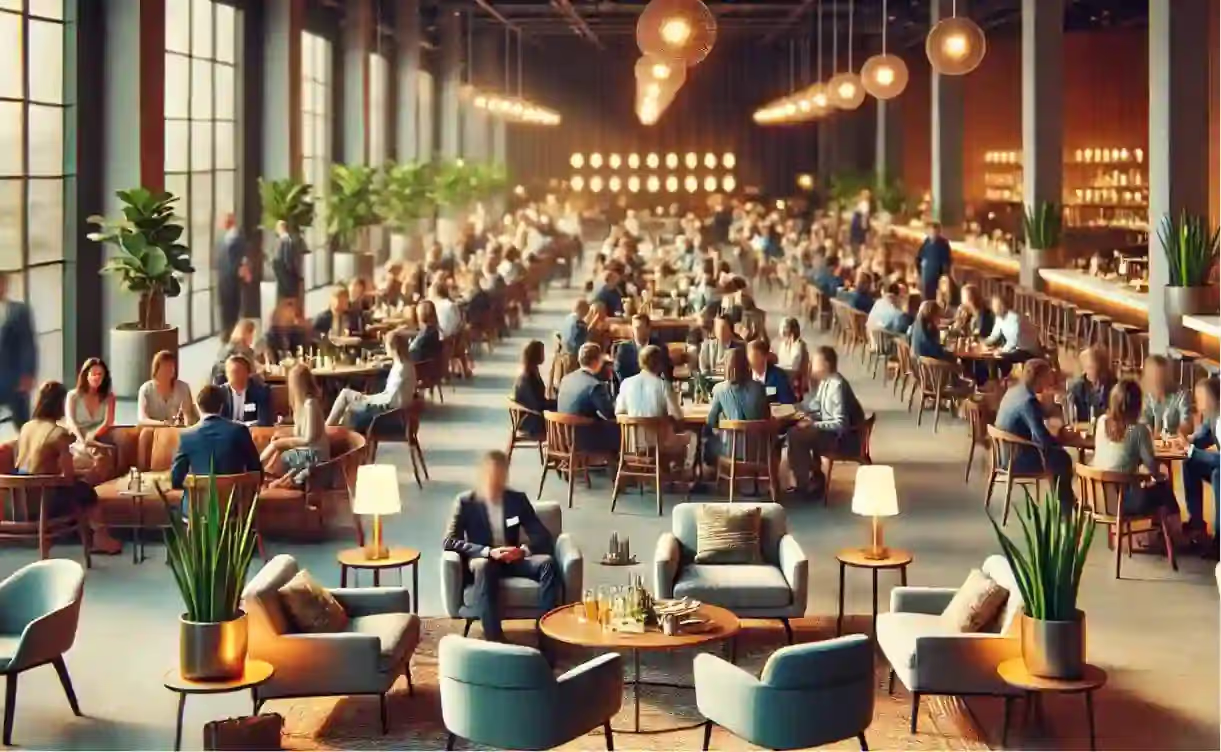
Providing cozy, informal spaces helps attendees feel at ease, creating a natural setting for conversations to flow without the pressure or formality that can make networking feel like work rather than pleasure. Comfortable seating arrangements with sofas that encourage relaxed postures, armchairs positioned to facilitate conversation, and communal tables that allow groups to naturally expand or contract as people join or leave discussions invite participants to relax and chat in ways that rigid theater seating or standing-only spaces simply cannot achieve. The use of warm lighting that flatters faces and creates intimacy rather than harsh fluorescent overhead lighting, soft background music at volumes that provide ambient sound without forcing people to shout, and aesthetically pleasing decor that gives people something to comment on enhances the ambiance, making these areas more inviting and encouraging longer stays. Adding refreshments, such as coffee stations with quality beverages that give people a reason to visit the space, or light snacks that provide convenient excuses to linger and perhaps offer something to someone nearby as a conversation opener, encourages people to spend more time in these areas, increasing opportunities for interaction that might not happen if people simply passed through quickly on their way to sessions.
Consider also the psychology of seating arrangements—circular or L-shaped configurations promote conversation by allowing eye contact and equal positioning, while straight rows create barriers to interaction. Interior design research shows that removing physical barriers like high-backed furniture or solid dividers makes spaces feel more approachable, while strategic partial barriers like plants or decorative screens can create intimacy within larger spaces without complete isolation. Temperature control matters more than most organizers realize, with rooms that are too warm making people drowsy and disengaged while overly cold spaces cause discomfort that encourages people to leave quickly rather than settling in for conversations. Acoustics also significantly impact networking comfort—spaces with too much echo make conversations difficult and exhausting, while appropriate sound dampening through ceiling tiles, carpeting, or decorative fabric panels creates conditions where people can converse at normal volumes without competing with overwhelming ambient noise.
2. Dedicated Networking Zones
Designating specific areas for networking ensures that attendees have a clear and purposeful space to connect, signaling that networking is valued and providing permission for people who might otherwise feel awkward about initiating conversations to engage actively. These zones can include industry-specific tables clearly marked with signage to help people find relevant contacts quickly, interest-based clusters organized around topics like "AI in Healthcare" or "Sustainable Supply Chains" that give people immediate conversation topics, or thematic networking corners such as "First-Time Attendees" or "Career Changers" that reduce anxiety by bringing together people facing similar situations. Providing conversation starters—such as icebreaker questions displayed on screens or printed on table cards that give people something to discuss beyond awkward small talk—can further ease the process of initiating discussions, particularly for people who struggle with the social aspects of networking. Name tags with color-coded indicators such as different colors for industries, job functions, or experience levels, or even stickers indicating interests like "Looking to Hire," "Seeking Mentor," or "Open to Collaboration" can also make it easier for participants to identify relevant contacts at a glance rather than engaging in multiple dead-end conversations before finding compatible networking partners.
Consider implementing a "host" system where designated volunteers or staff members circulate through networking zones, introducing people who appear to be standing alone or who might benefit from knowing each other. This facilitation removes the burden from attendees to constantly initiate cold approaches, while helping overcome the common problem of small established groups that are difficult for newcomers to break into. Social facilitation research demonstrates that having designated connectors dramatically increases networking satisfaction, particularly for first-time attendees or those less confident in their social skills. Physical elements like height-adjustable tables that accommodate both sitting and standing preferences, charging stations that give people reasons to congregate in specific areas, and interesting visual elements like live artistic demonstrations or product displays provide focal points around which conversations can naturally form.
3. Interactive Installations
Incorporating interactive elements encourages engagement and acts as a natural icebreaker by giving people shared experiences to discuss and collaborative activities to participate in together. Digital screens with real-time polls that display aggregate results spark conversations like "I can't believe 60% of us struggle with the same problem," interactive whiteboards where attendees can share ideas, challenges, or goals create visual manifestations of community interests, and participatory art installations where people collectively contribute to something larger invite interaction in lower-stakes, creativity-focused ways. A "Networking Wall" or "Connection Board" where participants can post their interests, collaboration needs, challenges they're facing, or simply fun facts about themselves using sticky notes or index cards is another effective tool for sparking discussions, allowing people to browse and identify potential connections before approaching someone, reducing the anxiety of blind introductions. These installations not only make the event space visually engaging but also serve as conversation catalysts that provide natural openings like "I saw your note about needing supply chain partners" rather than forcing awkward "So, what do you do?" exchanges that can feel simultaneously invasive and banal.
Gamification strategies can transform networking from obligatory task to enjoyable activity through elements like scavenger hunts requiring people to find and converse with individuals meeting certain criteria, networking bingo where completing cards requires meeting people from different industries or with specific expertise, or point systems that reward both quantity and quality of connections with prizes or recognition. These playful approaches particularly appeal to younger professionals while reducing networking anxiety across age groups by providing structure and purpose beyond simply "meeting people." Photo opportunities—whether elaborate branded installations, whimsical props, or simply well-designed spaces—create natural congregating points and give people souvenirs they'll share on social media, extending your event's reach while providing organic reasons for small groups to form around shared photo-taking activities.
4. Flow Optimization
A well-designed event layout should promote movement and interaction while preventing bottlenecks that create frustration, reduce circulation, and cause people to miss networking opportunities in less-traveled areas. Strategic placement of key areas—such as food stations positioned throughout the venue rather than concentrated in one location, exhibit booths arranged to create natural traffic patterns, and seating arrangements that don't create dead ends—ensures that attendees naturally circulate through the space rather than remaining in one spot or following a single path that leaves some areas deserted. Avoiding overcrowded areas through capacity management and ensuring clear pathways with adequate width for people to pass without awkwardly squeezing past each other can make it easier for people to navigate and find new networking opportunities without feeling frustrated or exhausted by constant physical jostling. Creating designated "breakout" spaces near main event areas but visually and acoustically separated allows for private or small-group discussions where people can dive deep into topics introduced during formal programming, fostering deeper connections that might not develop in the busier main areas.
Consider traffic flow patterns using principles from retail design which has long understood how spatial arrangement influences movement and behavior. Right-hand bias means most people naturally turn right when entering spaces, potentially leaving left areas underutilized unless you deliberately create attractions there. The "decompression zone" immediately inside entrances should be kept clear of important elements since people are still orienting themselves and not paying full attention. Strategic placement of amenities creates natural circulation—perhaps placing coffee in one area and restrooms in another, requiring people to traverse the space and encounter different networking opportunities along the way. Sightlines matter too—people are drawn toward what they can see, so interesting visual elements deep in the space pull people through while solid barriers or blank walls create dead zones people unconsciously avoid. Working with professional designers or event space planners helps create layouts that unconsciously guide attendee behavior toward your networking goals while feeling natural rather than manipulative.
Structured Networking Sessions: Breaking the Ice

Author: Sophie Bennett;
Source: isnvenice.com
While organic networking is valuable and some attendees thrive in unstructured environments, structured sessions provide a focused approach to building connections that many participants deeply appreciate, particularly those who find traditional networking anxiety-inducing or frustrating. These sessions are especially beneficial for attendees who may feel shy or uncertain about initiating conversations, for first-time event attendees unfamiliar with the community, for individuals whose natural communication styles don't align with typical networking situations, or for anyone who has limited time and wants to maximize connection efficiency. By offering guided formats, event planners can create an inclusive environment where meaningful interactions happen naturally even for people who would struggle in purely organic settings. Here are some effective structured networking formats that have proven successful across various event types:
1. Speed Networking
Inspired by speed dating, speed networking allows participants to engage in short, timed conversations—typically 3-7 minutes each—with multiple attendees in quick succession, ensuring that everyone meets a diverse range of individuals within a short timeframe. This format's efficiency appeals to busy professionals who want to maximize connection potential without spending hours hoping for organic encounters that may never materialize. At the end of the session, attendees can exchange contact information with those they'd like to continue speaking with, and many events provide matching forms where participants indicate who they'd like to reconnect with, facilitating follow-up. To enhance the experience, organizers can provide conversation prompts or themes to guide discussions such as "What's the biggest challenge facing your industry right now?" or "What brought you to this event?" preventing awkward silences while ensuring conversations go beyond superficial pleasantries. Speed networking research shows this format generates more initial connections than unstructured networking, though follow-through on these connections requires deliberate effort after the event to convert brief meetings into meaningful relationships.
The key to successful speed networking is thoughtful implementation rather than simply throwing people together randomly. Consider using registration data to create compatible pairings rather than pure randomness, matching based on complementary roles (buyers with sellers, mentors with mentees), shared interests, or deliberate diversity to expose people to perspectives they wouldn't naturally encounter. Clear instructions and timing are essential—provide a loud, non-jarring signal when it's time to switch partners, designate one row to remain seated while the other moves, and consider providing brief breaks every five rounds to prevent fatigue. Some events add creativity through themed speed networking—perhaps "Problem-Solution Speed Networking" where people pitch challenges and others suggest solutions, or "Skill Swap Speed Networking" where people exchange expertise. The structured nature paradoxically creates more authentic connections for many people than unstructured events because it removes anxiety about whether approaching someone is appropriate and eliminates the awkwardness of extracting yourself from conversations that aren't productive.
2. Roundtable Discussions
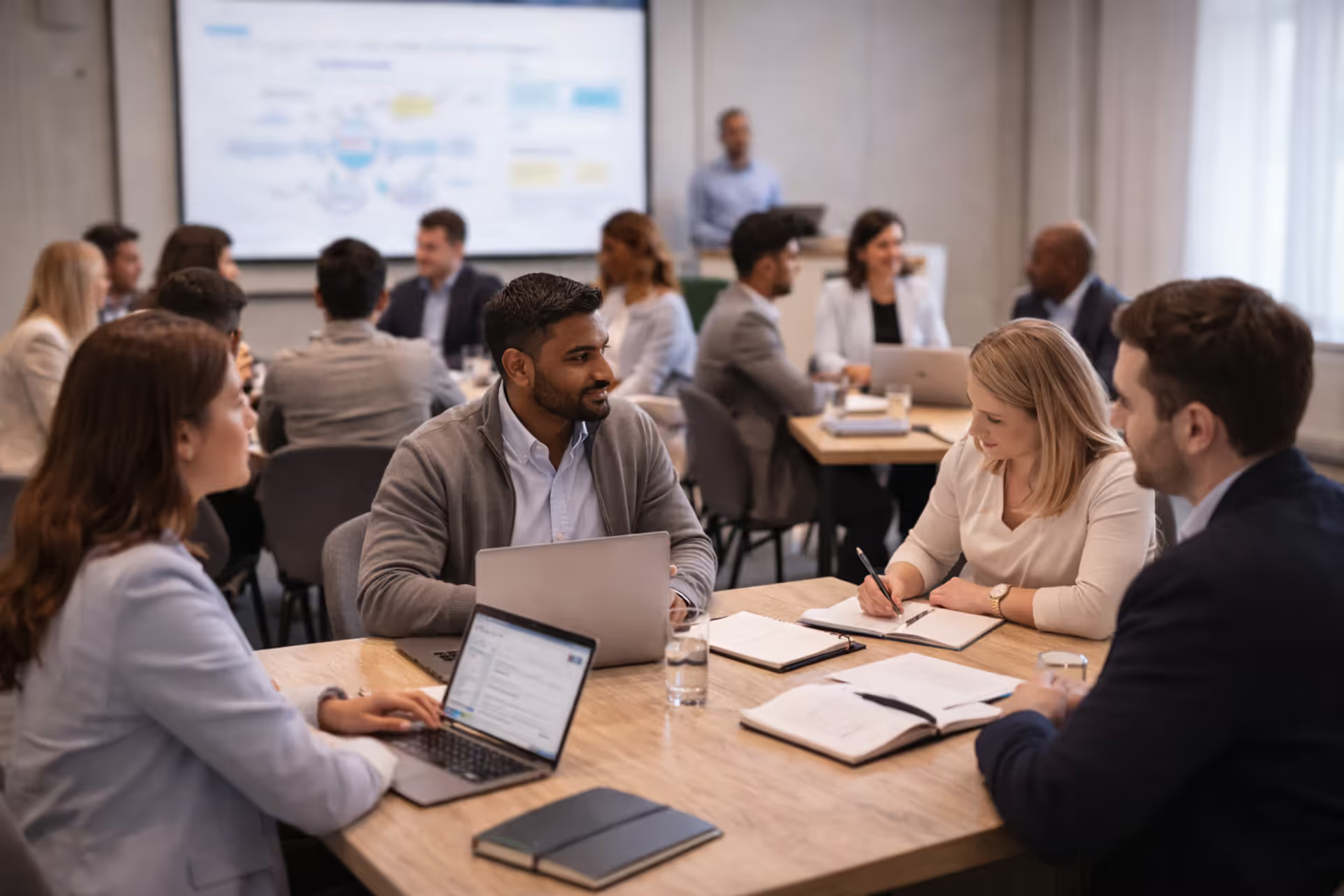
Roundtables bring together small groups of attendees—typically 8-12 people—to discuss specific topics, industry trends, shared challenges, or questions raised during keynotes, creating intimate environments where deep discussion can occur. Each table is moderated by a facilitator who ensures that the discussion remains engaging and balanced, preventing any individual from dominating while encouraging quieter participants to contribute, and keeping conversations focused on topics of mutual interest rather than devolving into tangential discussions. This format is ideal for knowledge-sharing where participants learn from diverse perspectives, collaboration where people identify potential partnerships, and deeper networking among professionals with similar interests who might later connect individually to continue conversations begun at the table. Participants leave not only with valuable insights gained from collective expertise but also with meaningful new connections to people they've now engaged with substantively rather than superficially, creating the foundation for relationships that extend beyond the event.
When implementing roundtables, topic selection is crucial—choose subjects specific enough to attract people with genuine expertise or interest, but broad enough to allow diverse perspectives and avoid excluding people who feel underqualified. Consider using registration data to allow attendees to pre-select topics they're interested in, ensuring each table has people who chose to be there rather than being randomly assigned. Facilitator quality makes or breaks roundtable success—these individuals need skills in group facilitation, subject matter knowledge sufficient to ask intelligent questions, and awareness of group dynamics to ensure balanced participation. Facilitation training resources help develop these skills, which go beyond simply liking to talk to requiring genuine ability to draw out others while managing difficult personalities. Providing discussion guides with suggested questions, potential frameworks for analyzing topics, or relevant background information helps facilitators prepare while ensuring some consistency in quality across different tables.
3. Panel-Led Q&A with Networking Breaks
A great way to combine learning with networking is by hosting panel discussions followed by dedicated networking breaks, creating natural conversation topics and allowing attendees to process ideas together. After listening to industry experts share insights, attendees are given time to connect with speakers and fellow participants who heard the same content, with fresh ideas and potentially provocative opinions providing immediate material for discussion. Encouraging panelists to engage with attendees in a casual setting—such as a designated "Meet the Speaker" area with seating and perhaps light refreshments—creates a seamless transition from passive listening to active discussion, while demonstrating that speakers value audience connection and aren't simply flying in to deliver remarks before disappearing. This accessibility can be a significant draw for attendees who view access to expert speakers as a primary event benefit beyond the content itself.
Consider implementing "conversation tables" or "discussion corners" organized by panel topics, where attendees can continue debating ideas raised during presentations with others who found the same topics compelling. Place facilitators or topic experts at these tables to anchor discussions and ensure conversations don't stall. Timing matters significantly—if networking breaks are too short, conversations just get started before people must move on to the next session, creating frustration rather than connection. However, overly long breaks can lead to dead time where people disengage completely. Research by event planning associations suggests 20-30 minute networking breaks after 60-90 minute content sessions strike the right balance, giving adequate time for substantial conversations while maintaining event momentum. Providing discussion questions related to panel content on slides, handouts, or table cards can jumpstart conversations, particularly for people who aren't naturally inclined to approach strangers to discuss complex topics without structure.
4. Interactive Workshops
Workshops that require group participation, problem-solving, or hands-on activities naturally foster networking by creating shared experiences that bond participants in ways pure conversation often cannot. Whether it's a collaborative brainstorming session where people work together to generate solutions for industry challenges, a hackathon where technical professionals combine skills to build prototypes, or a creative team-building exercise that might feel tangential to the event's explicit purpose but creates the psychological safety and familiarity that enables networking, working together toward a shared goal strengthens connections between attendees through cooperative effort rather than competitive positioning. These experiences create lasting impressions, as people bond over shared learning and accomplishments in ways that exchange of business cards simply cannot replicate, with the memories of creating something together serving as foundation for ongoing relationships.
The most effective workshop formats for networking deliberately mix groups rather than allowing people to cluster with existing acquaintances, pushing people outside comfort zones in supportive rather than threatening ways. Consider using random assignment for initial groupings, then allowing people to choose new teammates for subsequent activities, combining the benefits of forced diversity with respect for emerging connections. Collaborative learning research demonstrates that people who work together on challenging tasks develop more robust relationships than those who simply socialize, as collaborative problem-solving requires vulnerability, mutual respect, and complementary contributions that reveal character and competence more effectively than small talk. Building in reflection time—perhaps five minutes at the end where groups discuss not just what they created but how they worked together—helps participants recognize the networking value of the experience rather than focusing purely on outputs.
Leveraging Technology to Enhance Networking
Technology has revolutionized networking, making it easier for attendees to connect before, during, and after events in ways that complement rather than replace face-to-face interactions. Integrating the right tools into your event design can significantly enhance the networking experience by reducing friction, increasing relevant connections, and extending networking beyond the physical event boundaries. However, technology should enhance rather than replace human connection—the goal isn't making networking completely digital but using technology to make in-person interactions more efficient, targeted, and likely to result in meaningful relationships.
— Sophie Bennett
1. Event Apps
Custom event apps developed using platforms like Whova, EventMobi, or Attendify allow attendees to create profiles highlighting their background, interests, and networking goals, browse participant lists to identify relevant contacts before the event even begins, and schedule one-on-one meetings during breaks or designated networking times, eliminating the inefficiency of hoping to bump into the right people randomly. Features like matchmaking algorithms suggest connections based on shared interests or complementary goals, streamlining the networking process by doing upfront research that attendees would otherwise need to conduct manually. These apps can also facilitate conversation through chat features that allow people to introduce themselves virtually before meeting in person, reducing the anxiety of cold approaches while ensuring that when people do meet face-to-face, they already have context and shared ground.
The most sophisticated event apps include features like AI-powered connection recommendations that analyze not just stated preferences but behavior patterns to identify potentially valuable connections attendees might not think to seek themselves, activity feeds showing what other attendees are interested in or discussing, leaderboards gamifying networking by tracking connections made or sessions attended, and integrated calendar tools that sync meeting requests across participants' schedules. Consider requiring or strongly encouraging attendees to complete detailed profiles before the event, perhaps offering incentives like priority session registration or prize drawings for completed profiles, ensuring the database is robust enough to enable meaningful matching. Provide profile-building guidance—many people struggle with self-presentation, so templates or examples help them create profiles that attract relevant connections. Post-event, these apps become valuable for following up on connections, accessing shared resources, or continuing discussions in ongoing forums, extending networking value beyond the event itself.
2. Virtual Networking Platforms
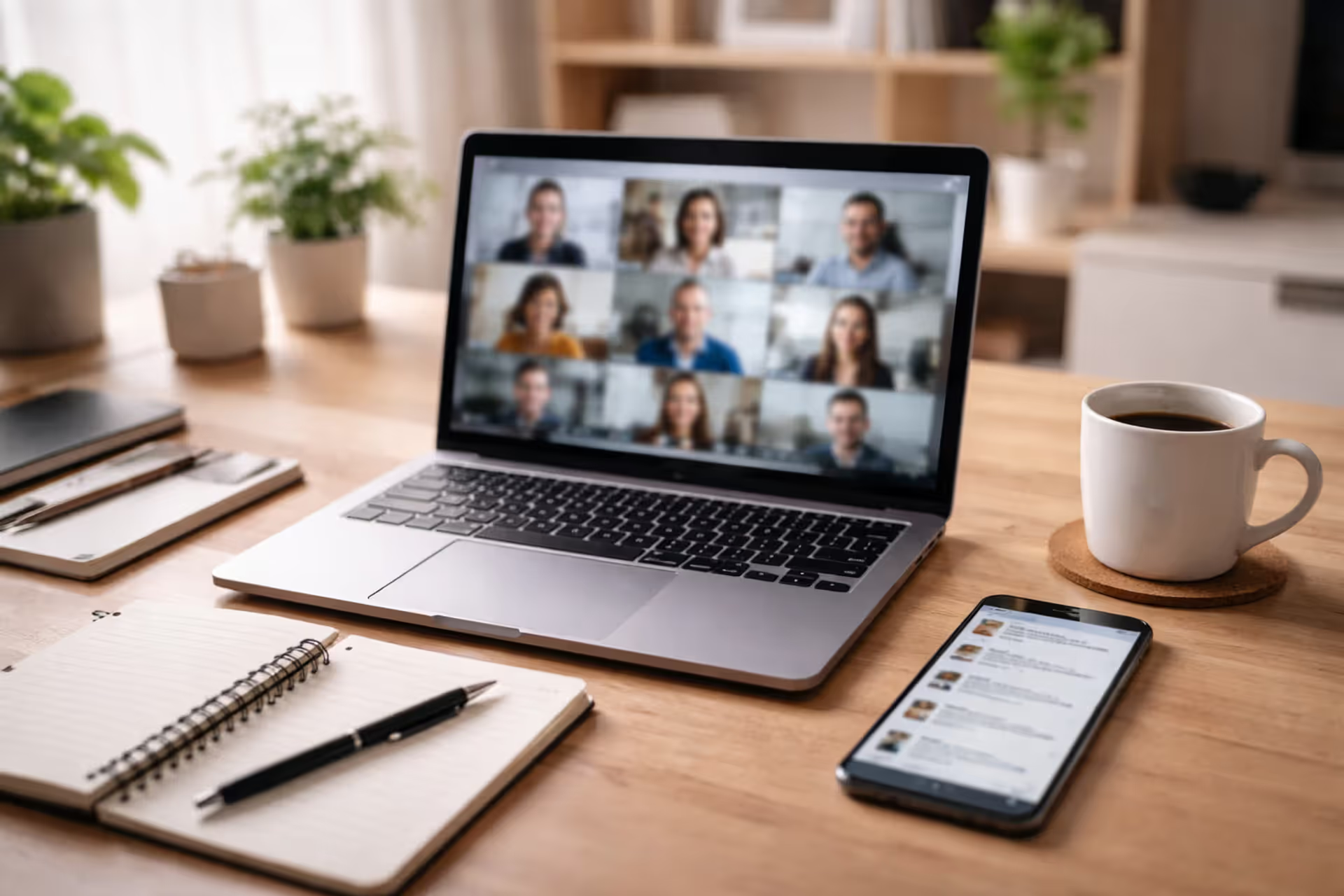
For hybrid or virtual events, platforms like Zoom, Hopin, or Airmeet provide interactive features such as breakout rooms where small groups can have focused conversations, virtual lounges that mimic informal gathering spaces, and chat forums organized by topic or interest that allow asynchronous discussions. These tools create opportunities for meaningful interactions, even in a digital environment, by replicating the spontaneity and intimacy of in-person networking within technological constraints. The best virtual platforms include "spatial" features that simulate physical movement through a venue, allowing people to navigate between different areas and encounter different conversation opportunities as they would at physical events, creating serendipity that pure video conferencing lacks.
Successful virtual networking requires deliberate facilitation—without the ambient social pressure of physical presence, people are more likely to leave if connections don't form immediately. Consider implementing virtual "speed networking" with automated room assignments and timers, hosting "table topics" where people can join topical discussions that appeal to them, or creating industry-specific networking rooms that people flow between as interests dictate. Encourage video-on participation through gentle prompting and by modeling from facilitators, as video dramatically improves connection quality compared to audio-only or chat interactions. Provide clear instructions since many attendees, particularly those less familiar with technology, may struggle with platform navigation. Consider offering practice sessions before the event where people can test technology and get comfortable with features in low-stakes environments, preventing technical difficulties from derailing networking attempts during the actual event.
3. Smart Badges and Wearable Technology
Wearable technology such as RFID-enabled smart badges or NFC-enabled wearables available through providers like Intellitix or Eventbrite facilitates seamless information exchange without the awkwardness of business card exchanges or manual data entry. Attendees can tap their badges together to instantly share contact details, social media profiles, or customized information they've chosen to share, with data automatically captured in event apps or CRM systems for easy follow-up. This technology can also track session attendance, provide access control, enable cashless payments at food or merchandise areas, or facilitate gamification by automatically recording networking interactions and assigning points toward prizes or recognition, all while reducing friction and allowing people to focus on conversation rather than transactional mechanics of information exchange.
Beyond simple contact sharing, advanced implementations include badges that light up or vibrate when matching professionals are nearby based on pre-set preferences, creating ambient awareness of potential valuable connections without requiring constant app checking. Some systems generate heat maps showing where high networking activity occurs, helping organizers identify successful spaces and formats. However, privacy concerns require careful consideration—provide clear information about what data is collected and how it's used, give attendees control over their sharing preferences, and comply with regulations like GDPR for international events. Privacy considerations for event technology provide guidance on balancing innovation with ethical data practices, ensuring technology enhances rather than compromises attendee experience.
4. Live Polls and Interactive Q&A
Engage attendees through live polls using tools like Slido, Mentimeter, or Poll Everywhere, interactive Q&A sessions where audience questions drive discussion, and audience voting that gives participants agency in shaping content. These features encourage participation and provide opportunities for shared experiences that become discussion topics, with people bonding over surprising poll results or particularly insightful questions from fellow attendees. When someone asks a great question, it provides an organic opening for others interested in the same topic to connect afterward, while disagreement about poll results can spark productive debates that lead to relationship formation. Making these tools accessible through multiple channels—event apps, SMS, web browsers—ensures participation regardless of technical comfort levels or device availability.
Hosting Social Events to Build Relationships
Author: Sophie Bennett;
Source: isnvenice.com
Networking doesn't have to be confined to formal sessions or professional settings—some of the most valuable connections form in relaxed, social environments where people let their guards down and relate as human beings rather than purely as professional contacts. Social events provide a relaxed setting where attendees can bond over shared experiences, shared humor, or simply the break from constant professional positioning that formal networking sometimes requires. Consider incorporating the following into your event program to create diverse networking opportunities that accommodate different comfort levels and preferences:
1. Welcome Receptions
Kick off your event with a casual reception that includes light refreshments ranging from beverages to passed hors d'oeuvres and entertainment such as live music at conversational volumes or interactive elements like local artisans demonstrating crafts. This sets the tone for the event as friendly and accessible while encouraging attendees to start mingling early before formal programming creates competing demands on attention. Welcome receptions are particularly valuable for breaking down initial barriers—once people have met casually over drinks, they're more comfortable approaching each other in other contexts throughout the event. Consider incorporating icebreaker activities into welcome receptions, such as trivia about the event location, team challenges that require forming groups with strangers, or simply conversation cards at tables that prompt interesting discussions beyond typical professional small talk.
2. Themed Dinners or Cocktail Hours
Themed social gatherings add an element of fun and creativity to networking, transforming what could be ordinary meals into memorable experiences that give people stories to share and bonds to form. Consider incorporating local cuisine that showcases the event location and gives out-of-town attendees authentic experiences, cultural themes that celebrate diversity and educate participants about different traditions, or interactive elements like cooking classes where small groups work together to prepare dishes under chef guidance, or mixology sessions where participants learn cocktail preparation while socializing. These experiential elements create natural conversation topics beyond the usual professional discussions, allowing people to connect over shared discovery and enjoyment while the collaborative nature of activities brings people together around common goals in low-pressure environments.
3. Team-Building Activities
Group activities such as escape rooms requiring collaboration and problem-solving, trivia games creating friendly competition and revealing diverse knowledge, outdoor adventures like guided hikes or group sports bringing people together through physical challenges, or creative workshops where people make art or craft objects together create shared memories and foster camaraderie among participants that extends beyond the activity itself. These bonding experiences are particularly valuable for breaking down hierarchical barriers—senior executives and junior staff interact more naturally when solving puzzles together than in formal professional contexts. Choose activities that are inclusive and accessible to participants with varying physical abilities, comfort levels, and interests, ensuring no one feels excluded or uncomfortable. Team building resources provide countless options suitable for different group sizes, industries, and objectives.
4. Entertainment and Performances
Live music creating ambiance without overwhelming conversation, comedy acts providing shared laughter and relaxation, or cultural performances showcasing local artists and traditions provide a relaxed atmosphere for attendees to connect while enjoying the entertainment together. These elements transform events from purely transactional networking into holistic experiences that people genuinely enjoy and remember fondly, making them more likely to return to future events and view the organization positively. Entertainment also provides natural conversation openings—discussing the performance gives people easy topics to break the ice, while the shared experience creates common ground even among people who otherwise have little in common professionally. Consider balancing entertainment that requires full attention with background elements that allow simultaneous conversation, providing options for different preferences and energy levels throughout multi-day events.
Measuring the Success of Networking Opportunities
To continuously improve networking experiences at events, it's essential to measure their success using both quantitative metrics that provide objective data and qualitative feedback that captures nuances and individual experiences. A combination of approaches helps assess the impact of networking activities, identify areas for improvement, and ensure attendees derive value from their interactions rather than just attending out of obligation or habit. Here are key ways to evaluate the effectiveness of networking opportunities, moving beyond simply tracking attendance to understanding genuine impact:
1. Surveys and Feedback Forms
Gather direct insights from attendees by distributing post-event surveys using tools like SurveyMonkey or Google Forms, ideally sent within 24-48 hours while experiences remain fresh in participants' minds. Ask participants about their networking experience broadly, the effectiveness of structured sessions specifically, and any challenges they faced in making connections that you might address in future events. Open-ended questions can provide rich qualitative feedback revealing concerns or successes you might not have anticipated, while rating scales help quantify satisfaction levels that can be tracked across events to measure improvement. Consider asking questions like: Did you meet valuable connections that you anticipate maintaining contact with? Which networking formats did you find most effective and why? What improvements would enhance networking opportunities in future events? How many meaningful connections did you make, and how does this compare to your expectations coming in? Would you recommend this event to colleagues specifically because of networking opportunities?
Beyond immediate post-event surveys, consider following up 3-6 months later to assess whether event connections evolved into actual business relationships, collaborations, or other valuable outcomes. This longer-term perspective reveals whether your networking design creates lasting relationships versus superficial interactions that don't survive beyond the event itself. Track Net Promoter Score specifically related to networking—would attendees recommend the event primarily for networking value?—as this metric predicts future attendance and overall event health better than generic satisfaction ratings.
2. Attendance Metrics
Tracking attendance at networking sessions, roundtable discussions, social events, and optional networking activities provides a clear indicator of interest and engagement that helps identify which formats resonate with your specific audience. Comparing the number of registered attendees to actual participation helps assess which formats were most appealing and which fell flat despite organizer enthusiasm. If certain networking events had low turnout, it may suggest the need for a different approach, better promotion explaining value and expectations, improved timing that doesn't compete with other priorities, or simply recognition that this particular format doesn't work for your audience. Analyze patterns—does attendance drop for early morning networking sessions, suggesting they should be scheduled differently? Do certain topics draw crowds while others languish? This data informs future design decisions.
Consider also measuring dwell time—how long people stay in networking spaces versus simply passing through on their way elsewhere. Security footage or staff observation can reveal whether your lounge areas are thriving hubs where people linger or ghost towns people avoid. Heat mapping technology shows where attendees congregate and which areas remain empty despite your intentions, revealing disconnects between planned and actual usage. Analytics platforms for events increasingly offer sophisticated tracking that shows not just attendance but engagement quality, though privacy concerns require transparent disclosure of monitoring practices.
3. Connection Analytics
For events using digital platforms or event apps, analytics can offer deeper insights into networking success through data that purely physical events struggle to capture. Data such as the number of messages exchanged between attendees, meetings scheduled through the platform, contact information shared via digital business cards, session discussion participation, and profile views revealing who is researching whom can reveal how actively attendees engaged with networking opportunities both during and after the event. Matchmaking features within event apps can also highlight the success rate of suggested connections—what percentage of recommendations resulted in actual contact, and of those, how many developed into ongoing relationships? This data helps refine matching algorithms while demonstrating return on investment for technology spending.
Advanced platforms track connection quality beyond simple counts—analyzing message content to distinguish substantive discussions from brief pleasantries, measuring response rates that indicate genuine interest versus perfunctory acknowledgment, and identifying super-connectors who serve as network hubs versus isolates who may need additional support. Network analysis tools can visualize the social structure emerging from your event, revealing cliques, central figures, and opportunities to better connect disparate groups in future events. However, balance data collection with privacy protection, clearly communicating what you're tracking and why, and giving participants control over their data sharing preferences.
4. Anecdotal Evidence and Success Stories
Personal testimonials from attendees who formed meaningful connections provide valuable qualitative feedback that numbers alone cannot capture, illustrating the human impact of successful networking in ways that resonate emotionally and compellingly. Encouraging participants to share their networking success stories—such as securing a business deal that originated from an event conversation, finding a mentor who has guided their career development, starting a collaboration that resulted in innovation neither party could have achieved alone, or simply feeling less isolated after meeting peers who understand their challenges—adds credibility to the event's impact while providing concrete examples of value that can be used in future marketing. These testimonials humanize data and help prospective attendees envision how networking might benefit them specifically.
Systematically collect success stories through post-event surveys, social media monitoring using event hashtags, follow-up interviews with selected attendees, or even video testimonials for marketing use. Create opportunities for attendees to share connections publicly—perhaps a "Connection Success Board" at multi-day events where people post notes about valuable contacts made, or social media campaigns encouraging story-sharing with specific hashtags. These stories not only provide marketing content but also validate and reinforce the networking culture you're trying to cultivate, encouraging others to engage more actively when they see peer success. Social proof research shows that visible examples of successful networking dramatically increase participation and effort, as people gain confidence that networking is worthwhile and achievable rather than wasted effort.
The Role of Event Planners in Crafting Networking Opportunities
Professional event planners play a crucial role in designing networking opportunities that align with your event's vision and goals while drawing on expertise that most organizers lack. Their expertise in layout design informed by research on environmental psychology and traffic flow, session planning that considers adult learning principles and engagement strategies, and technology integration that balances innovation with user-friendliness ensures that every aspect of the event supports meaningful interactions rather than leaving networking to chance or hoping it somehow happens organically. Skilled planners understand nuances that non-specialists might miss—like the importance of room temperature in encouraging lingering conversations, how ceiling height affects perceived intimacy and willingness to speak, or which personality types thrive in which networking formats, allowing them to design comprehensive experiences that work for diverse attendee populations.
Planners also bring valuable insights into attendee behavior developed through years of observation across hundreds of events, enabling them to create experiences that cater to diverse preferences while gently pushing people outside comfort zones in productive ways. They know, for example, that placing the bar across the room from the entrance forces circulation, that round tables encourage conversation while rectangular ones create hierarchy, and that providing activities (games, demonstrations, etc.) gives people who are uncomfortable with pure socializing something to do with their hands and something to talk about, reducing networking anxiety. By collaborating with a skilled event planner through organizations like Meeting Professionals International or International Live Events Association, you can elevate your event and provide participants with the tools and environments they need to build lasting connections rather than simply creating spaces and hoping networking happens.
The strategic value of professional planners extends to managing the countless details that enable smooth networking—ensuring adequate staffing to prevent long wait times at bars that cut into networking time, coordinating timing so sessions end with enough buffer for conversations to develop before the next commitment, managing technology so it enhances rather than distracts from connection, and troubleshooting problems quickly so attendees remain focused on relationship-building rather than logistical frustrations. Planners also often have extensive vendor networks, allowing them to recommend entertainment, caterers, technology providers, and other services specifically suited to networking goals rather than generic event services.
Conclusion: Elevating Events Through Meaningful Networking
Building meaningful networking opportunities is both an art and a science, requiring creativity and intuition alongside data analysis and systematic design. By understanding your audience deeply and designing experiences that match their actual needs rather than your assumptions, designing intentional spaces that unconsciously encourage interaction through environmental psychology principles, leveraging technology that enhances rather than replaces human connection, incorporating structured sessions that serve diverse comfort levels and preferences, and measuring outcomes rigorously to enable continuous improvement, you can create an environment where connections thrive naturally rather than feeling forced or transactional. These interactions not only enhance the attendee experience by making events genuinely valuable rather than just obligatory, but also contribute to the long-term success of your event as word spreads that meaningful networking consistently happens there.
Expert event planning services specialize in crafting customized networking solutions that align with your goals while incorporating best practices and innovations you might not discover independently. Whether you're hosting a corporate conference aimed at industry relationship-building, workshop focused on skill development and peer learning, or social gathering celebrating achievements while fostering community, the right approach to networking can transform your event from a series of activities into a platform for collaboration, growth, and lasting impressions that extend far beyond the final session. With thoughtful planning and innovative strategies informed by research on human behavior, technology capabilities, and evolving attendee expectations, your events can foster connections that endure long after the final curtain call, creating value that justifies attendance and establishes your event as an essential industry gathering rather than just another option competing for limited attention and budget.