
How to Find Networking Events That Match Your Career Goals
How to Find Networking Events?

Content
Most professionals waste hours scrolling through irrelevant event listings, only to attend gatherings where nobody shares their industry, seniority level, or professional interests. The problem isn't a shortage of events—it's that the best opportunities rarely appear in obvious places.
Finding the right networking events requires a deliberate system. You need to know where different types of gatherings are promoted, how to evaluate whether an event deserves your evening, and which platforms consistently surface opportunities aligned with your career trajectory. This guide walks through proven methods that working professionals use to build calendars filled with high-value connections.
Why Traditional Google Searches Miss the Best Opportunities
Typing "networking events near me" into Google yields predictable results: commercial conferences with $500 tickets, generic "business networking" mixers at hotel bars, and outdated listings from three years ago. The algorithm prioritizes websites with strong SEO, not necessarily events with the most relevant attendees.
Here's what basic search engines can't surface effectively:
Invitation-only gatherings promoted exclusively through private communities or email lists. Many senior-level meetups never receive public promotion because organizers want to maintain attendee quality through referrals.
Newly formed groups that haven't built search visibility yet. A product manager starting a monthly roundtable for SaaS professionals won't rank on Google for months, even if it's exactly what you need.
Industry-specific platforms that professionals in your field use but aren't household names. Engineers find events through GitHub and Stack Overflow communities; designers use Dribbble and Behance; writers discover opportunities through niche Slack channels.
Event discovery tips that actually work involve casting a wider net across specialized channels. Relying on a single search method guarantees you'll miss 70% of relevant opportunities in your area.
The most connected professionals in any field use 4-5 different discovery methods simultaneously. They've automated alerts, joined the right groups, and know which local institutions regularly host their target audience.
7 Platforms That Actually Work for Discovering Professional Meetups
Industry-Specific Event Aggregators
Every major industry has dedicated event calendars that general platforms don't touch. Marketing professionals check MarketingProfs and Content Marketing Institute calendars. Developers monitor conference lists on sites like Confs.tech and PaperCall.io. Healthcare workers use ACHE and specialty medical association calendars.
These aggregators matter because they're curated by people who understand your field. They filter out generic "business networking" noise and focus on gatherings where attendees speak your professional language.
How to find yours: Search "[your industry] + event calendar" or "[professional association] + upcoming events." Bookmark 2-3 that consistently list gatherings in your region or specialty. Many offer email digests that save you from checking manually.
Trade-off: These platforms excel at large conferences and established meetup series but often miss informal gatherings and newly launched groups.
LinkedIn Events and Groups
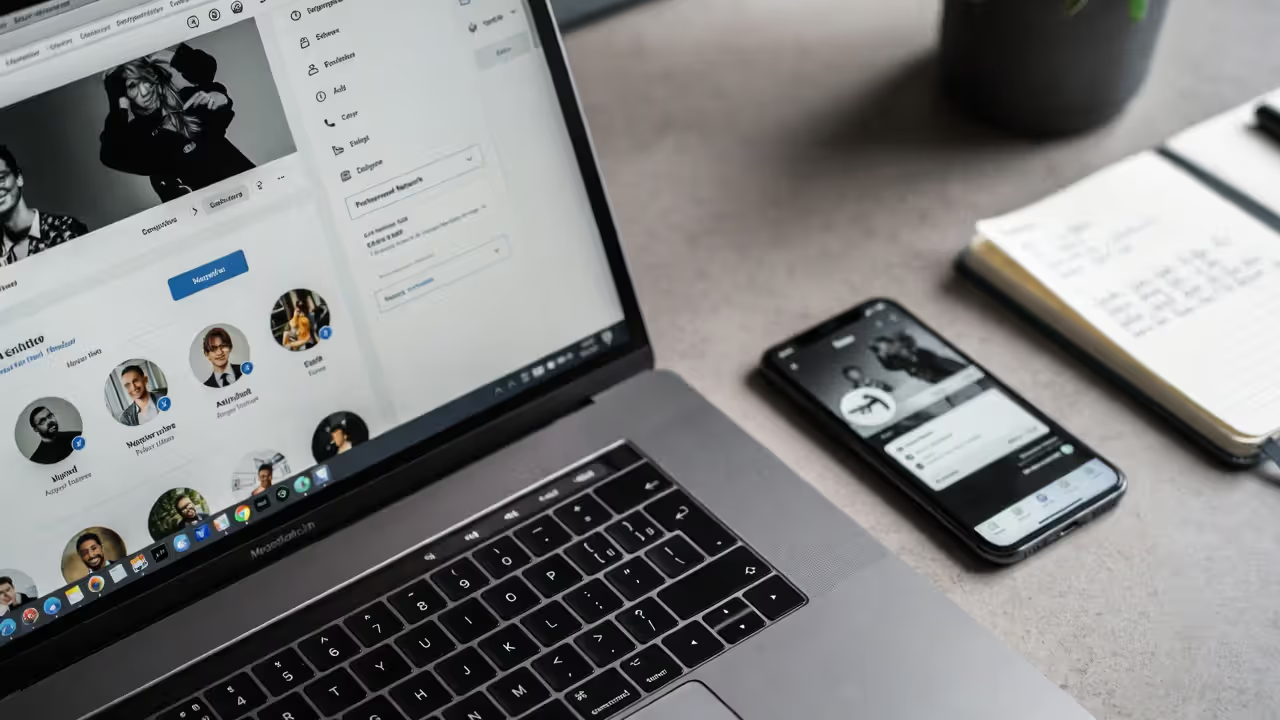
LinkedIn's Events tab remains underutilized despite hosting thousands of industry events search results. The platform's targeting works because organizers tag events with industries, job functions, and seniority levels—the same filters you'd use to find relevant attendees.
Start by joining 10-15 LinkedIn Groups related to your industry, role, and location. Group administrators frequently promote meetups exclusively to members before posting elsewhere. A "Chicago Product Managers" group will surface local gatherings weeks before they appear on general platforms.
Practical tip: Set your LinkedIn location accurately and enable event notifications. The algorithm suggests events based on your connections' RSVPs, which naturally filters for your professional circle.
Limitation: LinkedIn skews toward formal professional events. You'll find plenty of panel discussions and workshops but fewer casual after-work meetups.
Author: Nathan Brook;
Source: isnvenice.com
Eventbrite and Meetup Alternatives
Eventbrite and Meetup.com dominate event discovery, but their usefulness varies dramatically by location and industry. Both platforms work well for technology, entrepreneurship, and creative fields. They're less effective for finance, healthcare, or manufacturing networking.
Eventbrite strengths: Paid professional development events, workshops, and structured networking sessions. Use filters for "Business & Professional" categories and save searches for your city.
Meetup.com strengths: Recurring informal gatherings and hobby-adjacent professional groups. Search by keyword rather than category—"freelance writers" surfaces better results than browsing the "Career & Business" category.
Alternatives worth checking:
- Luma (luma.co): Growing fast among startup and tech communities, especially for invite-based events
- Partiful: Popular for younger professionals and creative industries
- Facebook Events: Still relevant for local business groups and chamber of commerce gatherings despite declining general usage
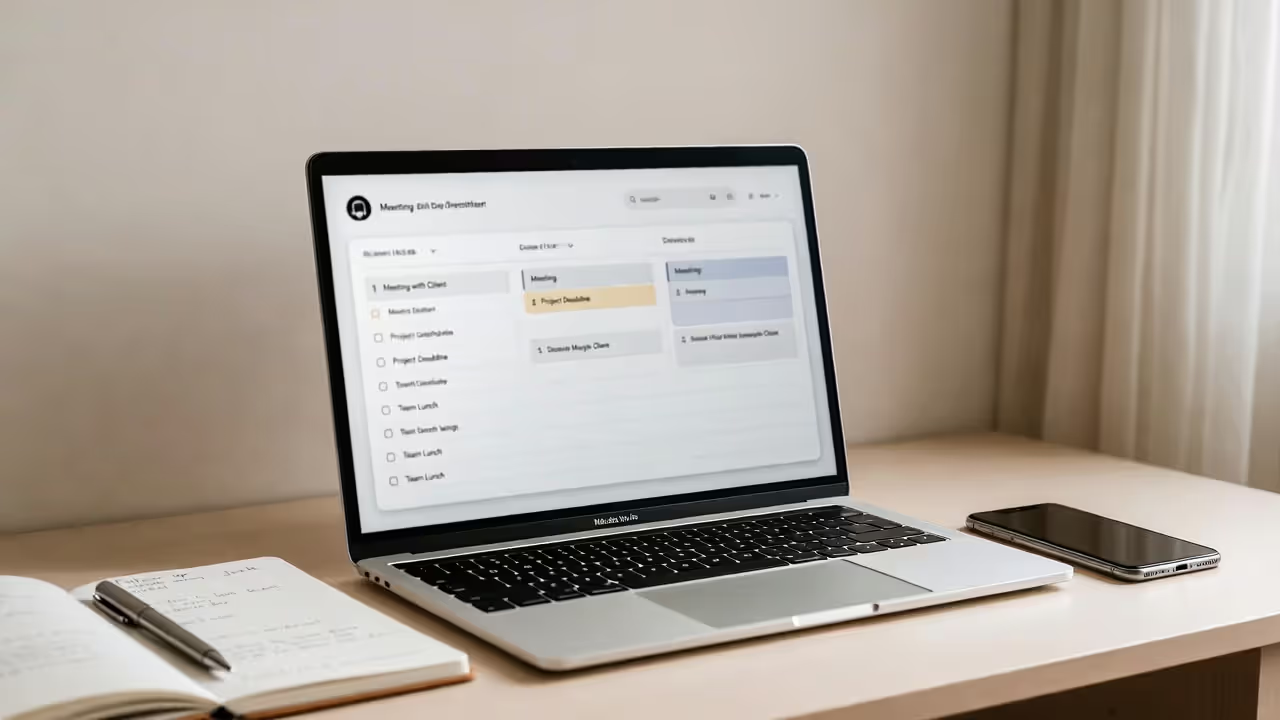
Set up saved searches on your two most relevant platforms and check weekly rather than daily. Event posting patterns cluster around Mondays and mid-month planning cycles.
| Platform Name | Best For | Cost | Geographic Coverage | Mobile App | Key Feature |
| LinkedIn Events | Corporate professionals, B2B industries | Free | Global (strong in major metros) | Yes | Industry/role filtering |
| Meetup.com | Tech, creative, entrepreneurship | Free to attend (organizers pay) | US/Canada/Western Europe | Yes | Recurring group meetups |
| Eventbrite | Paid workshops, professional development | Varies (free to $500+) | Global | Yes | Integrated ticketing |
| Luma | Startup/tech communities | Mostly free | US major cities | Yes | Invite-based discovery |
| Industry aggregators | Specialized fields (varies) | Free to browse | Depends on industry | Rarely | Curated by experts |
| Facebook Events | Local business groups, chambers | Mostly free | Strong local coverage | Yes | Existing social graph |
How to Tap Into Hidden Local Networking Opportunities
The highest-ROI networking often happens through institutions that don't primarily exist for networking. These organizations host regular gatherings where attendees share contextual bonds beyond "we both want to network."
Chamber of Commerce events attract business owners and senior decision-makers. Membership costs $200-800 annually but includes monthly mixers, industry-specific roundtables, and ribbon-cutting ceremonies. These gatherings skew toward local service businesses—lawyers, accountants, real estate professionals, and consultants who work with local clients.
Coworking spaces run member events but often allow non-members to attend for $10-25. WeWork, Industrious, and independent spaces host speaker series, skill-shares, and happy hours. Check "events" pages on coworking space websites in your city, even if you don't work there.
University alumni networks provide built-in commonality. Most universities run local chapters that organize quarterly events. You don't need to attend every "all-alumni mixer"—look for affinity groups like "Alumni in Tech" or "Healthcare Alumni Network" that filter by industry.
Professional associations operate at national and local chapter levels. National conferences get attention, but local chapter meetings happen monthly and cost $20-40 per event. The American Marketing Association, Project Management Institute, and hundreds of industry-specific groups run local programming.
Pro tip: Email local chapter presidents directly (their contact info is usually on chapter websites) and ask about upcoming events. You'll often receive personal invitations to gatherings not yet publicly posted.
Library and community center business programs fly completely under the radar. Many public libraries host "Business After Hours" series, entrepreneur meetups, and skill-building workshops—often free. Check your city's library system events calendar under "business" or "career."
These local networking ideas consistently outperform generic networking events because attendees share context. Alumni events mean you already have university connection; chamber events mean you're both invested in the local economy; coworking events mean you likely work in similar modern industries.
Filtering Events Worth Your Time: 5 Red Flags vs. Green Flags
Not every networking opportunity deserves three hours of your evening plus travel time. Experienced networkers evaluate events before committing using these criteria:
Red flag: Vague event descriptions like "come network with professionals" without specifying industries, roles, or topics. These attract random crowds where finding relevant connections becomes needle-in-haystack work.
Green flag: Specific attendee profiles mentioned—"for marketing directors at B2B SaaS companies" or "freelance designers working with e-commerce clients." Narrow targeting means higher relevance density.
Red flag: Organizers who've never run events before and provide no information about their background. First-time organizers aren't automatically bad, but lack of transparency about who's hosting suggests poor planning.
Green flag: Established organizers with track records. Check if they run regular events, read past attendee comments, or see if respected professionals in your network have attended previous editions.
Red flag: "Speed networking" or "everyone gets 60 seconds to pitch" formats. These create transactional atmospheres where people collect business cards without building actual relationships. Career networking works better through substantive conversations than rapid-fire introductions.
Green flag: Structured activities that facilitate natural conversation—panel discussions with Q&A, roundtable discussions on specific challenges, or workshops where attendees collaborate. Format shapes outcomes.
Red flag: Events charging $75+ without clear value propositions. High prices aren't inherently wrong, but you should know exactly what justifies the cost—notable speakers, curated attendee lists, included meals, or professional development credits.
Green flag: Transparent value breakdown. Good event pages explain who attends, what you'll learn or discuss, and what's included in ticket prices.
Red flag: No information about expected attendance size or past turnout. A "networking event" with 200 people plays very differently than one with 25. Large events favor extroverts and require different strategies than intimate gatherings.
Green flag: Attendance expectations clearly stated. Knowing whether to expect 15, 50, or 150 people helps you prepare mentally and decide if the format matches your networking style.
Rule of thumb: If an event description doesn't answer "who attends," "what we'll discuss," and "how it's structured," email the organizer with those questions. Their response quality tells you everything about event quality.

Author: Nathan Brook;
Source: isnvenice.com
Setting Up Automated Event Alerts for Your Industry
Manually checking multiple platforms weekly becomes unsustainable. Automation ensures you never miss relevant opportunities while minimizing time investment.
Google Alerts for industry events search: Create alerts for phrases like: - "(Your city) + (your industry) + networking" - "(Your industry) + conference + (your region)" - "(Professional association name) + events"
Set frequency to "weekly" rather than "as-it-happens" to avoid notification fatigue. Google Alerts catch blog posts, news articles, and website updates announcing events that might not appear on major platforms.
Newsletter subscriptions: Most professional associations, coworking spaces, and event organizers run email newsletters. Create a dedicated email folder for "Event Newsletters" and review it weekly. This beats visiting 15 different websites.
Subscribe to: - Local business journals (they compile weekly event roundups) - Professional association newsletters - Coworking space mailing lists - Chamber of Commerce updates - Industry-specific media outlets
Platform-specific alerts: Enable notifications within platforms you've identified as relevant: - LinkedIn: Follow event organizers and turn on notifications for groups - Meetup: Save searches and enable weekly email digests - Eventbrite: Follow organizers who consistently run quality events
Author: Nathan Brook;
Source: isnvenice.com
RSS feeds: If you use an RSS reader (Feedly, Inoreader), add feeds from event calendar pages of key organizations. This centralizes updates from multiple sources into one dashboard.
Calendar integrations: Some platforms (LinkedIn, Eventbrite) let you sync events directly to Google Calendar or Outlook. Syncing creates automatic reminders and helps visualize scheduling conflicts.
Time investment: Initial setup takes 90 minutes. Weekly maintenance requires 15 minutes to scan alerts and newsletters. This system surfaces 10-15 relevant events monthly compared to 2-3 you'd find through occasional manual searches.
What to Do When No Events Exist in Your Niche
Professionals in emerging fields, specialized B2B sectors, or smaller cities frequently discover that relevant events simply don't exist. Rather than settling for tangentially related gatherings, consider these alternatives.
Start your own meetup: Creating a recurring gathering is easier than most professionals assume. Reserve a table at a coffee shop or brewery, post in relevant LinkedIn groups that you're organizing an informal roundtable for [specific role/industry], and show up. If three people attend your first event, you've succeeded.
Minimum viable meetup: Pick a consistent schedule (first Tuesday monthly), choose an accessible venue with free parking, create a simple Eventbrite page, and promote through LinkedIn posts and direct messages to 20 professionals you'd want to attend. Don't overthink logistics—start informal and add structure as the group grows.
Professionals who start their own networking groups often see faster career advancement than those who only attend existing events. Organizing positions you as a connector and thought leader in your space, which creates opportunities beyond what individual attendance provides.
— Jennifer Martinez
Virtual alternatives: If your niche is geographically dispersed, online events might serve better than forcing in-person local gatherings. Twitter Spaces, LinkedIn Live sessions, and Zoom roundtables work well for specialized professional communities. A monthly virtual coffee chat for "technical writers in fintech" can attract participants from dozens of cities.
Cross-industry networking: When industry-specific options don't exist, attend events focused on your functional role across industries. If you're a CFO in manufacturing and can't find manufacturing finance events, attend general CFO roundtables. You'll gain perspectives from other industries while building relationships with peers facing similar challenges.
Adjacent community infiltration: Find communities one degree away from your focus. A cybersecurity professional in healthcare might attend general healthcare IT events. A sustainability consultant might join entrepreneurship groups where founders increasingly prioritize ESG considerations.
Professional development as networking: Workshops and courses create natural networking environments. Attendees share learning goals, which provides conversation starting points beyond "what do you do?" Look for multi-session courses rather than one-off workshops—repeated exposure builds stronger relationships.
The professional meetups that don't exist yet represent opportunities. Starting a group requires more effort than attending existing events, but it positions you at the center of your professional community rather than the periphery.

Author: Nathan Brook;
Source: isnvenice.com
FAQ: Common Questions About Finding Networking Events
Finding networking events that actually advance your career requires systems, not sporadic searching. The professionals with the strongest networks don't rely on luck—they've built automated discovery processes that consistently surface relevant opportunities.
Start by implementing three changes this week: set up Google Alerts for your industry and city, join five LinkedIn groups related to your role, and subscribe to your local chamber of commerce newsletter. These three actions take 30 minutes and will immediately increase the events reaching your radar.
Next week, identify the two platforms most relevant to your industry from the comparison table above. Create accounts, set up saved searches, and enable weekly digest emails. Add event calendar pages from your top three professional associations to your RSS reader or bookmark folder.
The goal isn't attending every event you discover—it's ensuring you see enough options to choose strategically. When your system surfaces 15-20 events monthly, you can select the 2-3 with the highest potential ROI rather than settling for whatever you stumble across.
Networking compounds. The events you attend this quarter introduce you to people who invite you to better events next quarter. The key is consistent exposure to your professional community through gatherings where relevant connections naturally congregate. Build the discovery system now, and your calendar will fill with opportunities that actually match your career goals.