

Networking for Entrepreneurs: How to Build Connections That Grow Your Business
How to Do Networking for Entrepreneurs at Events?

Content
Most founders treat networking like speed dating—collect as many business cards as possible, make vague promises to "grab coffee sometime," then wonder why nothing materializes. Three months later, they're still searching for investors, struggling to find the right hires, and missing opportunities that went to entrepreneurs who knew how to build real relationships.
The difference between founders who raise capital, land partnerships, and scale quickly versus those who struggle in isolation often comes down to one thing: strategic relationship-building. Not networking for the sake of networking, but deliberately constructing a web of connections that creates tangible business outcomes.
This isn't motivational fluff—it's the reality of building a startup in an ecosystem where access to the right people determines whether you get funded, find product-market fit, or hire exceptional talent.
The challenge? Most advice about building business connections is either too vague ("just add value!") or too transactional (cold email templates that everyone ignores). What follows is a practical framework for making networking actually work for your startup.
Why Most Entrepreneur Networking Efforts Fail (And How to Fix Them)
Walk into any startup event and you'll spot the mistakes immediately. There's the founder who launches into a pitch within 30 seconds of meeting someone. The one collecting LinkedIn connections like Pokémon cards. The entrepreneur who attends every event but never follows up. The person who only reaches out when they need something.
These patterns kill networking efforts before they start.

Author: Nathan Brook;
Source: isnvenice.com
The transactional trap is the most common failure mode. Treating every interaction as a potential sale, investment, or immediate benefit creates a desperate energy that repels the very people you're trying to attract. Experienced investors and successful founders can sense this approach from across the room. They've learned to avoid it.
Poor follow-up ranks as the second biggest mistake. You have a great conversation at an event, exchange contact information, then... nothing. Or worse, you send a generic "nice to meet you" message that requires no response. Without a systematic follow-up process, even promising connections evaporate within 48 hours.
Attending the wrong events wastes countless hours. Many founders default to whatever networking opportunity appears in their inbox or Facebook feed without considering whether the attendees match their actual needs. A B2B SaaS founder spending time at general small business mixers is unlikely to meet relevant investors or customers.
Lack of strategy ties all these mistakes together. Showing up without clear goals, target connections, or a plan for moving relationships forward turns networking into an expensive hobby rather than a business-building activity.
The fix requires flipping each of these problems. Approach networking as a long-term investment where you give before you ask. Build a follow-up system that runs automatically. Research events before committing time. Define what successful networking looks like for your specific startup stage and industry.
Where to Find High-Value Networking Opportunities for Startup Founders
Not all networking channels deliver equal returns. A pre-revenue founder needs different connections than a Series A CEO. Geographic constraints, industry focus, and budget limitations further narrow your options.

Author: Nathan Brook;
Source: isnvenice.com
Industry-Specific Founder Meetups vs. General Business Events
General business networking events—chamber of commerce meetings, broad entrepreneur mixers, generic "startup nights"—offer low signal-to-noise ratios. You'll meet insurance agents, consultants, and aspiring entrepreneurs still working day jobs. Nothing wrong with any of these people, but they probably can't help you close your seed round or solve technical challenges.
Industry-specific founder meetups concentrate relevant connections in one place. A fintech founder meetup puts you in a room with people facing similar regulatory challenges, working with the same potential partners, and competing for attention from the same specialized investors. The conversations immediately go deeper because you share context.
The trade-off? These events happen less frequently and may require travel. A SaaS founder in Boise might need to visit San Francisco or attend specific conferences to access their tribe. Budget this time and money deliberately rather than spreading yourself across low-value local events.
Investor Events and Pitch Competitions Worth Your Time
Most pitch competitions waste your time. The prize money rarely justifies the preparation effort, and the "exposure" seldom leads anywhere. However, certain investor events deliver disproportionate value.
Demo days from respected accelerators (Y Combinator, Techstars, 500 Global) attract serious investors who write checks. Industry-specific investor conferences like SaaStr Annual or industry summits put you in front of VCs actively deploying capital in your space. Angel group meetings in major startup hubs offer access to investors who actually invest locally rather than just attend events.
The key differentiator: are the investors in the room active and relevant? A pitch event sponsored by a local bank where the "investors" are mostly curious professionals won't move your fundraising forward. Research the attendee list before committing.
Online Entrepreneur Communities That Actually Deliver Results
Digital communities have matured beyond simple forums. The best ones facilitate real business outcomes through structured programming, curated membership, and active engagement.
Slack and Discord communities built around specific niches (SaaS founders, e-commerce operators, B2B marketers) enable daily interaction and quick problem-solving. Unlike LinkedIn, where everyone performs for their network, these private spaces encourage honest conversation about challenges and failures.
Paid communities like Hampton, On Deck, and South Park Commons filter for serious founders through membership fees and application processes. This curation dramatically improves connection quality. You're not networking with everyone—you're building relationships with vetted peers at similar stages.
The downside? These communities require consistent engagement to deliver value. Joining and lurking produces nothing. Budget 2-3 hours weekly for active participation if you want results.
| Networking Channel | Average Cost | Time Commitment | Best For Startup Stage | Primary Benefit | Geographic Reach |
| Y Combinator / Accelerator Networks | Equity (7-10%) | 3 months intensive | Pre-seed to Seed | Investor access, peer cohort, structured mentorship | Global |
| Entrepreneurs' Organization (EO) | $5,000-8,000/year | 4-6 hours/month | Post-revenue ($1M+) | Peer learning, accountability, global network | Local chapters, international |
| Startup Grind / Tech Meetups | Free - $50/event | 2-3 hours/event | All stages | Local connections, casual learning | City-specific |
| Industry Conferences (SaaStr, Web Summit) | $500-2,000/event | 2-4 days | Seed to Series B | Investor meetings, partnership deals, market visibility | Regional to global |
| LinkedIn / Online Groups | Free - $30/month | 3-5 hours/week | All stages | Broad reach, content distribution, warm intros | Global |
| Private Communities (Hampton, On Deck) | $3,000-8,000/year | 2-4 hours/week | Seed to Series A | High-quality peer connections, specific expertise | Global, virtual-first |
| Angel Investment Groups | Free to attend | 2-3 hours/event | Pre-seed to Seed | Direct investor access, pitch practice | Local/regional |
| Local Chambers of Commerce | $300-600/year | 2-3 hours/month | All stages (limited value for VC-track startups) | Local business connections, community visibility | Hyperlocal |

Author: Nathan Brook;
Source: isnvenice.com
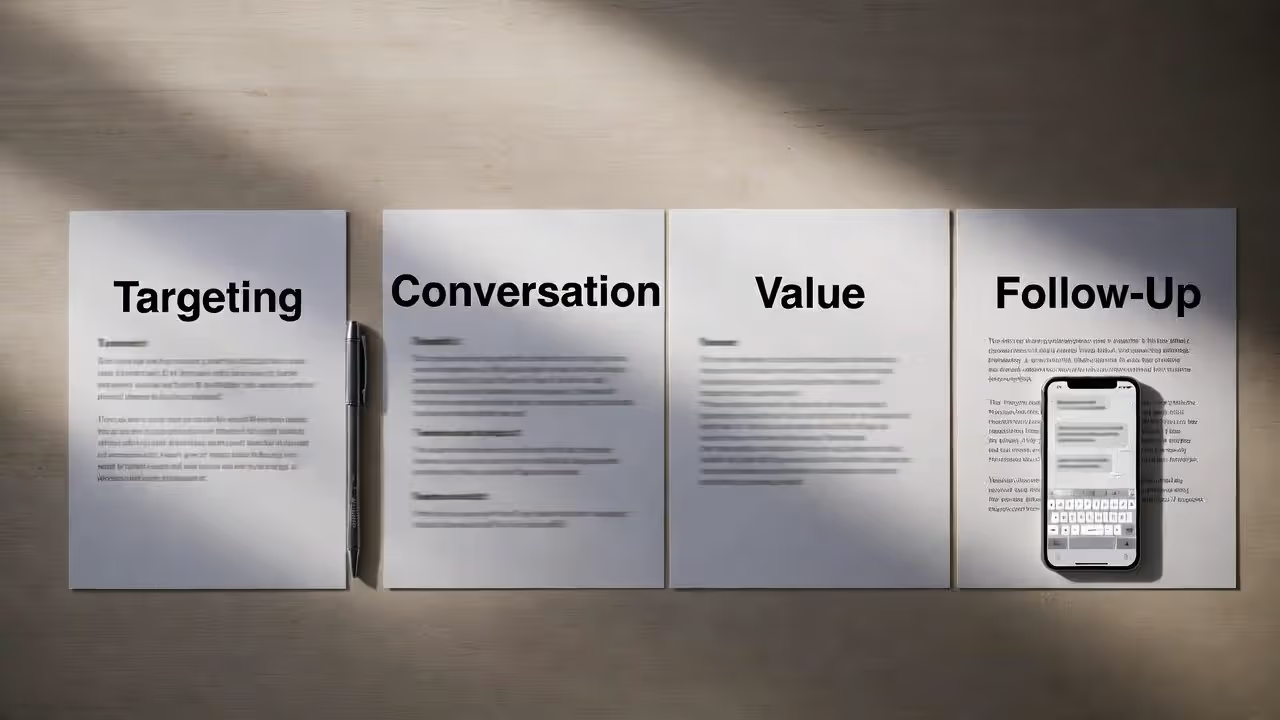
The 5-Step System for Making Business Connections That Convert
Random networking produces random results. A systematic approach turns relationship-building into a predictable business function.
Step 1: Research and targeting. Before any event or outreach, identify 5-10 specific people you want to meet. Review their background, recent activity, and potential connection points. This preparation transforms you from another face in the crowd to someone who can reference their recent blog post, mutual connection, or shared interest within the first minute of conversation.
Spend 15 minutes per target. Check their LinkedIn, Twitter, company blog, and recent news mentions. Note anything you can reference naturally. This isn't stalking—it's professional preparation.
Step 2: The approach. At events, avoid the direct pitch. Instead, ask informed questions based on your research. "I saw your company just launched in the healthcare vertical—what surprised you most about that market?" opens better conversations than "What do you do?"
For cold outreach, the same principle applies. Reference something specific, explain a clear reason for connecting beyond "picking your brain," and suggest a concrete next step. Vague coffee invitations die in busy inboxes.
Step 3: Conversation structure. Follow the 70/30 rule: listen 70% of the time, talk 30%. Most people leave networking conversations thinking about what they'll say next instead of actually listening. This is backwards.
When you do talk, tell specific stories rather than listing credentials. "We're building AI-powered analytics" is forgettable. "We're helping e-commerce brands figure out why customers abandon carts—turns out 60% of the time it's not price, it's confusion about shipping costs" sticks in memory.
Step 4: Value exchange. Identify something useful you can offer before the conversation ends. An introduction to someone in your network. An article relevant to a challenge they mentioned. Feedback on something they're working on. This doesn't need to be major—small, thoughtful gestures build reciprocity.
The key: make it specific to them, not generic. Offering to "help however I can" creates no obligation. Sending a specific introduction to someone who can solve their hiring challenge creates real value.
Step 5: Follow-up cadence. Within 24 hours, send a message referencing something specific from your conversation and delivering any value you promised. This isn't optional—it's where most networking efforts die.
Then schedule a follow-up for 2-3 weeks later. Not to ask for anything, but to share something relevant: an article, an introduction, an update on something you discussed. This second touch point moves you from "person I met once" to "someone I'm building a relationship with."
After that, maintain contact every 4-8 weeks through valuable check-ins, not just when you need something. Calendar these touches or they won't happen.
Author: Nathan Brook;
Source: isnvenice.com
How to Leverage Startup Networking Events Without Wasting Time
Events consume enormous time when you factor in travel, the event itself, and recovery. A full-day conference easily eats 12+ hours including preparation and follow-up. Make those hours count.
Pre-event preparation determines outcomes. Most founders decide to attend an event, show up, and hope for the best. Better approach: review the attendee list two weeks before, identify your top targets, and reach out in advance. "I see we're both attending [event]—I'd love to connect there about [specific topic]" converts cold networking into warm meetings.
Book 3-5 specific meetings during or around the event. This ensures you connect with high-priority people even if you don't bump into them randomly. It also provides a natural exit from unproductive conversations: "I have a meeting in 10 minutes, but before I go..."
During the event, avoid the networking trap. Don't try to meet everyone. Meeting 30 people superficially produces zero results. Meeting 8-10 people in substantive conversations creates actual opportunities.
Position yourself strategically. Arrive early when crowds are smaller and people are more accessible. Skip the main sessions if you can watch recordings later—the real value happens in hallways and side rooms. Attend the after-parties where conversations go deeper after the formal programming ends.
Take brief notes after each significant conversation. Not during—that's weird—but step away for 30 seconds afterward and capture key points in your phone. You'll forget details within hours otherwise.
Post-event workflow separates successful networkers from everyone else. Block 2-3 hours the day after an event specifically for follow-up. Go through your notes, send personalized messages, make promised introductions, and schedule next steps while conversations are fresh.
Create a simple spreadsheet or CRM to track new connections: name, company, what you discussed, what you promised, when to follow up next. Without this system, promising connections evaporate into your overstuffed LinkedIn network.
Evaluate whether the event justified your time investment. Track concrete outcomes: meetings scheduled, introductions made, partnerships discussed, investors engaged. If an event type consistently produces low returns, stop attending and reallocate that time.
No matter how brilliant your mind or strategy, if you're playing a solo game, you'll always lose out to a team.
— Reid Hoffman
Building Long-Term Relationships in Entrepreneur Communities
The most valuable business connections aren't transactional—they're relationships built over years. These are the people who make introductions that change your company trajectory, who give you honest feedback when you're heading in the wrong direction, and who celebrate your wins because they've been part of the journey.
Moving from transactional to strategic relationships requires time and intention. You can't force this progression, but you can create conditions for it. Consistent value delivery over months signals that you're investing in the relationship, not just extracting value.
Join or create a peer group of 4-6 founders at similar stages. Meet monthly to discuss challenges, share advice, and hold each other accountable. These small groups create deeper bonds than large networking events ever will. The vulnerability of discussing real struggles—cash flow problems, co-founder tensions, hiring mistakes—builds trust that superficial networking never reaches.
Nurturing connections means staying relevant without being annoying. Share genuinely useful information when you come across it. Make introductions between people in your network who should know each other. Celebrate others' wins publicly. Offer specific help when you see opportunities.
The frequency matters less than the consistency. A valuable check-in every two months beats weekly generic messages. Quality over quantity applies to relationship maintenance just as much as initial networking.
Creating mutual value elevates relationships beyond one-sided extraction. The strongest connections involve bidirectional value flow. You introduce them to potential customers; they introduce you to investors. You provide feedback on their product; they advise on your hiring strategy. This reciprocity creates relationships that endure beyond immediate business needs.
Look for ways to create value that leverage your unique position. Maybe you have expertise in a specific market, access to a particular network, or experience with challenges they're facing. Your value doesn't need to match theirs dollar-for-dollar—it needs to be genuine and useful.
Measuring Your Networking ROI: Metrics That Matter
What gets measured gets managed. Treating networking as a business function means tracking whether it produces results.
Partnerships formed represents a clear outcome. Count how many strategic partnerships, vendor relationships, or collaboration agreements originated from networking efforts. Track not just the number but the business impact—revenue generated, costs reduced, capabilities gained.
Capital raised directly ties networking to fundraising outcomes. What percentage of your investor conversations came from networking versus cold outreach? Which networking channels produced investor introductions that converted to term sheets? This data tells you where to focus future efforts.
Customers acquired matters especially for B2B startups where relationships drive sales. Track how many customers came through network referrals versus other channels. Calculate the customer acquisition cost for network-sourced customers compared to paid channels.
Key hires often come through network connections. Your best employees probably came from referrals, not job boards. Count how many critical hires resulted from networking relationships and factor in the value of finding A-players versus settling for available candidates.
Mentorship value is harder to quantify but no less real. Having experienced entrepreneurs who'll take your call when you're facing a tough decision, who'll review your pitch deck honestly, or who'll make an introduction to their network creates enormous value even without immediate business outcomes.
Time investment must factor into ROI calculations. If you're spending 10 hours weekly on networking but generating minimal tangible outcomes, something needs to change. Compare time invested against results produced to identify which activities deliver returns and which waste time.
Create a simple tracking system. Monthly, note: number of meaningful new connections made, follow-up conversations held, concrete opportunities created (investor meetings, partnership discussions, customer introductions, key hire referrals), and outcomes closed (deals signed, funding received, hires made). Review quarterly to identify patterns and adjust strategy.
FAQ: Common Questions About Entrepreneur Networking
Building a valuable network doesn't happen by accident. It requires strategy, consistent effort, and a genuine commitment to creating value for others before extracting it for yourself.
The founders who raise capital, form game-changing partnerships, and hire exceptional teams aren't necessarily more talented—they're better connected. They've invested time in building relationships that create opportunities when needed.
Start by fixing the common mistakes: stop treating networking as a transaction, build a follow-up system, choose events strategically, and approach relationship-building with clear goals. Focus your limited time on high-value channels that match your startup stage and industry. Implement a systematic approach to making connections that convert into real business outcomes.
Most importantly, play the long game. The most valuable relationships in your network won't pay dividends immediately. They'll matter three years from now when you need an introduction to a strategic partner, when you're hiring a critical executive, or when you're raising your Series B. Invest in those relationships now, before you need them.
Your network isn't built in a month or even a year. But start today, apply these frameworks consistently, and a year from now you'll have a web of relationships that creates tangible business value. That's not networking for the sake of networking—that's building a strategic asset that compounds over time.