
Relationship Building at Events Guide for Deeper Connections That Last
Relationship Building at Events Guide

Content
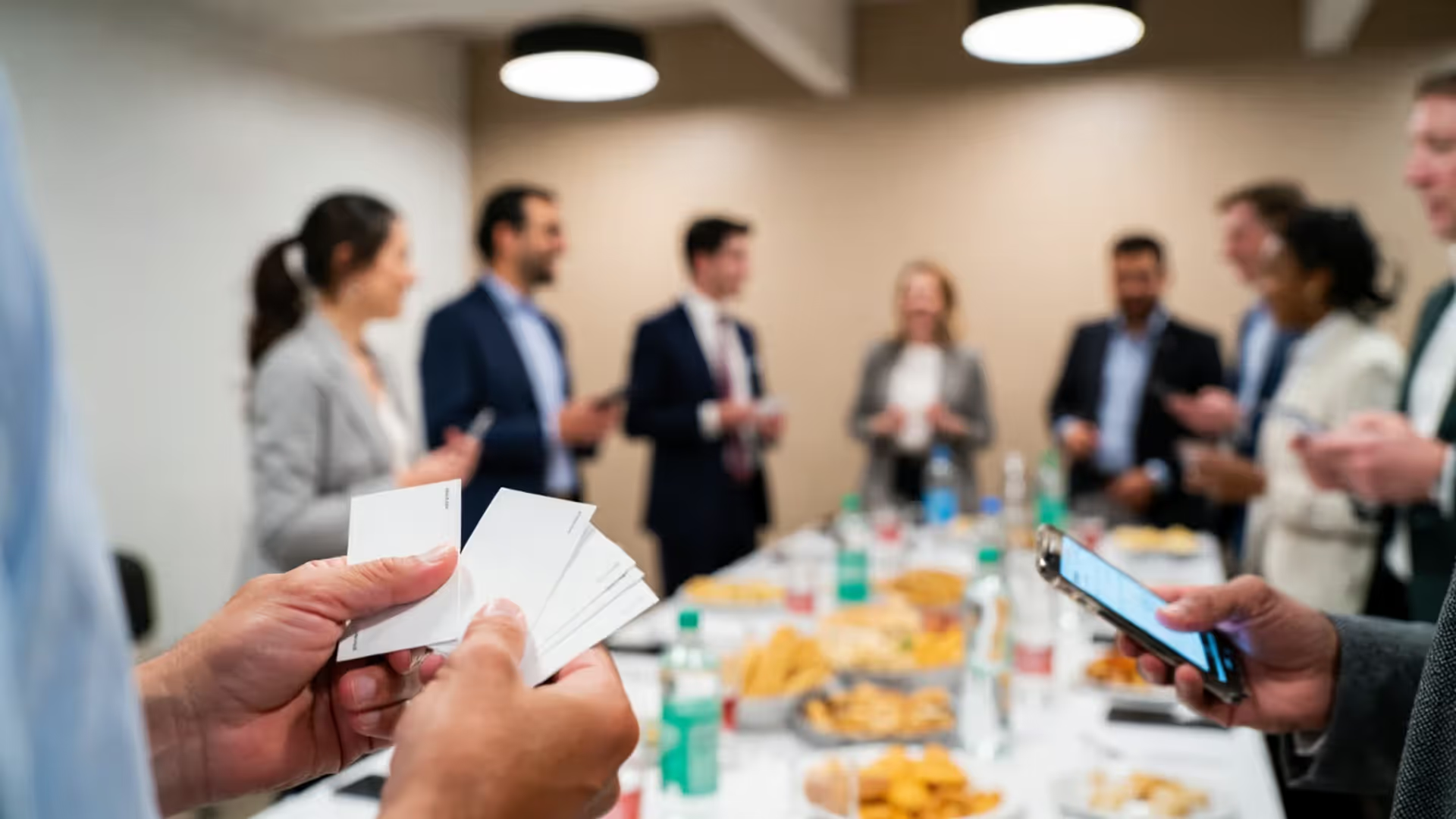
Walk into any conference hall during a networking break and you'll witness the same scene: clusters of people exchanging business cards, scanning name tags for job titles, and mentally calculating whether the person in front of them is "worth their time." Three months later, those same attendees wonder why none of those conversations led anywhere.
The problem isn't attending the wrong events. It's treating relationship building at events like a transaction rather than an investment.
Most professionals approach networking with a collector's mindset. They measure success by the stack of business cards gathered or LinkedIn connections added. This transactional approach creates shallow interactions that both parties forget within days. You're not building relationships—you're building a database of strangers who vaguely remember meeting you.
Meaningful connections require a completely different approach. Instead of maximizing quantity, successful networkers focus on creating moments of genuine exchange. They ask better questions. They listen without planning their next comment. They follow up with personalized messages that reference actual conversation details, not generic "great to meet you" templates.
The difference shows up in results. Transactional networkers leave with 40 contacts and zero follow-through. Relationship-focused attendees leave with five quality conversations and three coffee meetings scheduled for the following month. One year later, the first group has forgotten everyone they met. The second group has referral partners, collaborators, and friends.
Here's what actually works: treating every interaction as the beginning of a potential long-term relationship, not a one-time opportunity to pitch yourself. This shift in mindset changes everything about how you prepare, engage, and follow up.

Author: Lucas Hayes;
Source: isnvenice.com
Pre-Event Preparation: Research and Goal-Setting for Stronger Connections
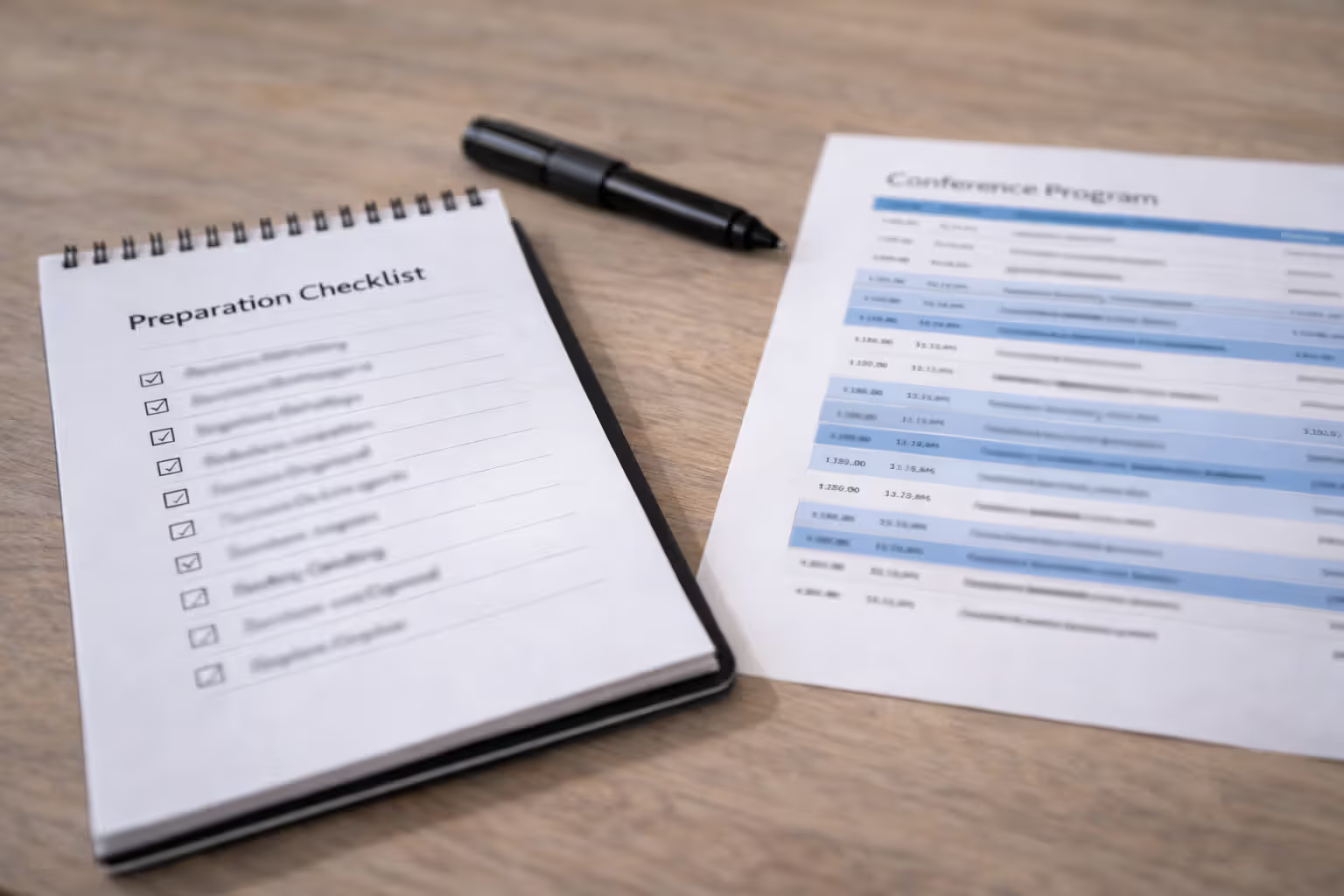
The work of relationship building starts before you walk through the venue doors. Attendees who invest 90 minutes in pre-event research consistently create stronger connections than those who show up unprepared.
Identifying High-Value Attendees Worth Your Time
"High-value" doesn't mean targeting the most senior people or biggest companies. It means identifying individuals whose interests, challenges, or expertise align with yours in ways that create mutual benefit.
Start with the attendee list if available. Look for people working on similar problems, serving adjacent markets, or building complementary skills. Check their recent LinkedIn activity or blog posts to understand their current priorities. This isn't stalking—it's doing your homework.
Create a shortlist of 8-12 people you'd genuinely like to meet. Any more becomes unmanageable. For each person, note one specific reason you want to connect beyond "they seem successful." Maybe they're implementing a strategy you're researching. Perhaps they've navigated a challenge you're currently facing. Specificity matters because it shapes how you'll introduce yourself and what you'll discuss.

Author: Lucas Hayes;
Source: isnvenice.com
Don't ignore people outside your immediate industry. Some of the most valuable connections come from adjacent fields where you can offer fresh perspectives to each other.
Setting Realistic Relationship Objectives Beyond Business Cards
Most attendees set vague goals like "expand my network" or "meet potential clients." These objectives are too fuzzy to guide behavior or measure success.
Better goals are specific and relationship-focused: - Have three substantive conversations where I learn something new about an industry challenge - Identify two people I'd like to continue the conversation with over coffee in the next month - Find one potential collaboration opportunity worth exploring further
Notice these goals emphasize depth over breadth. They're about building rapport, not collecting contacts.
Here's how different approaches play out across the event lifecycle:
| Pre-Event Activities | At-Event Activities | Post-Event Activities |
| Research 8-12 attendees you want to meet; note specific conversation topics | Focus on 5-7 quality conversations instead of meeting everyone | Send personalized follow-ups within 48 hours referencing specific discussion points |
| Set 2-3 specific relationship goals (not contact collection targets) | Take brief notes after conversations (names, details, potential next steps) | Schedule concrete next interactions (calls, meetings, introductions) |
| Prepare 3-4 thoughtful questions about industry challenges or trends | Listen more than you talk; ask follow-up questions that show genuine interest | Add new contacts to your CRM with context about how you met and why you connected |
| Plan your schedule to include breaks for deeper conversations | Introduce people to each other when you see potential mutual benefit | Share relevant articles or resources mentioned during your conversation |
| Identify sessions where your target connections might attend | Follow up on promises made during conversations (sending resources, making introductions) | Set calendar reminders for 30-day and 90-day check-ins with key connections |
This preparation framework transforms how you experience events. Instead of wandering and hoping for good conversations, you create them intentionally.
Author: Lucas Hayes;
Source: isnvenice.com
5 Conversation Techniques That Build Trust Within Minutes
Trust building doesn't require hours of conversation. The right techniques create connection surprisingly quickly.
- Lead with curiosity, not credentials. Most people open with their elevator pitch. This immediately signals transactional intent. Instead, ask a substantive question related to the event content or their work. "What brought you to this session?" beats "What do you do?" every time. The first invites storytelling. The second triggers rehearsed responses.
- Use the "tell me more" technique. When someone shares something interesting, resist the urge to pivot to your own experience. Simply say "tell me more about that" or "how did that come about?" Most people rarely experience genuine curiosity about their work. This simple prompt creates disproportionate goodwill.
- Share a specific vulnerability or challenge. Rapport building accelerates when you show you're human, not a polished professional facade. Mention a specific problem you're working through or a mistake you learned from. This gives others permission to be authentic too. The conversation shifts from performance to exchange.
- Mirror their communication style. If someone speaks quickly and gets excited about big ideas, match that energy. If they're more measured and detail-oriented, slow down and go deeper. This isn't manipulation—it's meeting people where they are. Emotional intelligence networking means adapting your approach to make others comfortable.
- Make the conversation about them, then find the connection. Spend 70% of the conversation asking about their work, interests, and challenges. Only after understanding their world should you share how your experience connects. This sequence matters. Leading with your story feels self-promotional. Connecting your story to theirs after listening feels collaborative.
The most successful networkers I've studied don't try to be interesting—they're interested. They ask better questions, remember small details, and follow up on things that matter to the other person. That's not a tactic; it's genuine respect for other people's experience and expertise.
— Dr. Ivan Misner, Founder of BNI and organizational psychologist
Body language reinforces these techniques. Maintain comfortable eye contact. Put your phone completely away—not just face-down on the table. Angle your body toward the person speaking. These micro-behaviors signal that this conversation matters to you.
The goal isn't to become someone you're not. It's to create space for authentic exchange by removing the performance anxiety that usually dominates networking events.
Moving Beyond Small Talk: Questions That Reveal Shared Values
Small talk serves a purpose—it's the entry point to conversation. But meaningful connections require moving past weather and weekend plans into territory that reveals how people think, what they value, and where potential collaboration exists.
The transition from surface to substance doesn't require aggressive personal questions. It requires better professional questions that invite reflection rather than recitation.
Instead of "What do you do?", try "What problem are you most focused on solving right now?" This reframes the conversation from job titles to actual work. You learn what drives them, not just what's on their business card.
Instead of "How's business?", ask "What's changing in your industry that you're most excited or concerned about?" This reveals their perspective, awareness, and values. Someone who focuses on threats versus opportunities tells you something about their worldview.
Instead of "What brings you to this event?", try "What are you hoping to learn or figure out while you're here?" This shows intentionality and often reveals challenges they're working through.
The framework is simple: ask questions that require thought rather than reflex. Questions that begin with "what," "how," or "why" work better than "do you" or "are you" questions that invite yes/no answers.
Follow-up questions matter more than opening questions. When someone mentions they're working on improving their team's collaboration, don't just nod and move on. Ask "What's been the biggest obstacle to that?" or "What approaches have you tried?" These follow-ups demonstrate you're actually processing what they're saying.
Emotional intelligence networking means recognizing when someone wants to go deeper and when they prefer to stay surface-level. Some people light up when discussing their work challenges. Others remain guarded at first. Pay attention to energy shifts. If someone's answers get shorter or more generic, you've pushed too fast. Pull back to lighter topics and try again later.
Shared values often emerge through stories, not direct questions. Instead of asking "What do you value in business relationships?", share a brief story about a collaboration that worked well and why. Then ask if they've had similar experiences. This indirect approach feels like conversation, not interrogation.
The trade-off with deeper questions is time. You can't have ten meaningful conversations in a two-hour networking session. You can have three. Choose quality over coverage.

Author: Lucas Hayes;
Source: isnvenice.com
The 48-Hour Follow-Up Framework for Converting Contacts Into Relationships
The follow-up determines whether an event conversation becomes a lasting relationship. Most people either never follow up or send generic messages that get ignored. The 48-hour window is critical—soon enough that you're both still remembering the conversation, but not so immediate that you seem desperate.
Your first follow-up message should accomplish three things: remind them of your specific conversation, provide immediate value, and suggest a concrete next step.
Bad follow-up: "Great meeting you at the conference! We should stay in touch."
Better follow-up: "Really enjoyed our conversation about the challenges of scaling customer success teams. I thought about what you said regarding response time metrics, and I came across this case study from Intercom that addresses exactly that issue (link). Would you be open to a 20-minute call next week to continue the conversation? I'd love to hear more about your approach to team structure."
The difference is specificity. The second message proves you were actually listening. It offers value before asking for anything. It proposes a specific, time-bound next step rather than a vague "let's stay in touch."
For your highest-priority connections from the event—the 3-5 people where you see real potential for long-term relationships—use a multi-touch approach:
Touch 1 (within 48 hours): Personalized email referencing your conversation and offering something valuable (article, introduction, resource).
Touch 2 (7-10 days later): If they responded positively, schedule that call or coffee meeting. If they didn't respond, send a brief follow-up with a different value add—maybe a relevant podcast episode or news item related to your discussion.
Touch 3 (30 days after the event): Check in with something genuinely useful. Not "just checking in" but "I remembered you were exploring X, and I just saw Y that seems relevant."
This isn't about pestering people. It's about demonstrating consistent value and interest over time. Trust building happens through repeated positive interactions, not a single great conversation.
For medium-priority connections, a single thoughtful follow-up is sufficient. Connect on LinkedIn with a personalized note referencing your conversation. Share one relevant resource. If they engage, great—continue the dialogue. If not, add them to your periodic newsletter or content sharing if you have one.
The mistake most people make is treating follow-up as a one-time task. Relationship building requires ongoing attention. Set calendar reminders for 60 and 90 days post-event to check in with your top connections. Not with an ask, but with something valuable or a genuine "how's that project going?" inquiry.
Personalization scales poorly, and that's the point. You can't maintain this level of attention with 100 people. You can with 10-15. That's why the pre-event prioritization matters so much.
Measuring What Matters: Tracking Relationship Quality Over Quantity
Most professionals measure networking success by counting: business cards collected, LinkedIn connections added, or contacts in their CRM. These metrics tell you nothing about relationship quality or future value.
Better metrics focus on relationship depth and progression:
Conversation quality: How many substantive conversations (15+ minutes, beyond small talk) did you have? This matters more than total people met.
Follow-through rate: What percentage of your intended follow-ups actually happened within two weeks? This measures your execution, not just your intentions.
Reciprocal engagement: How many people responded to your follow-ups and continued the conversation? This reveals whether you're creating mutual interest or just adding names to a list.
Concrete next steps: How many connections resulted in scheduled calls, meetings, or specific collaboration discussions? This indicates real relationship progression.
90-day retention: Three months after the event, how many connections have you interacted with at least twice? This separates temporary contacts from developing relationships.
Track these metrics in a simple spreadsheet or CRM. After each event, record the 5-10 most promising connections and note specific next steps for each. Review monthly to ensure you're actually nurturing these relationships.
The quality-over-quantity approach requires saying no to some opportunities. You can't deeply engage with everyone, so you must choose. This feels uncomfortable for people who equate networking success with meeting as many people as possible. But attempting to maintain 100 shallow connections delivers less value than nurturing 20 meaningful ones.
Consider the lifetime value of relationships. One strong connection who understands your work and thinks of you when opportunities arise is worth more than 50 people who vaguely remember meeting you once. The math favors depth.
Some relationships won't progress despite your best efforts. People get busy. Priorities shift. Not every conversation leads somewhere, and that's fine. The goal isn't a 100% conversion rate from contact to relationship. It's ensuring that your most promising connections get the attention they deserve.
Common Relationship-Building Mistakes That Cost You Opportunities
Even experienced professionals make predictable errors that undermine their relationship building at events.
Pitching too soon. You meet someone interesting and immediately launch into what you do and how you might work together. This triggers defensive walls. People need to trust you before they'll consider doing business with you. Invest in understanding them first. The business conversation can happen later, after rapport exists.
Forgetting to ask for contact information. You have a great conversation, then realize you never exchanged details. Now you're searching LinkedIn trying to remember their last name. Always exchange contact information during or immediately after meaningful conversations. Don't assume you'll remember or find them later.
Making promises you don't keep. You say you'll send that article, make that introduction, or follow up next week. Then you don't. Nothing damages trust faster than unfulfilled commitments. Only promise what you'll actually deliver, and deliver it promptly.
Networking only when you need something. You ignore your connections for months, then reach out when you need a favor. This transactional pattern is obvious and off-putting. Maintain relationships during the times you don't need anything. Share useful information. Make introductions. Check in genuinely. Then when you do need help, you've built sufficient goodwill.
Treating junior people as less valuable. You scan name tags for titles and dismiss anyone below a certain level. This is shortsighted. Today's coordinator is tomorrow's director. Beyond career progression, junior people often have valuable insights, connections, and influence you're overlooking. Treat everyone with genuine interest regardless of their current title.
Monopolizing conversations. You dominate the dialogue, barely letting the other person speak. This might feel like you're being impressive, but you're actually being exhausting. Aim for 30-40% talking, 60-70% listening. If you're not learning anything new about the other person, you're talking too much.
Collecting contacts without context. You meet someone, exchange cards, and move on without noting anything about them or your conversation. Two weeks later, you can't remember what you discussed or why you connected. Take 30 seconds after each meaningful conversation to jot down key details in your phone. This makes follow-up infinitely easier and more personal.
Recovery strategies exist for most of these mistakes. If you realize you pitched too soon, acknowledge it in your follow-up: "I got a bit ahead of myself in our conversation. I'm genuinely interested in learning more about your work with (topic) before discussing potential collaboration." If you forgot to follow up, own it: "I apologize for the delay—your insights about (topic) have stuck with me, and I wanted to continue the conversation."
Honesty and humility repair most networking missteps. People appreciate authenticity more than perfection.
Frequently Asked Questions About Building Professional Relationships at Events
Relationship building at events isn't about mastering clever techniques or collecting impressive contact lists. It's about showing up with genuine curiosity, investing time in understanding people beyond their job titles, and following through consistently after the initial conversation.
The professionals who build the strongest networks aren't the most charismatic or extroverted. They're the ones who treat every interaction as potentially valuable, listen more than they talk, and maintain relationships during the times they don't need anything. They measure success by the quality of connections formed, not the quantity of business cards collected.
Start with your next event. Research a handful of attendees you'd genuinely like to meet. Set specific relationship goals. Focus on five quality conversations instead of meeting everyone. Ask better questions. Take brief notes. Follow up within 48 hours with something personalized and valuable. Then maintain those connections over time with consistent, genuine engagement.
The relationships you build at events can transform your career, business, and professional community. But only if you approach them as long-term investments rather than short-term transactions.