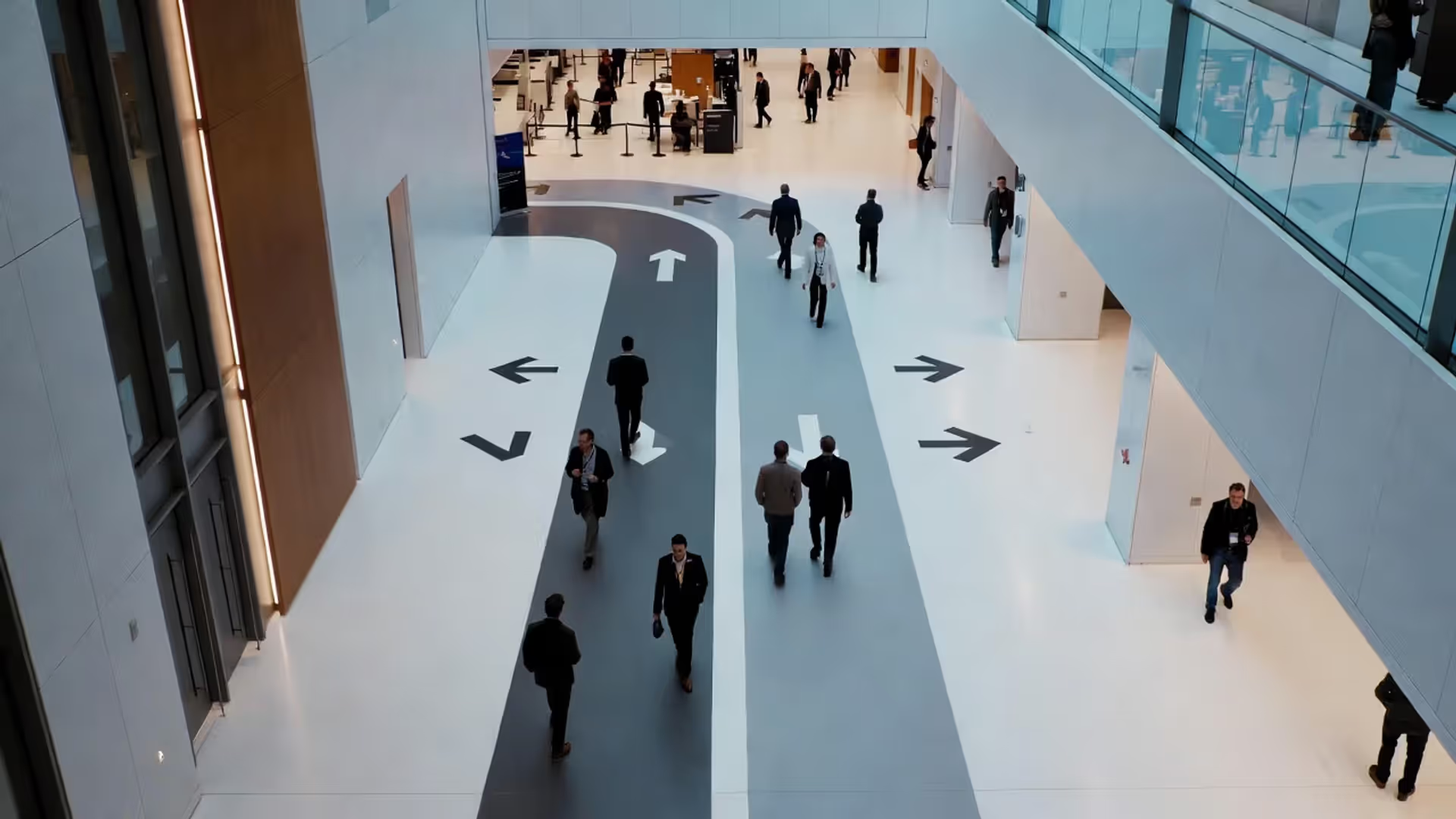

Timing turns good talks into remembered ones
Event Agenda Ideas and Examples

Content
Let me tell you about last year's fintech conference in Austin.
They'd landed keynotes from three Fortune 500 CTOs. Venue? The new convention center everyone's talking about. Breakfast spread that probably cost $85 per person.
By 10:30 AM, half the room was checking Slack. After lunch, entire rows had emptied out.
Here's what happened: organizers spent eleven months chasing big-name speakers. They threw the actual schedule together during one frantic Tuesday afternoon, three weeks before go-time. "We'll figure out timing later" turned into "just make it fit."
The result? Back-to-back 75-minute talks with ten-minute "breaks" that barely allowed bathroom runs. No transition time between rooms. The big-name afternoon keynote positioned right after lunch when everyone's fighting food coma.
I've seen this pattern dozens of times now. We fixate on who's speaking while treating when and how long as boring logistics.
Turns out, timing matters more than we think. The Event Leadership Institute tracked 200+ conferences and found something striking: attendees retained 38% more information from events with strategic pacing compared to content-stuffed schedules. The difference wasn't speaker quality—it was structure.
Think about your last full-day conference. Remember that brilliant speaker whose session ran right before lunch when you were starving? Or the fascinating panel that started at 4:00 PM when you'd already hit mental capacity? Great content, terrible placement, mediocre
Consider the business angle too. Sponsors pay premium rates expecting engaged audiences, not exhausted ones scrolling their phones. Attendees justify travel budgets by demonstrating value to their managers. Strategic scheduling that works with human energy patterns—not against them—delivers actual ROI.
Poor pacing turns paid conferences into endurance contests.
12 Proven Event Agenda Formats for Different Event Types
A product launch shouldn't follow the same timing as a medical symposium. Seems obvious, right? Yet most schedules copy-paste the standard conference template regardless of purpose or audience.
These frameworks actually work because they're built for specific contexts.

Author: Nathan Brook;
Source: isnvenice.com
Half-Day Workshop Agenda Framework
Four-hour events excel for skill-building, especially when you're teaching one specific thing really well. The time constraint forces clarity. Participants leave feeling accomplished rather than overwhelmed.
Morning version (8:30 AM - 12:30 PM): - 8:30-9:00: Check-in, coffee, casual mingling - 9:00-9:15: Welcome and learning objectives (keep it brief) - 9:15-10:30: Main teaching block—75 minutes with one quick stretch break embedded around minute 40 - 10:30-10:45: Real break for coffee refills and mental reset - 10:45-12:00: Practice what you just learned (hands-on exercises, small group work) - 12:00-12:30: Q&A and wrap-up
This works because you're teaching while brains are fresh, then switching to hands-on practice as focus naturally starts drifting.
Afternoon version (1:00 PM - 5:00 PM): Start with a 15-minute activation exercise before diving into content. Post-lunch slots demand movement to counter that inevitable afternoon slump. Don't fight biology—work with it.
The agenda is your event's architecture. You can have beautiful furniture, but if the foundation is weak, everything feels unstable. I've seen mediocre speakers succeed in well-designed agendas and brilliant experts fail in poorly structured ones
— Marcus Chen, Senior Event Strategist, Convergence Events Group
Full-Day Conference Structure
Eight hours is a long time. The mistake I see constantly? Treating it like two half-days stapled together, ignoring how fatigue compounds.
Framework that actually works: - 8:00-8:45: Registration, breakfast service, people finding their friends - 8:45-9:00: Quick welcome (skip the 20-minute opening ceremony nobody remembers) - 9:00-10:15: Opening keynote—75 minutes maximum - 10:15-10:45: Extended break—full 30 minutes for real networking - 10:45-12:00: Breakout sessions—offer 3-4 parallel options - 12:00-1:15: Lunch with optional discussion tables by topic - 1:15-1:30: Quick energizer (rapid-fire panel, brief case study, anything interactive) - 1:30-2:30: Skill workshops—60 minutes - 2:30-2:45: Bathroom break and coffee - 2:45-4:00: Afternoon sessions - 4:00-4:30: Closing conversation or fireside chat format - 4:30-5:30: Reception
Notice how nothing's the same length? That's intentional. When every session runs exactly 60 minutes, your schedule becomes a metronome putting people to sleep. Mix 30-minute, 45-minute, and 75-minute blocks to keep rhythm unpredictable.

Author: Nathan Brook;
Source: isnvenice.com
Multi-Day Summit Planning
Extended conferences multiply every scheduling mistake. I've watched well-planned Day 1s collapse into disaster by Day 3 because organizers didn't account for cumulative exhaustion.
Day 1 approach (arrival day): - Start around 2:00 PM if possible, giving people travel time - Focus on connections and orientation, not dense content - End with social gathering, not keynotes - Resist cramming first evening full of programming
Day 2-3 approach (main days): - Begin 30 minutes later than single-day formats (9:00 AM instead of 8:30) - Extend lunch from 60 to 90 minutes - Build in one "choose your own adventure" block—networking, rest, or optional sessions - Hard stop at 5:00 PM to prevent fatigue buildup
Final day approach: - Latest start time yet—9:30 AM - Finish by 2:00 PM for travel logistics - Put priority content early (don't save important stuff for final afternoon when everyone's mentally checked out)
| Event Type | Duration | Number of Sessions | Recommended Break Frequency | Best For |
| Half-Day Workshop | 4 hours | 2-3 main segments | One 15-minute intermission | Skills training, 30-75 people, specific learning goals |
| Full-Day Conference | 8 hours | 6-8 segments | Three 15-30 minute breaks plus lunch | Industry gatherings, 100-500 attendees, mixed topics |
| Multi-Day Summit | 2-3 days | 15-25 segments total | 4-5 breaks each day | Annual conventions, 200+ attendees, extensive programming |
| Virtual Half-Day | 3 hours | 3-4 segments | Break every 45-60 minutes | Online seminars, unlimited capacity, global audiences |
| Hybrid Full-Day | 6-7 hours | 5-7 segments | Break every 75-90 minutes | Mixed in-person and remote, 50-300 on-site plus virtual |
| Executive Retreat | 1.5-2 days | 6-10 segments | Flexible, frequent breaks | Leadership teams, 15-50 people, strategic planning |
How to Time Your Sessions Without Losing Your Audience
Session length isn't about filling calendar slots. It's about matching content density to how human brains actually process information.
The 45-Minute Rule for Presentations
Your attention peaks around 10-15 minutes into focused listening. Then it steadily declines. By minute 45, most people mentally check out unless something shifts dramatically—a new speaker, audience interaction, video break, something.
Here's what works for typical presentations: - 30 minutes: Perfect for single-topic talks or case studies. Leaves people wanting more instead of checking their watches. - 45 minutes: Absolute ceiling for lecture-style formats. Insert audience questions around minute 25. - 60 minutes: Only works with multiple presenters, live demos, or substantial audience participation.
The lazy default books 60-minute slots "because conferences use hour blocks." That's not strategy, it's habit. A 45-minute presentation followed by 15 minutes of facilitated discussion beats 60 minutes of monologue every time.
Planning test: If your speaker can't outline three distinct sections in their talk, it's either too long or too unfocused.
Panel Discussion Sweet Spots
Panels suffer more chronic mistiming than any other format. Too short? Superficial soundbites. Too long? Moderators lose control, panelists repeat themselves, audiences zone out.
Duration by number of panelists: - 2 panelists: 30-40 minutes - 3 panelists: 45-50 minutes - 4 panelists: 50-60 minutes - 5+ panelists: Don't do it. Cap panels at four maximum.
Work backward from the end: each person needs 2-3 minutes for substantive responses. Four panelists addressing five questions = 40-60 minutes plus intro and audience Q&A. Anything past 60 minutes loses people fast.
Scheduling tip: put panels right before breaks, never after. People tolerate slightly extended sessions when they know a break's coming. But launching post-break with a 60-minute panel wastes peak attention on an inherently diffuse format.
Workshop and Breakout Session Length
Workshops need extended time because learning happens through practice, not passive listening. But "extended" doesn't mean "unlimited."
Workshop timing that works: - 90 minutes: Minimum for substantive hands-on work. Add a 5-minute movement break at the midpoint. - 2 hours: Optimal for skill development with application time. Structure it as 30-minute foundation, 60-minute practice, 30-minute integration. - 3 hours: Maximum without a real intermission. Break into distinct modules with varied activities.
Breakout sessions differ—they emphasize dialogue over instruction.
Breakout session timing: - 20 minutes: Quick networking or focused topic exchanges - 45 minutes: Standard duration for most conference breakouts - 60 minutes: Reserved for complex problem-solving or serious collaborative work
The death zone for breakouts? 30 minutes. That allows time for introductions, one comment round, then everyone packs up to leave. Either commit to 45 minutes or compress to 20-minute lightning rounds.
Strategic Networking Breaks: More Than Just Coffee Refills

Author: Nathan Brook;
Source: isnvenice.com
Networking intermissions host deal closings, partnership formations, unexpected breakthroughs. Yet most agendas treat them like filler between "real" content.
That's backwards.
How often to schedule breaks: For full-day programs, build in breaks every 90-120 minutes of content. That's 3-4 breaks minimum beyond lunch. Sounds excessive? It's not.
Here's the math: participants who connect with 3-4 relevant contacts report 60% higher satisfaction than those who only consume presentations. Breaks enable those connections.
How long breaks should run: - 10 minutes: Bathroom access only—don't call this a networking opportunity - 15 minutes: Minimum for real networking; allows one meaningful exchange - 20-25 minutes: Sweet spot for most breaks; time for two exchanges or one deeper conversation - 30 minutes: Extended intermission; schedule one mid-morning
Where to position breaks: Put your longest break (30 minutes) between 10:00-10:30 AM or 10:30-11:00 AM. Morning energy runs high, people haven't splintered into lunch groups yet, and you're ahead of pre-lunch mental fadeout.
Skip breaks immediately after opening comments. Attendees haven't absorbed enough yet for interesting conversations. First intermission should follow your opening keynote or first session block when people have something to discuss.
What to do during breaks: Empty breaks with only coffee create awkward phone-scrolling. Add structure:
- Themed stations: Designate zones for specific conversation topics
- Speaker access: Keep presenters available for 10 minutes post-session
- Facilitated networking: Orchestrate 5-minute rotations during one break
- Sponsor engagement: Give sponsors one break for demos, not every break
- Quiet zones: Designate space for introverts needing solitude
Networking delivers measurable returns. Post-event surveys consistently show professional connections drive repeat registration more than content quality. People might forget your keynote speaker's name six months later, but they'll remember the colleague who solved their challenge during the coffee break.
8 Event Program Examples From Successful Conferences
Author: Nathan Brook;
Source: isnvenice.com
Real implementations show what actually works versus what looks good in proposals.
Example 1: Technology Startup Summit (Full-Day) - Started at 9:00 AM (not 8:00) matching young professional schedules - 20-minute pitch blocks instead of standard 45-60 minute presentations - "Corridor programming" formalized in schedule as official 30-minute networking blocks - Ended with 90-minute open networking instead of closing remarks - Why it worked: Format matched audience expectations (fast-paced, connection-focused) rather than following conference traditions
Example 2: Healthcare Leadership Conference (Two-Day) - Day 1 concluded at 4:30 PM—no evening programming - Offered optional dinner cohorts by interest area, not mandatory banquet - Day 2 opened with 30-minute case analysis instead of keynote - Built in 45-minute "integration periods" for participants to process material - Why it worked: Acknowledged senior leaders value efficiency and reflection time over maximum content volume
Example 3: Creative Industry Workshop (Half-Day) - Opened with 15-minute portfolio exploration instead of lectures - Capped at 30 participants for meaningful interaction - Two 90-minute working blocks with live critique - Zero formal presentations—instruction delivered through feedback and conversation - Why it worked: Format aligned with how creative practitioners actually learn (experiential, collaborative)
Example 4: Virtual Marketing Conference (4 Hours) - Split across two days (2 hours each) versus one 4-hour marathon - 30-minute session ceiling - 10-minute breaks every hour - Interactive elements every 15 minutes - Recorded immediately for time zone flexibility - Why it worked: Acknowledged screen fatigue and global participant realities
Example 5: Academic Symposium (Three-Day) - Parallel tracks by specialty - Poster exhibitions during extended meal periods - "Open space" afternoon on day 2 where participants proposed discussion topics - Final morning dedicated to small collaborative groups, not lectures - Why it worked: Balanced formal presentations with participatory formats academics value
Example 6: Sales Kickoff (Full-Day) - Opened with high-energy plenary (45 minutes) - Segmented into team workshops (90 minutes) - Lunch incorporated recognition ceremony (limited to 20 minutes) - Afternoon "capability stations" where reps rotated through 20-minute training modules - Closed with team challenge instead of speeches - Why it worked: Maintained energy through variety and movement; avoided death by PowerPoint
Example 7: Nonprofit Fundraising Gala (Evening, 3 Hours) - Reception first (45 minutes) before seated service - Meal service during brief video content (not lengthy speeches) - Single 8-minute keynote from program beneficiary - Fundraising auction woven throughout evening, not isolated block - Ended precisely at 9:30 PM - Why it worked: Respected that fundraising events aren't content conferences; kept programming tight and emotional
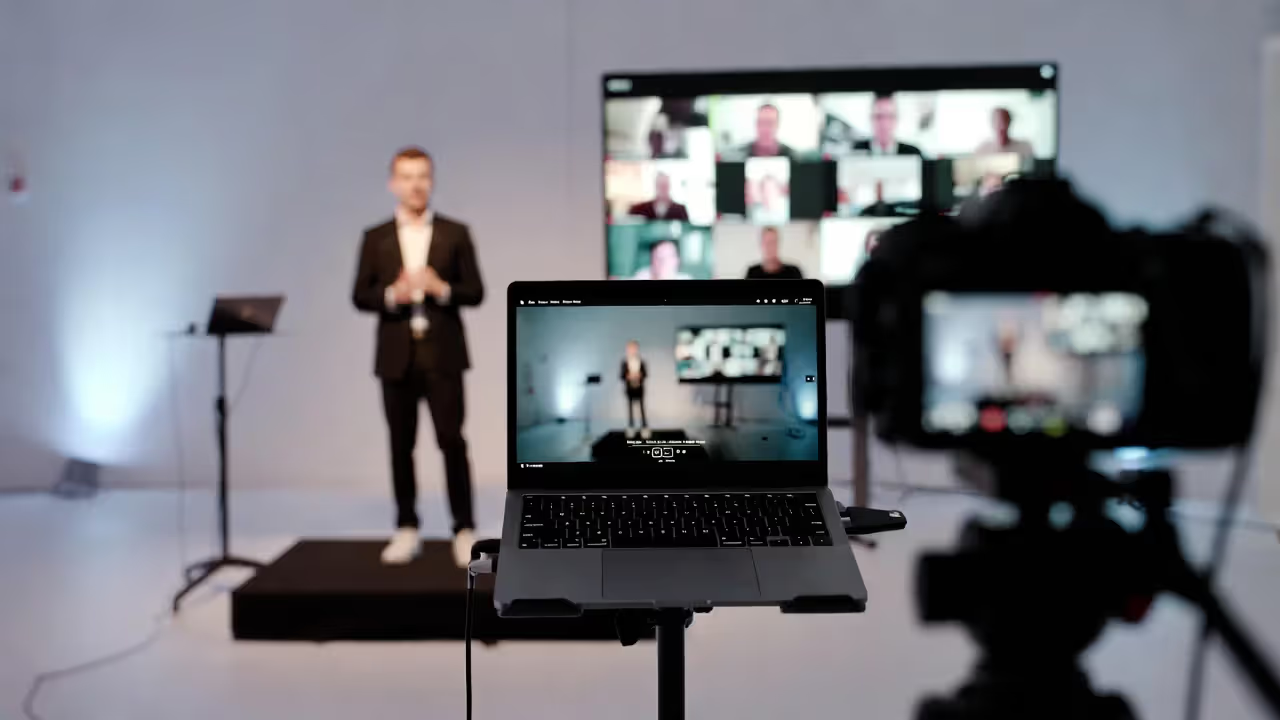
Example 8: Hybrid Product Launch (Half-Day) - Physical event at 2:00 PM local, virtual beginning at 10:00 AM - Remote participants got exclusive pre-event Q&A access - Core presentation (30 minutes) optimized for cameras, not just room - Distinct demonstration spaces for remote and physical attendees - Virtual programming ended 30 minutes before physical to enable in-person networking - Why it worked: Treated remote and physical as separate experiences rather than forcing unified format
Common Event Agenda Mistakes That Kill Engagement

Author: Nathan Brook;
Source: isnvenice.com
Experienced planners study failures. These scheduling errors consistently damage events.
Stacking sessions without buffer time: Your 10:00 AM segment runs until 10:03. People need bathrooms. Next venue's two floors away. Following session starts late, creating a cascade of disruption, and by lunch your entire schedule runs 20 minutes behind.
Build in 10-15 minute cushions between segments. Yes, that cuts total session count. That's the point—executing six segments excellently beats eight segments poorly.
Ignoring time zones for virtual events: Scheduling your international webinar at 2:00 PM Eastern means 7:00 PM London and 11:00 PM Mumbai. You've excluded huge audiences or forced exhausted participation.
Solutions: record everything, offer multiple time slots for key content, or cap virtual events at 90 minutes so someone's inconvenience stays manageable.
The disastrous post-lunch keynote: You've positioned your most important speaker at 1:00 PM right after lunch. Congratulations—you've weaponized digestion against engagement. Post-meal energy dips are biological. You can't fight biology with "critical content."
Schedule high-energy, interactive formats after meals: discussions, workshops, collaborative sessions. Save keynotes for morning or late afternoon when natural alertness peaks.
No transition time between topics: Jumping from "AI in Medicine" to "Digital Marketing Tactics" to "Investment Strategies" in consecutive 60-minute blocks creates mental whiplash. Participants can't integrate, can't mentally shift, retain less across everything.
Cluster related topics into themed sequences. When covering diverse material, use breaks as cognitive reset points between themes.
Unrealistic schedule density: Your program promises 12 presentations, 8 speakers, 4 workshops, and 3 networking events in one day. On paper? Comprehensive. In reality? Attendees leave overwhelmed and drained, unable to cite specifics from any segment.
Cut 25% of what seems feasible. Best feedback isn't "so much programming!" It's "I genuinely absorbed and can apply what I learned."
Every session the same length: When every segment runs 60 minutes, your schedule becomes rhythmically hypnotic. Attendees zone out because predictable pacing eliminates variation that maintains alertness.
Vary intentionally: 30-minute case studies, 45-minute presentations, 20-minute lightning demos, 75-minute workshops. Diverse pacing maintains audience engagement.
Treating breaks as wasted time: Cutting intermissions to squeeze in more content resembles eliminating rest days from training programs. Sure, you're doing more volume, but performance tanks and burnout accelerates.
Breaks host informal learning, content processing, networking ROI. Protect them as fiercely as keynote slots.
FAQ: Event Agenda Planning Questions Answered
Effective scheduling requires more than filling time slots with presenters. Your structure determines whether participants leave energized and connected versus exhausted and overwhelmed.
Start with attendee needs rather than your content wishlist. Honor attention limitations by varying segment lengths and formats. Defend networking time as fiercely as keynote positions—those informal exchanges often deliver greater value than scheduled programming.
Use these frameworks and timing principles as starting points, then customize based on your specific audience, goals, and format. Validate your schedule by mentally walking through it hour-by-hour, questioning whether you'd stay engaged as a participant. When you mentally check out during your own planning, your audience will too.
Superior schedules feel effortless to participants while demanding substantial behind-the-scenes planning. That's the goal: invisible architecture enabling visible engagement.