

A strong brand transforms the entire event experience.
Conference Event Branding

Content
When your conference attendees walk through registration, scroll through the event app, or share photos on social media, they're interacting with dozens of brand touchpoints. Each one either reinforces your event's identity or dilutes it. The difference between a forgettable conference and one that generates buzz for months often comes down to how deliberately you've crafted that brand experience.
Professional event branding goes far beyond slapping a logo on name badges. It's the strategic orchestration of visual, verbal, and experiential elements that shape how attendees perceive, remember, and talk about your event. A well-executed brand identity transforms passive participants into engaged advocates who return year after year.
What Makes Event Branding Different from Traditional Marketing
Traditional marketing campaigns push messages outward through controlled channels—ads, emails, website content. Event branding operates in real time across physical and digital environments where attendees become active participants rather than passive receivers.
The touchpoint diversity at events creates unique challenges. Within a single day, your brand appears on registration desks, directional signage, stage backdrops, mobile notifications, coffee cups, speaker slides, social media walls, and networking lounges. Each touchpoint competes for attention in crowded, stimulating environments where attendees are simultaneously checking their phones, scanning schedules, and navigating unfamiliar venues.
Campaign-based marketing typically follows linear journeys: awareness, consideration, conversion. Event branding must support multiple simultaneous journeys. First-time attendees need orientation and welcome. Returning guests want recognition and progression. Speakers require tools that amplify their authority. Sponsors demand visibility that justifies their investment. Your brand identity must flex across these competing needs without fragmenting.
The temporal concentration matters too. A product launch campaign might unfold over months. An event compresses brand exposure into hours or days, demanding immediate recognition and recall. Attendees won't study your brand guidelines—they'll form impressions in seconds based on whether your signage is readable from twenty feet away or whether your color palette photographs well under venue lighting.
This compressed timeline means mistakes cascade quickly. Inconsistent badge designs confuse registration staff. Unreadable presentation templates frustrate speakers. Poor wayfinding signage generates bottlenecks and complaints. The brand experience becomes inseparable from operational execution.
Core Components of a Conference Branding Strategy
A conference branding strategy functions as the blueprint connecting organizational goals to attendee perceptions. It answers why this event exists, who it serves, and what makes it worth attending—then translates those answers into tangible design and messaging decisions.
Visual Identity System (Logos, Color Palettes, Typography)
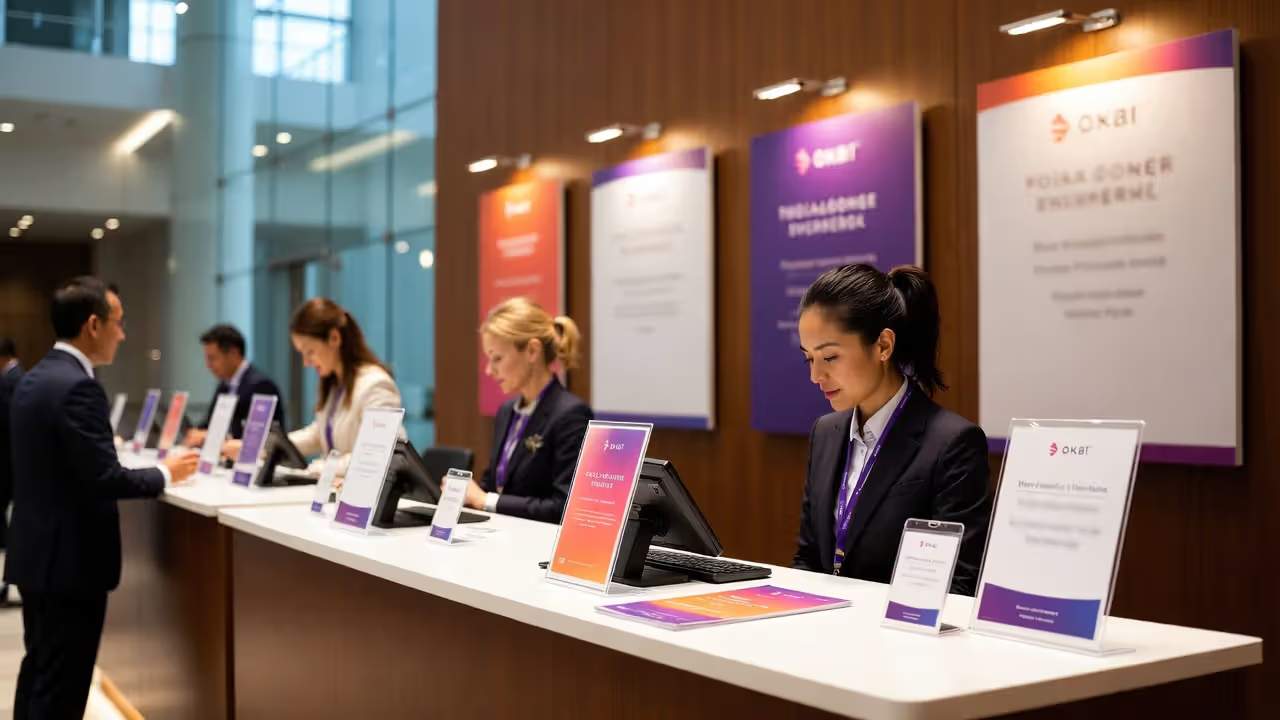
Your visual identity system establishes immediate recognition and sets emotional tone. Start with a primary logo that works across scales—from 16-pixel favicons to 20-foot stage backdrops. Create alternate versions: horizontal, vertical, icon-only, and reversed for dark backgrounds. Specify minimum sizes and clear space requirements to prevent cramped, illegible applications.
Author: Sophie Bennett;
Source: isnvenice.com
Color palettes require more strategic thinking than picking favorites. Choose a primary brand color that photographs distinctly (avoiding colors that wash out under typical venue lighting). Add two or three secondary colors that provide enough contrast for accessible text while maintaining visual harmony. Specify RGB values for digital applications and Pantone codes for printed materials—venue lighting can make "close enough" color matches look amateurish.
Typography choices directly impact readability in challenging environments. Select a headline font with strong personality but clear letterforms. Pair it with a body font optimized for legibility at small sizes and on screens. Avoid script fonts or ultra-thin weights that disappear under stage lights or when projected. Test your type system on actual signage materials and presentation screens before finalizing.
Build a pattern or graphic system that extends your identity beyond static logos. Geometric shapes, photographic treatments, or illustrative elements give designers flexibility while maintaining consistency. These elements should feel proprietary—recognizable as "yours" even without the logo present.
Messaging Architecture and Voice
Messaging architecture defines what you say and how you say it across every touchpoint. Start with a positioning statement that captures your event's unique value in one sentence. This isn't a tagline for public consumption—it's an internal compass that guides every communication decision.
Develop three to five core message pillars that support your positioning. If you're positioning as "the premier gathering for healthcare innovation leaders," your pillars might address cutting-edge research access, peer networking caliber, and actionable implementation strategies. Every session description, email, and social post should reinforce at least one pillar.
Voice and tone guidelines prevent your brand from sounding schizophrenic across channels. Define 3-4 voice attributes with specific do's and don'ts. "Authoritative but approachable" needs examples: "We use data to support claims (authoritative) but avoid jargon that excludes newcomers (approachable)." Include sample phrases that hit the mark and ones that miss it.
Create a lexicon of preferred terms and phrases to avoid. If you're positioning around "connection," consistently use that word rather than alternating between "networking," "relationship-building," and "community." Small linguistic inconsistencies undermine brand coherence.
Environmental Design Elements
Author: Sophie Bennett;
Source: isnvenice.com
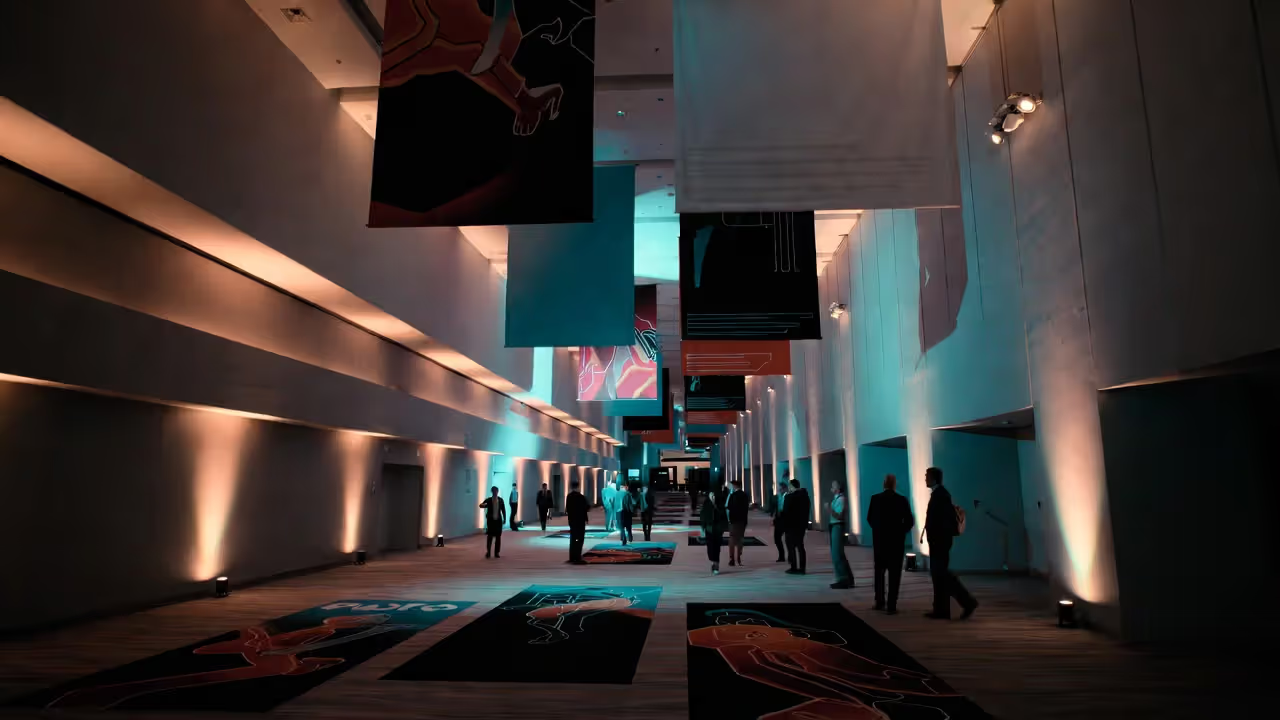
Environmental design transforms venues into branded experiences. Start by mapping attendee flows—registration to main hall, sessions to exhibition, morning arrival to afternoon departure. Identify decision points where attendees need directional guidance or motivational messaging.
Signage hierarchy prevents visual chaos. Tier signs by function: primary wayfinding, secondary directional, tertiary informational. Use size, color, and placement to establish clear hierarchy. A registration desk needs bold, simple messaging visible from 50 feet away. A session room schedule can use smaller type since attendees read it up close.
Consider vertical real estate. Venues offer walls, floors, ceilings, and suspended opportunities. Hanging banners utilize empty airspace. Floor decals guide traffic and create Instagram-worthy moments. Ceiling treatments transform generic ballrooms into branded environments.
Lighting design amplifies or undermines visual branding. Work with venue technical teams to specify lighting that renders your colors accurately. Test critical signage under actual venue lighting conditions—that perfect teal might look muddy under amber house lights.
7 Steps to Develop Your Event Identity from Concept to Execution
Step 1: Research and Discovery Audit past events if they exist. What worked visually? What confused attendees? Survey previous participants about memorable elements and pain points. Analyze competitor events—not to copy, but to identify differentiation opportunities. Interview stakeholders to surface conflicting expectations before design begins.
Step 2: Strategic Positioning Define your event's unique value proposition. Who attends and why? What transformation do they experience? What would they lose if this event disappeared? Distill answers into a positioning statement that guides all subsequent decisions. Test positioning with a small attendee sample to ensure it resonates.
Step 3: Design Development Translate positioning into visual concepts. Develop 2-3 distinct creative directions, each with logo, color palette, typography, and sample applications. Evaluate options against criteria like scalability, reproducibility, and alignment with positioning. Avoid design-by-committee—gather feedback but empower a decision-maker.
Step 4: Guidelines Documentation Create comprehensive brand guidelines that answer every vendor question. Include logo usage rules with visual examples of correct and incorrect applications. Specify color values in multiple formats. Provide typography licensing and pairing rules. Document signage specifications, presentation templates, and social media graphics. Make guidelines searchable and accessible—a PDF buried in email won't get used.
Step 5: Asset Production and Rollout Build a complete asset library before vendors need files. Include logos in multiple formats (vector, high-res PNG, low-res web). Create templates for common needs: badges, signage, presentations, social graphics. Organize assets logically with clear naming conventions. Use a shared drive or digital asset management system that grants appropriate access levels.
Step 6: Vendor Training and Support Don't assume vendors will read guidelines. Host a kickoff call walking through brand standards and answering questions. Provide examples of great execution. Establish a review process for critical deliverables—catch mistakes before they're printed or installed. Designate a brand steward who can make real-time decisions during event setup.
Step 7: Measurement and Iteration Document what worked and what didn't while memories are fresh. Photograph every branded touchpoint for reference. Survey attendees about brand recall and perception. Compare social media photo shares—which branded elements appeared most frequently? Use findings to refine guidelines and priorities for the next cycle.
Brand Storytelling at Events: Turning Attendees into Advocates
Events offer unique storytelling opportunities because attendees experience narratives rather than just consuming them. The most effective brand storytelling events create emotional resonance through carefully designed journey arcs.
Map the attendee journey from registration confirmation through post-event follow-up. Identify emotional peaks and valleys. Registration should spark anticipation. Arrival should deliver on promises while surprising with unexpected details. Mid-event lulls need energizing moments. Closing sessions should provide satisfying resolution while teasing future chapters.
Weave narrative threads throughout this journey. If your event brand emphasizes innovation, don't just state it—demonstrate it through unexpected venue choices, cutting-edge technology integrations, or format experiments. If community is your theme, create structured opportunities for connection rather than generic "networking breaks."
Content integration amplifies storytelling. Session topics should reinforce brand pillars. Keynote speakers should embody brand values. Even catering choices can tell stories—locally sourced menus for sustainability-focused events, global cuisines for international conferences.
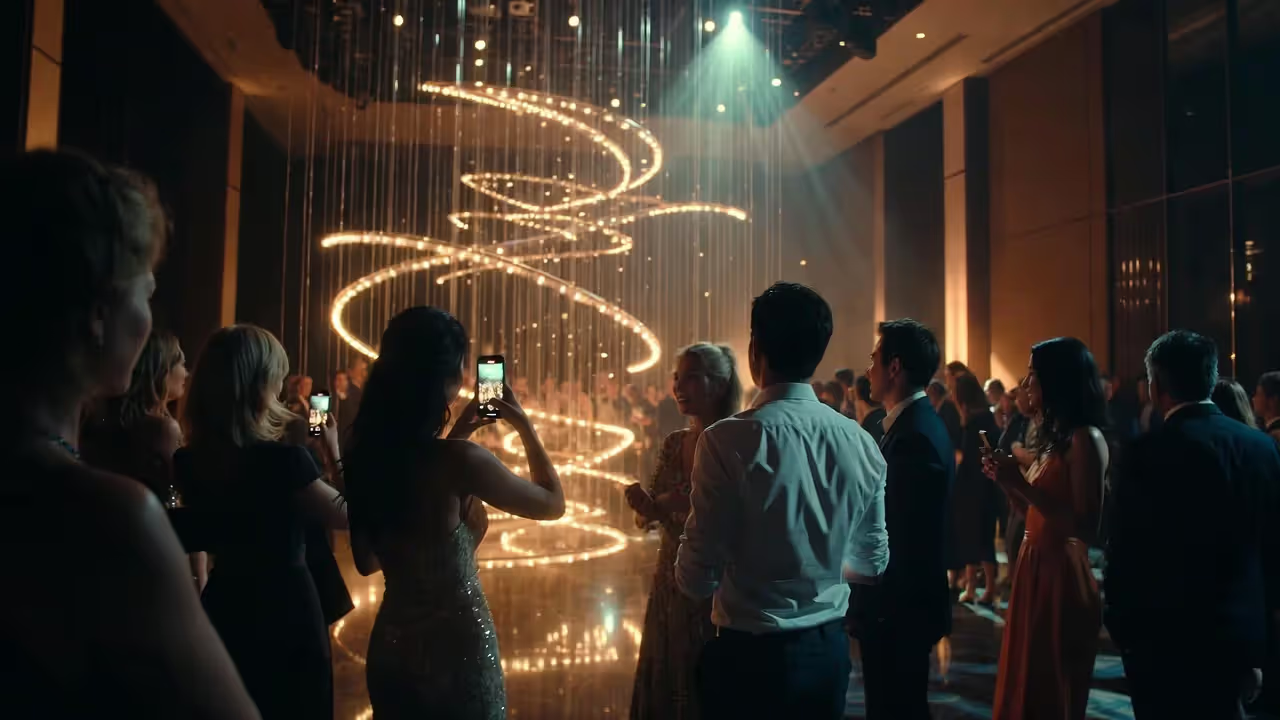
Create shareable story moments designed for social amplification. Interactive installations, visually striking environments, or unexpected experiences give attendees stories worth telling. The goal isn't gimmicks but authentic expressions of your brand that feel remarkable enough to share.
The most memorable events don't just communicate their brand—they invite attendees to live it through every interaction, creating stories that extend far beyond the event itself.
— Sarah Chen, Chief Experience Officer, EventForward Collective
Attendee-generated content becomes part of your brand story. Design photo opportunities with your branding naturally integrated—not awkward logo walls, but environments where your brand enhances rather than dominates the shot. Create event hashtags that encourage story sharing while building searchable archives.
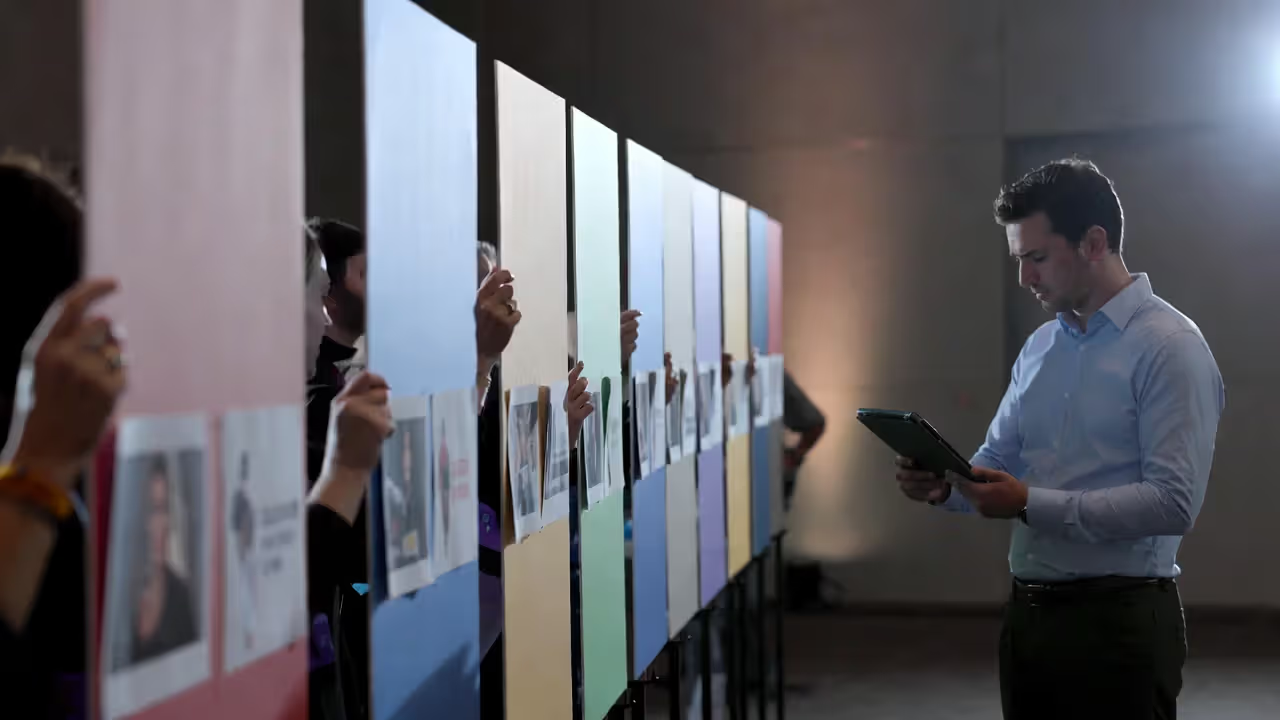
Empower attendees as co-creators. User-generated session notes, collaborative art installations, or crowd-sourced idea walls transform passive audiences into active participants whose contributions become part of the event narrative.
Author: Sophie Bennett;
Source: isnvenice.com
Visual Branding Mistakes That Undermine Event Credibility
Inconsistency Across Touchpoints Using slightly different logo versions, color variations, or font substitutions fragments your identity. Attendees won't consciously notice, but they'll subconsciously register disorganization. This is especially damaging when sponsors or speakers use off-brand templates that clash with your system.
Visual Overcrowding Cramming every surface with logos, sponsors, and messages creates visual noise that attendees tune out. Strategic white space and restraint make your key messages stand out. A single bold statement on a clean background outperforms a cluttered collage every time.
Poor Readability at Distance and Scale That intricate logo detail disappears on a badge. Elegant thin typography becomes illegible on projection screens. Test all visual elements at their actual application sizes and viewing distances. If attendees can't read your signage from where they'll actually see it, you've failed regardless of how beautiful the design looks up close.
Cultural Missteps and Accessibility Oversights Color symbolism varies across cultures—white signifies purity in some contexts, mourning in others. Idioms and wordplay often don't translate. Accessibility goes beyond ADA compliance to include color contrast ratios for vision impairments, font sizes for aging eyes, and language clarity for non-native speakers.
Neglecting Digital Touchpoints Gorgeous printed materials mean nothing if your event app uses generic templates or your social graphics look like afterthoughts. Digital touchpoints often generate more impressions than physical ones. Your Instagram stories, email headers, and virtual platform interfaces deserve the same design rigor as your stage backdrop.
Ignoring Vendor Capabilities Designing elements that exceed vendor capabilities wastes time and money. That custom Pantone color might not be reproducible on venue signage systems. Your chosen font might not be available in the presentation software. Understand production constraints before finalizing designs.
Static Branding That Doesn't Evolve Reusing identical branding year after year signals stagnation. Returning attendees want to see progression. Develop a brand system flexible enough to evolve—perhaps annual color shifts, updated graphic elements, or thematic variations—while maintaining core identity recognition.
Author: Sophie Bennett;
Source: isnvenice.com
How to Measure Brand Experience ROI at Your Event
| Touchpoint Category | Brand Elements | Primary Goal | Measurement Method |
| Pre-Event Digital | Email templates, landing pages, social graphics, registration portal | Build anticipation, drive registrations, set expectations | Email open/click rates, registration conversion rates, social engagement metrics, brand sentiment analysis |
| Pre-Event Physical | Direct mail invitations, welcome packages, pre-event gifts | Create tangible connection, reinforce premium positioning | Response rates, social sharing of unboxing experiences, registration completion after mail receipt |
| On-Site Wayfinding | Directional signage, floor decals, digital directories, staff uniforms | Reduce friction, prevent confusion, reinforce professionalism | Help desk inquiry rates, attendee flow analysis, post-event satisfaction scores for "ease of navigation" |
| On-Site Environmental | Stage design, lounge areas, photo opportunities, installation art | Create immersive experience, encourage social sharing | Photo share frequency, hashtag usage, dwell time in branded spaces, social reach metrics |
| On-Site Collateral | Badges, lanyards, programs, signage, swag items | Maintain visibility, provide utility, extend brand beyond event | Retention rates (items kept vs. discarded), social mentions featuring items, post-event usage reports |
| Digital Experience | Event app, virtual platform, presentation templates, social walls | Facilitate engagement, maintain consistency across hybrid experiences | App usage metrics, session attendance rates, in-app engagement, virtual attendee satisfaction scores |
| Sponsor Integration | Booth designs, sponsored sessions, co-branded materials | Deliver sponsor value while maintaining brand integrity | Sponsor satisfaction scores, renewal rates, attendee recall of sponsor alignment, lead quality reports |
| Post-Event Touchpoints | Thank you emails, recap videos, certificate designs, survey communications | Extend engagement, gather feedback, drive future registrations | Survey completion rates, content engagement metrics, early-bird registration conversion, Net Promoter Score |
Quantifying brand experience requires both hard metrics and soft perception measures. Start with baseline awareness and perception studies before major brand changes. Survey a sample of target attendees about event awareness, brand attributes, and likelihood to attend. Repeat post-event to measure shifts.
Track social listening metrics throughout the event lifecycle. Monitor hashtag usage, sentiment analysis, share of voice compared to competitor events, and influencer engagement. Spikes in positive mentions during and after your event indicate successful brand resonance.
Attendee surveys should include brand-specific questions beyond general satisfaction. Ask about brand recall: "Which event brand elements do you remember most clearly?" Test brand attribute alignment: "Which words best describe this event?" Compare intended positioning with perceived positioning to identify gaps.
Behavioral metrics reveal brand impact indirectly. Higher return attendance rates suggest positive brand associations. Referral rates indicate attendees value the experience enough to recommend it. Sponsor renewal rates reflect whether your brand delivers on partnership promises.
Brand lift studies measure changes in awareness, consideration, and preference among target audiences. Compare attendees with similar non-attendees on key brand metrics. While methodologically complex, these studies provide rigorous ROI evidence for stakeholders who demand quantitative proof.
Author: Sophie Bennett;
Source: isnvenice.com
Attribution modeling connects brand touchpoints to business outcomes. If your event drives lead generation, track which branded touchpoints preceded conversions. Did attendees who engaged with your branded lounge space show higher conversion rates? This data justifies investment in specific brand elements.
Calculate cost-per-impression for major brand investments. A $15,000 stage backdrop seen by 2,000 attendees for 8 hours, then featured in 500 social posts reaching 50,000 people, delivers a different ROI than a $15,000 swag item used once and discarded.
Qualitative feedback provides context that numbers miss. Conduct post-event interviews with diverse attendee segments. What moments felt most "on-brand"? Where did the experience fall short of brand promises? These insights guide strategic refinements.
FAQ: Professional Event Branding Questions Answered
Building Brands That Outlast the Event
Professional event branding creates value far beyond the days attendees spend on-site. A strong event identity builds anticipation before, shapes experience during, and extends conversation after. It transforms logistics into story, attendance into community, and transactions into relationships.
The most successful event brands don't chase trends or try to be everything to everyone. They make clear strategic choices about positioning, then execute those choices with relentless consistency across every touchpoint. They understand that brand building is cumulative—each event either strengthens or dilutes the equity you've built.
Start with strategy before aesthetics. Understand who you serve and what transformation you offer. Let those insights drive every design decision, every message, every environmental choice. Test your assumptions with real attendees. Measure what matters. Iterate based on evidence rather than opinions.
Your event brand is ultimately defined by the experiences you create and the stories attendees tell afterward. Make those stories worth sharing.