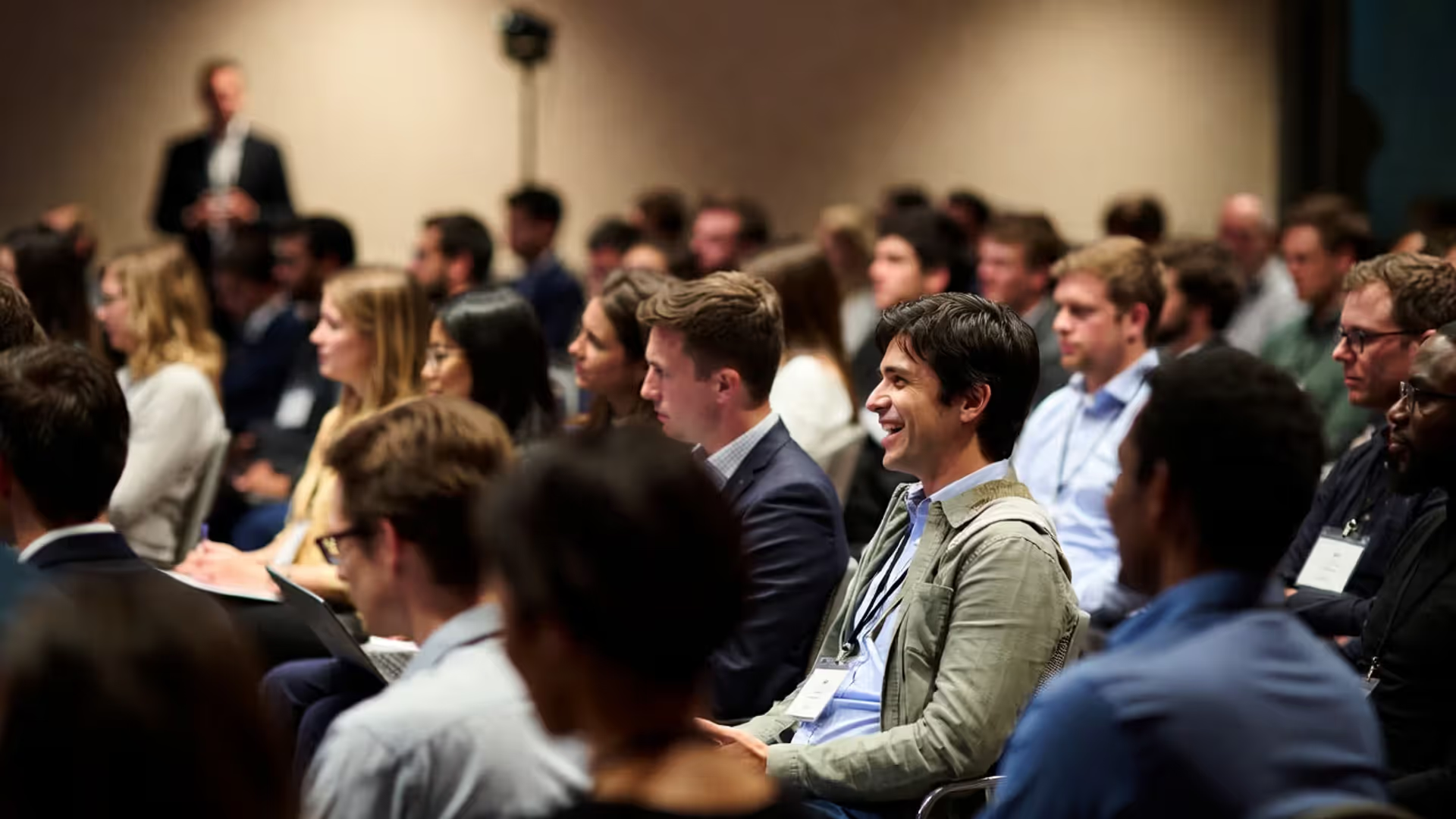

Participation creates the memory—not the slide deck.
Experiential Event Design

Content
Most people forget conferences within three days. They'll remember the hotel lobby, maybe a speaker's name, but the actual content? Gone. Traditional event formats—theater seating, PowerPoint marathons, forced networking over lukewarm coffee—blur together into one forgettable experience.
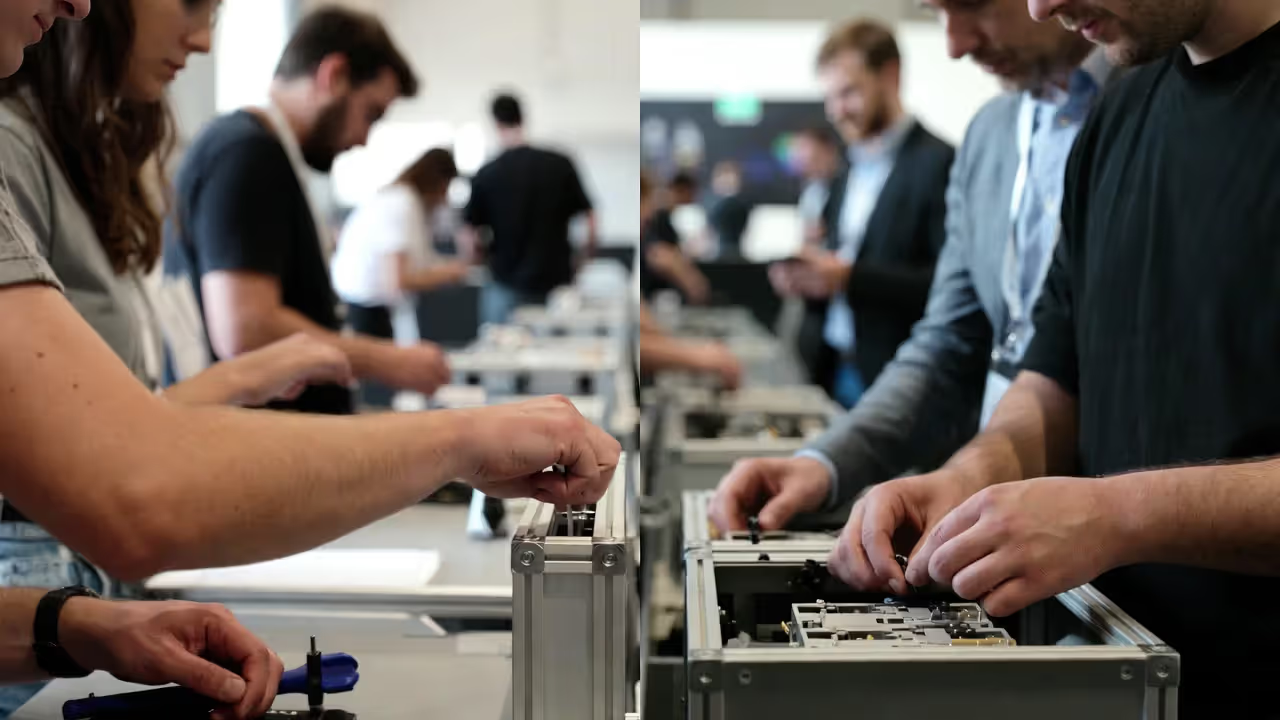
Experiential events flip this script. They turn spectators into participants, creating emotional bookmarks that stick around for months. A tech conference attendee might blank on every presentation but clearly remember assembling a robotic arm with engineers from rival companies. Someone at a brand activation might not recall product specifications but can describe, in detail, the moment they pushed past a personal boundary during an immersive challenge.
The core difference? Philosophy. Traditional events broadcast information. Experiential events engineer conditions where people make their own discoveries. This approach demands rethinking everything—registration through follow-up—with emotional resonance as the north star.
What Makes an Event "Experiential" vs. Traditional
Budget doesn't determine whether an event qualifies as experiential. A $5,000 neighborhood gathering can create lasting impact while a $500,000 conference disappears from memory. The real separator is attendee agency and emotional investment.
The Shift from Passive to Participatory Formats
Traditional events treat attendees as information receptacles. Sit down, listen up, watch carefully, ask questions during the designated ten-minute window. The event happens to them. Success means operational execution: Speaker arrived? Check. Microphone worked? Check. Lunch came on time? Check.
Experiential formats reverse this dynamic. Attendees help create what happens. They make choices that alter outcomes, team up with strangers on real projects, or chart personalized paths through content. Instead of sitting through pharmaceutical product presentations, sales reps might run through simulation labs where they diagnose patient scenarios using new medications. Music festival attendees might become performers through interactive sound installations that respond to their movements.
This participation breeds ownership. When you actively shape an experience instead of watching it unfold, your brain files the memory differently. You're not recalling something you witnessed—you're remembering something you did.
Author: Madison Cole;
Source: isnvenice.com
Core Elements That Define Experiential Design
Four structural components distinguish experiential events from their traditional cousins:
Choice architecture. Attendees face real decisions that change their experience. Not trivial options like meal preferences, but consequential choices: which skill track to pursue, which team to join, which difficulty level to attempt. These decisions create investment before anything else happens.
Sensory layering. Multiple senses fire simultaneously in ways that reinforce the central message. A sustainability summit might serve locally-sourced meals while displaying each dish's carbon footprint, linking taste memories to environmental data. A leadership retreat might combine outdoor physical challenges with reflection exercises, anchoring abstract concepts to physical sensations.
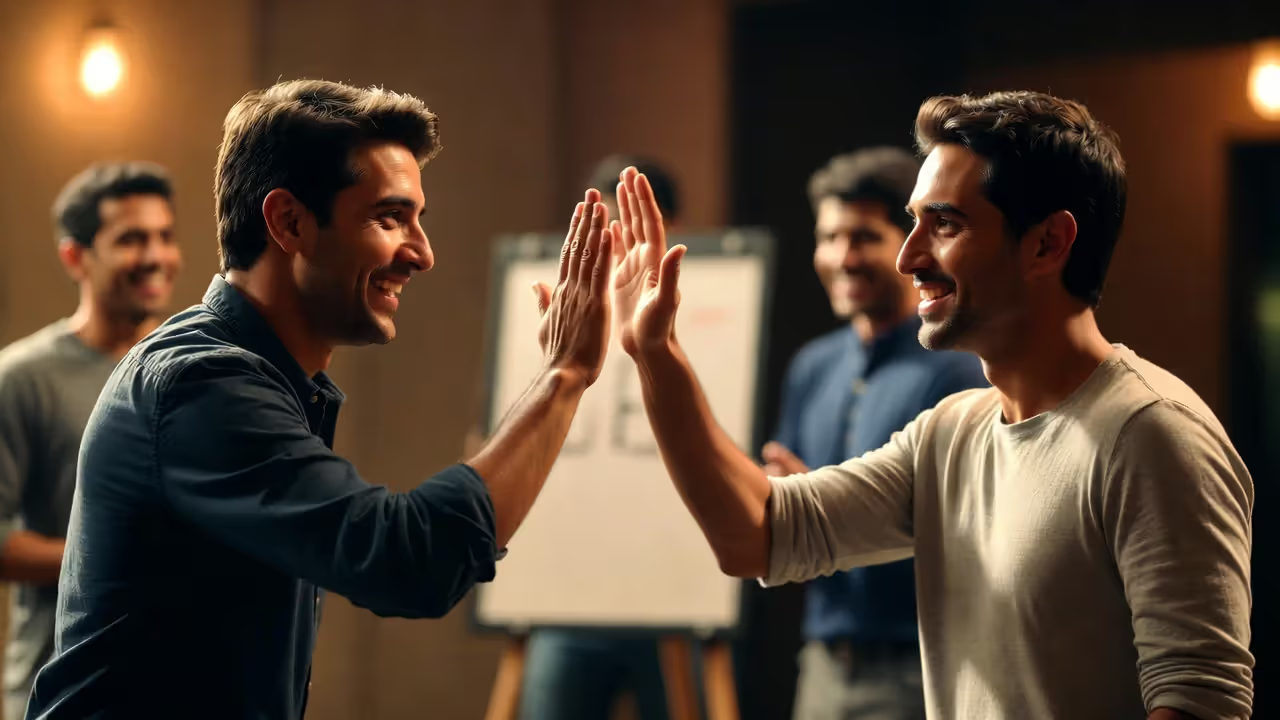
Social interdependence. Attendees need each other to finish tasks or unlock experiences. This differs from obligatory networking where strangers swap business cards out of politeness. Real interdependence—where your success requires collaborating with someone you met five minutes ago—builds genuine connections fast.
Narrative continuity. The experience follows an arc with tension, discovery, and resolution instead of a linear information dump. Attendees sense progression, not just time passing. They're moving through a story, not checking boxes on a schedule.
Why Emotional Connections Drive Attendee Retention and Brand Loyalty
Memory formation hinges on emotional arousal. Your amygdala flags emotionally significant moments for long-term storage while filtering out routine experiences. This brain mechanism explains why attendees remember conquering a challenge with strangers but forget hearing excellent presentations.
Emotions create chemical reactions in the brain that cement memories. When people feel something—surprise, accomplishment, genuine connection—their brains release dopamine and norepinephrine, which act like a 'save button' for that experience. Events that trigger these emotional responses don't just inform attendees; they change them.
— Dr. Susan Weinschenk, behavioral psychologist and author of "How to Get People to Do Stuff
This mechanism produces measurable business results. EventTrack research shows attendees are 4.5 times more likely to recommend brands after participating in experiential events versus traditional advertising exposure. The emotional connection transforms attendees into advocates because they're not promoting a message—they're sharing something that happened to them personally.
Brand loyalty works the same way. When someone connects your brand with a moment of real joy, accomplishment, or connection, that emotional anchor influences future decisions. They're not choosing your product because of features or price—they're picking the brand that made them feel capable, included, or inspired.
The retention effect reaches beyond marketing. Corporate training delivered experientially shows 65-80% knowledge retention after six months compared to 10-20% for lecture-based training. Employees remember what they discovered firsthand, not what someone told them.
Author: Madison Cole;
Source: isnvenice.com
5 Proven Strategies for Designing Memorable Attendee Interactions
Creating meaningful interactions demands intentional design choices that put emotional engagement ahead of operational convenience. These five strategies work across event types and budget levels.
Sensory Engagement Techniques
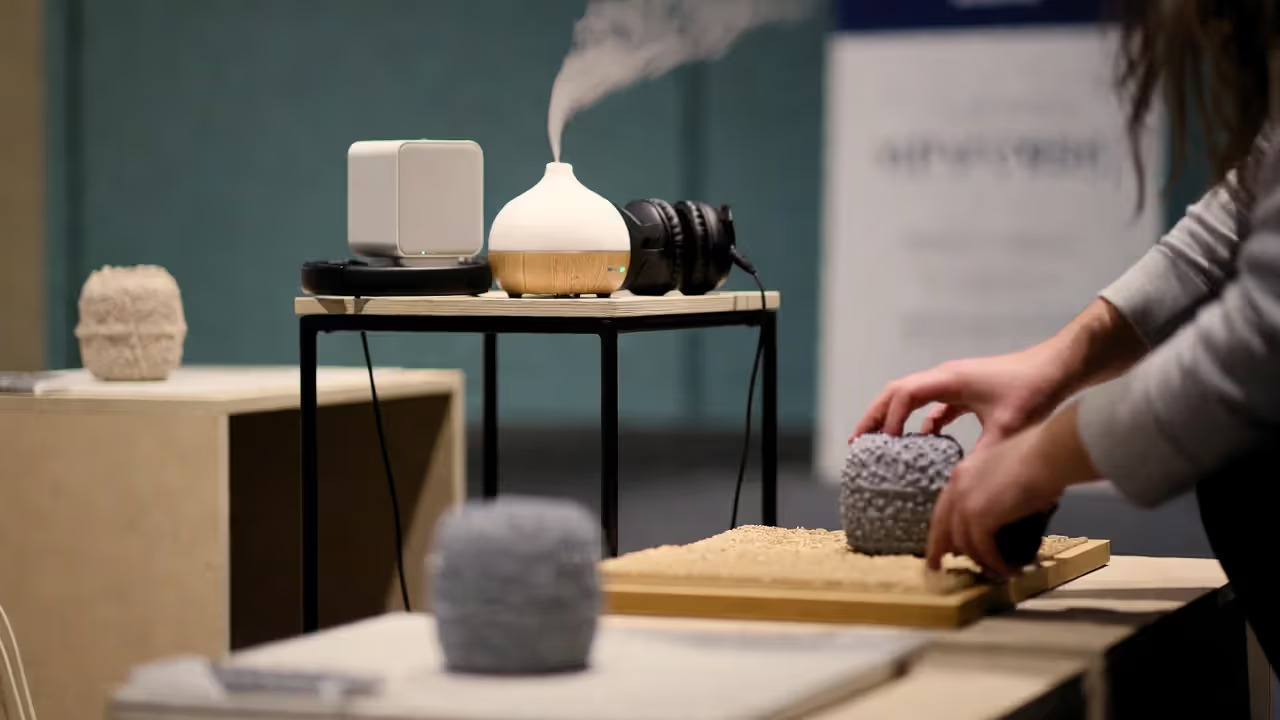
Human memory stores multi-sensory experiences more durably than single-channel information. Scent particularly creates powerful memory anchors because olfactory processing bypasses the thalamus and connects straight to the limbic system.
One financial services company hosting client appreciation events introduced signature scents in each experience zone—citrus in innovation labs, cedar in strategy rooms, vanilla in collaboration spaces. Six months later, when clients received promotional materials infused with these scents, brand recall jumped 43% compared to control groups.
Sound design operates similarly. A healthcare conference ditched generic background music for a custom soundscape that evolved throughout the day—energetic rhythms during morning sessions, ambient tones during reflection periods, celebratory crescendos during closing activities. Post-event surveys revealed 78% of attendees connected specific sounds with key learning moments.
Tactile engagement builds kinesthetic memories. Instead of handing out printed agendas, one event gave attendees modeling clay to shape during sessions. Creating physical objects while processing information anchored abstract concepts to tangible forms. Attendees photographed their sculptures and referenced them in follow-up discussions.
Author: Madison Cole;
Source: isnvenice.com
Personalization at Scale
True personalization doesn't require custom experiences for each attendee—an impossible standard for most budgets. It means creating choice architectures where attendees self-select into experiences matching their goals, learning styles, or comfort levels.
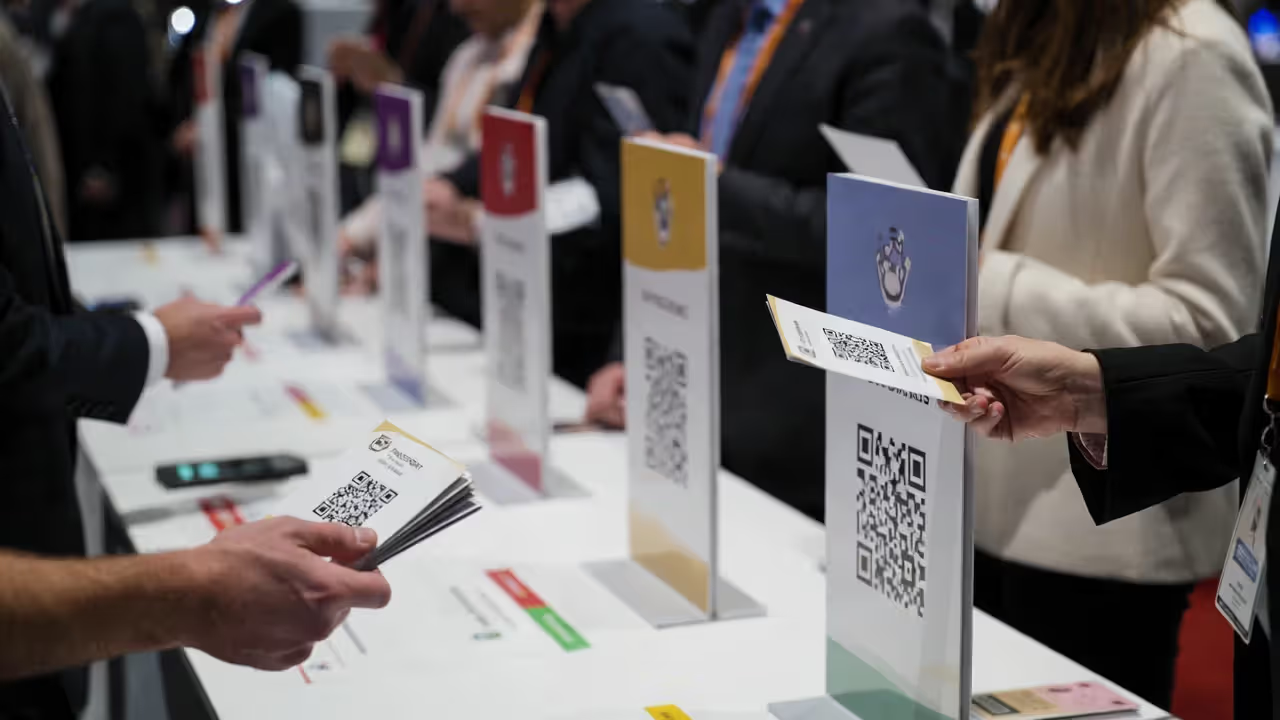
A technology conference replaced rigid schedules with a "choose your own adventure" format. Attendees received passports listing 40 potential experiences across six themes. Completing any five experiences in a theme earned a credential. Completing three credentials unlocked exclusive access. This structure let 3,000 attendees create unique paths while remaining operationally feasible.
Digital tools enable personalization without proportional cost increases. Pre-event surveys can segment attendees by expertise level, interests, or goals, then deliver customized welcome packets with recommended sessions and potential collaborators. Mobile apps can suggest connections based on profile data, turning random networking into curated introductions.
The trick is making personalization feel like empowerment rather than surveillance. Frame choices as opportunities for self-direction: "Which challenge matches your growth edge?" instead of "Which session will you attend?"
Author: Madison Cole;
Source: isnvenice.com
Creating Shareable Moments
Shareable moments extend event impact beyond physical attendance, but only when they're authentic rather than manufactured. The difference between a genuine shareable moment and "Instagram bait" is whether the experience has intrinsic value independent of documentation.
Forced photo opportunities—branded backdrops, props referencing inside jokes attendees don't get—generate low-quality shares signaling obligation rather than enthusiasm. Authentic shareable moments emerge from genuine accomplishment or surprise.
A nonprofit gala replaced the traditional step-and-repeat backdrop with an interactive art installation where attendees collaboratively created a mural representing their collective impact. Each person added elements symbolizing their contribution. The finished piece became the backdrop for photos, but the shareable moment was the creation process, not the photo opportunity.
Design for the story attendees want to tell. "I conquered this challenge" generates more enthusiastic shares than "I stood here." Build in natural documentation moments where capturing the experience enhances rather than interrupts it.
Building Community Through Participation
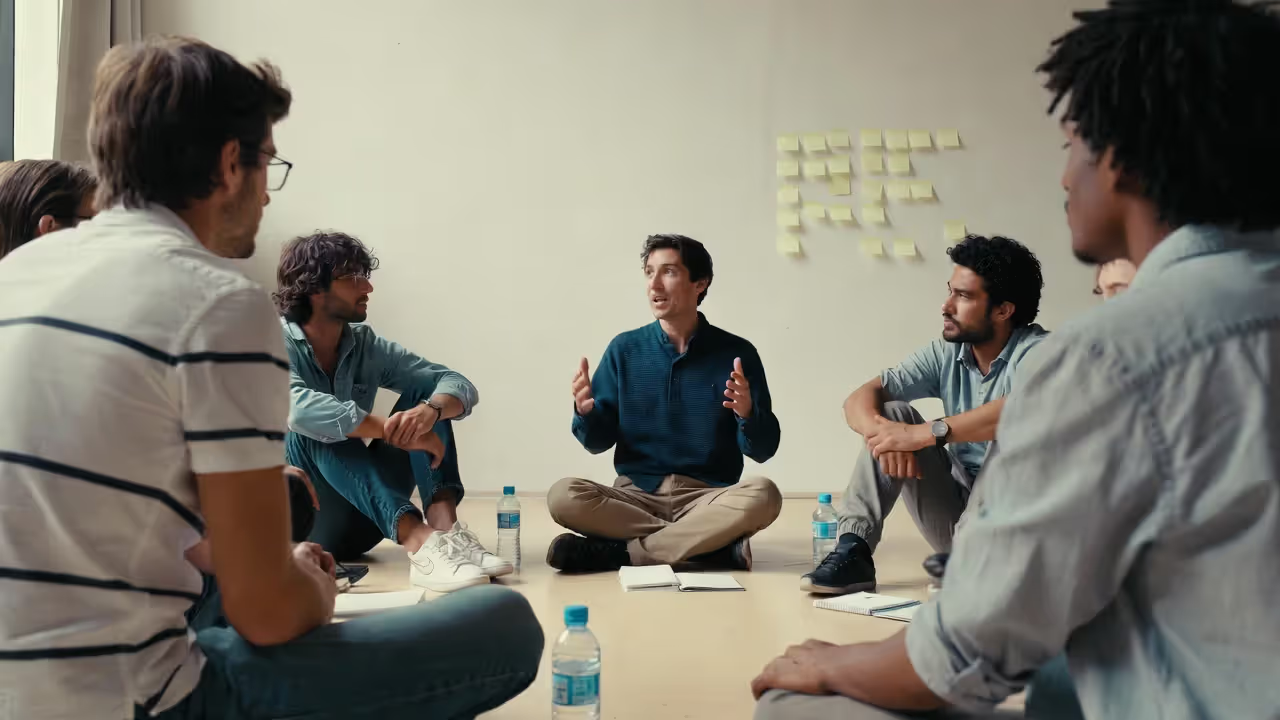
Community formation requires structured interdependence followed by unstructured connection time. Throwing strangers together and hoping they bond rarely works. Creating conditions where they must collaborate to achieve something meaningful, then providing space to process that shared experience, builds lasting connections.
A professional association conference divided 800 attendees into teams of eight for a city-wide scavenger hunt requiring diverse skills—research, negotiation, creative problem-solving, physical challenges. Teams had three hours to complete as many challenges as possible. The activity itself was memorable, but the real impact came during the debrief dinner where teams reflected on their collaboration patterns.
Months later, these randomly-assigned teams maintained active Slack channels, met for virtual coffee chats, and collaborated on projects. The shared challenge created a foundation for ongoing community.
The sweet spot involves manageable challenges requiring genuine collaboration and producing visible outcomes. Too easy or obviously contrived? Participants don't invest emotionally. Too difficult or work disguised as fun? Resentment builds.
Author: Madison Cole;
Source: isnvenice.com
Post-Event Continuation Tactics
Experiential events shouldn't end when attendees leave the venue. Design for memory reactivation through strategic follow-up that recalls emotional high points rather than repeating information.
Instead of sending slide decks, send sensory reminders. If attendees created something during the event, photograph it and send personalized images. If they overcame a challenge, send a credential or badge acknowledging the accomplishment. If they formed unexpected connections, facilitate continued interaction through curated introductions or micro-communities.
A corporate retreat sent attendees home with seeds from plants featured in the venue gardens. As participants nurtured these plants over subsequent months, the growing process triggered memories of insights and commitments from the event. Simple, inexpensive, emotionally resonant.
Create permission for continued engagement without obligation. Monthly "memory prompts" via email that ask "Remember when you..." allow attendees to re-engage on their terms. Some will ignore them; others will use them as springboards for action or connection.
Common Mistakes That Undermine Event Impact
Even well-meaning event designers stumble when they chase spectacle instead of substance or confuse busyness with genuine engagement. Here's what separates effective experiential design from expensive failures:
| What Works | What Fails | Why It Matters |
| Optional participation with clear value propositions | Mandatory participation ignoring comfort levels | Forcing people into uncomfortable situations creates resentment that overshadows any intended learning. They'll remember feeling trapped, not the lesson you wanted them to learn. |
| Multiple pathways through curated choices | Single-track activities ignoring diverse needs | When experiences don't match where attendees are, they mentally check out. Relevance matters more than production value for memory formation. |
| Moments worth documenting because they matter | Photo opportunities designed purely for social proof | People can smell manufactured photo ops a mile away. The resulting social shares feel forced, which actually undermines your organic reach. |
| Challenges requiring actual collaboration | "Team" activities individuals could complete alone | When people could succeed without their teammates, you get parallel solo work in the same room. Real connections require real interdependence. |
| Activities directly serving your core message | Flashy gimmicks disconnected from event purpose | When the memorable stunt has zero connection to your theme, people remember the spectacle but completely miss your point. |
| Processing breaks built into the flow | Constant stimulation without breathing room | Overwhelming attendees with non-stop activity doesn't maximize learning—it prevents their brains from converting short-term experiences into long-term memories. |
The most common mistake? Confusing novelty with meaning. A VR experience isn't automatically more experiential than a thoughtfully-designed conversation. What matters is whether the format creates conditions for emotional engagement and personal discovery.
Another frequent misstep: designing exclusively for extroverted, physically able, risk-tolerant attendees while alienating everyone else. Truly inclusive experiential design offers multiple engagement paths—physical and cerebral, social and individual, high-energy and contemplative.
Budget Considerations: What Actually Moves the Needle
Experiential events don't demand massive budgets, but they do require strategic resource allocation. Knowing which investments generate disproportionate impact helps you maximize limited funds.
High-cost production elements—elaborate sets, celebrity talent, cutting-edge technology—create impressive moments but rarely drive lasting emotional connections. A $50,000 hologram might wow attendees briefly, but they'll forget it faster than a $500 collaborative challenge that made them feel capable.
The most cost-effective experiential investments share three traits: they require attendee participation, they create tangible outputs, and they facilitate authentic human connection.
Low-investment, high-impact elements: - Structured collaboration frameworks transforming strangers into teams (design cost: time; implementation cost: minimal) - Choice architectures letting attendees personalize their paths (requires planning but minimal additional budget) - Reflection prompts and documentation tools helping attendees process experiences (often free or low-cost digital tools) - Sensory anchors like signature scents or soundscapes (one-time design cost, minimal implementation expense)
Medium-investment elements with strong ROI: - Custom interactive installations where attendees create collective outputs (fabrication costs but high shareability and memory formation) - Professional facilitation for complex group dynamics (expertise investment dramatically improving outcomes) - Pre-event personalization systems segmenting attendees and curating connections (technology and planning costs with strong engagement returns)
High-investment elements requiring careful justification: - Immersive technology (VR/AR) serving a specific learning or emotional goal, not general "wow factor" - Elaborate physical environments when the space itself communicates core messages - Celebrity or expert talent when their presence creates genuine value beyond name recognition
The real question isn't "Can we afford experiential elements?" but rather "Which experiential investments align with our core objectives?" A $10,000 event with strong experiential design will outperform a $100,000 traditional event in attendee memory and impact.
Think about expense per meaningful interaction instead of expense per attendee. Traditional event formats might reach 500 people but create zero lasting impressions—making the actual cost per impact infinite. Experiential formats might reach 200 people but create 150 lasting connections and behavior changes—making the cost per impact calculable and often surprisingly reasonable.
Measuring Success Beyond Attendance Numbers
Traditional event metrics—registration numbers, attendance rates, session capacity—measure logistics, not impact. Experiential events require different success indicators capturing emotional engagement and lasting memory formation.
Emotional Engagement Metrics
Real-time emotional engagement can be measured through technological and observational methods. Facial recognition software and biometric sensors provide quantitative data, but simpler approaches often prove more practical.
In-the-moment indicators: - Voluntary participation rates in optional activities (low participation signals poor relevance or value communication) - Time spent in experience zones beyond required minimums (attendees vote with their feet) - Spontaneous conversation volume and duration during unstructured time (authentic engagement creates organic social interaction) - Documentation behavior—not just photos taken, but whether attendees are capturing experiences or just checking boxes
Post-experience indicators: - Net Promoter Score specifically about the experience quality, not just overall satisfaction - Story richness in feedback—detailed narratives indicate emotional processing; generic praise suggests surface-level engagement - Unsolicied sharing on social media with personal commentary, not just branded hashtags - Follow-up question volume and depth—engaged attendees continue processing and seek additional resources
The most revealing metric is often unprompted recall. Two weeks after the event, ask them to describe their most significant moment without providing multiple choice options. Rich, specific responses indicate successful memory formation. Vague generalities suggest the experience didn't register emotionally.
Long-Term Memory Indicators
Memory durability outweighs immediate reactions. An event might feel exciting in the moment but fade within days. Real experiential success reveals itself through long-term recall and behavior change.
Three months out, watch for: - Unprompted recall of specific moments when asked "What do you remember about [event]?" without giving hints - Application of concepts or skills from the event, visible through work products or project choices - Ongoing communication between people who connected during the event - References to event experiences popping up in unrelated contexts
Six to twelve months out, look for: - Sustained behavior shifts matching event objectives—new practices, different decision patterns, skill application in daily work - Active community engagement among event attendees showing up as continued interaction and peer support - Voluntary return rates for recurring events (people voting with their calendars) - Attribution of professional or personal growth directly to event experiences when discussing career development
One financial services firm tracks "insight half-life"—how many days pass before 50% of attendees forget key concepts from their events. Traditional training shows a 30-day half-life. Their experiential leadership retreats show a 180-day half-life, with some concepts remaining accessible even longer.
Measuring these indicators requires building follow-up into your event design from the start. Schedule check-ins at 30, 90, and 180 days. Create lightweight mechanisms for attendees to report applications or insights. Monitor community platforms for organic interaction patterns.
Frequently Asked Questions About Experiential Events
The event industry faces a credibility crisis. Attendees increasingly question whether physical gatherings justify the time and cost investment when information is freely available online. Experiential events answer this question by offering something digital content cannot: transformative moments that reshape how people see themselves and their capabilities.
This shift from information delivery to experience creation requires courage. It means accepting that you can't control exactly what each attendee learns or how they'll respond. It means measuring success differently and defending budgets using metrics that don't fit traditional ROI calculations.
But the alternative—continuing to produce forgettable events that attendees endure rather than cherish—is no longer viable. When someone invests time attending your event, they're not just seeking information. They're hoping for connection, inspiration, or transformation. Experiential design honors that hope by creating conditions where meaningful experiences can emerge.
Start small. Take one element of your next event and redesign it for participation rather than observation. Replace a presentation with a collaborative challenge. Transform a networking break into a structured connection activity. Add choice where you previously dictated. Measure what attendees remember two weeks later, not just what they thought immediately after.
The events people remember aren't the ones with the biggest budgets or most famous speakers. They're the ones where attendees discovered something about themselves, connected authentically with others, or accomplished something they didn't think possible. That's the standard experiential events aspire to—not perfection in execution, but meaning in experience.