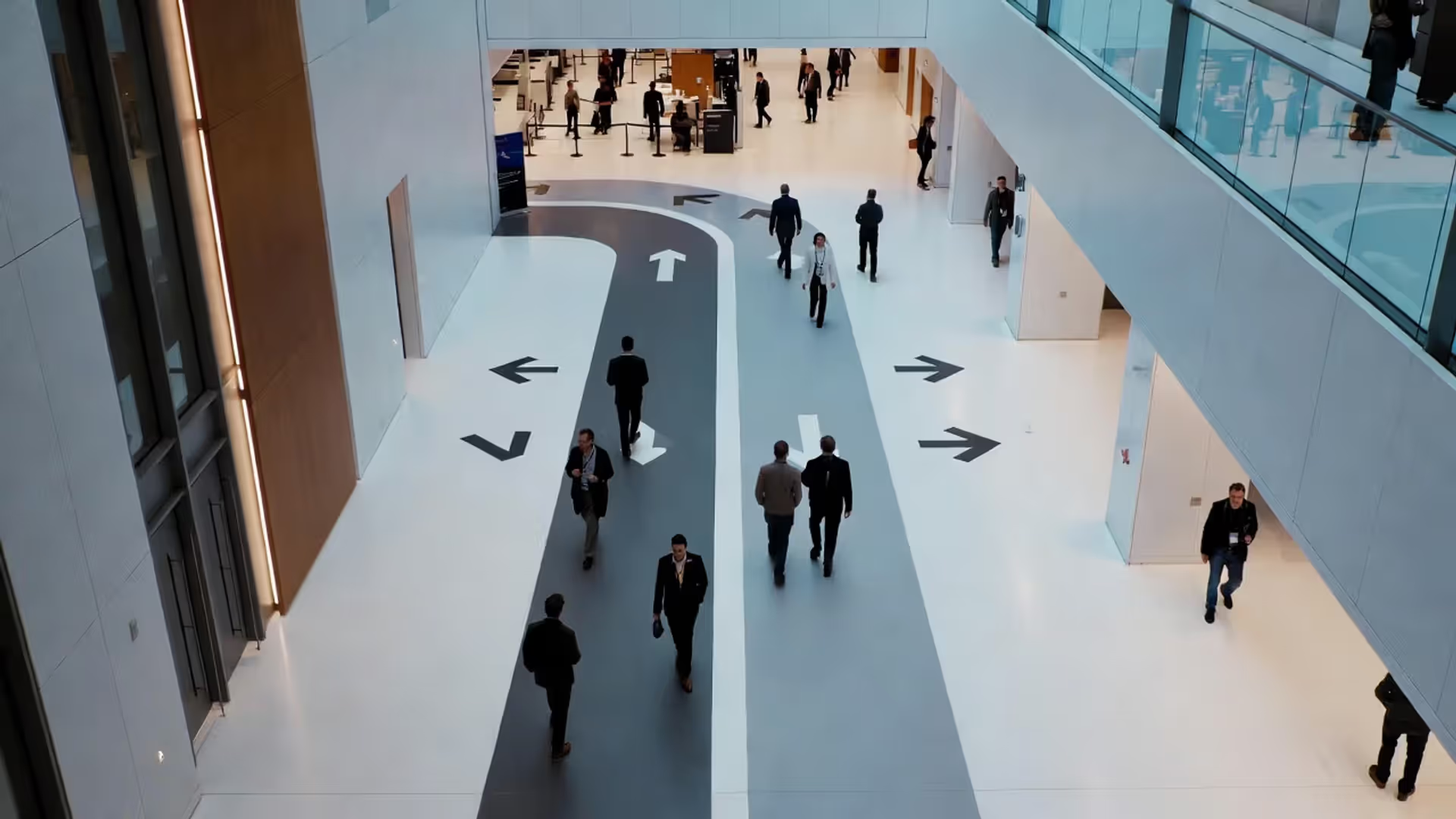
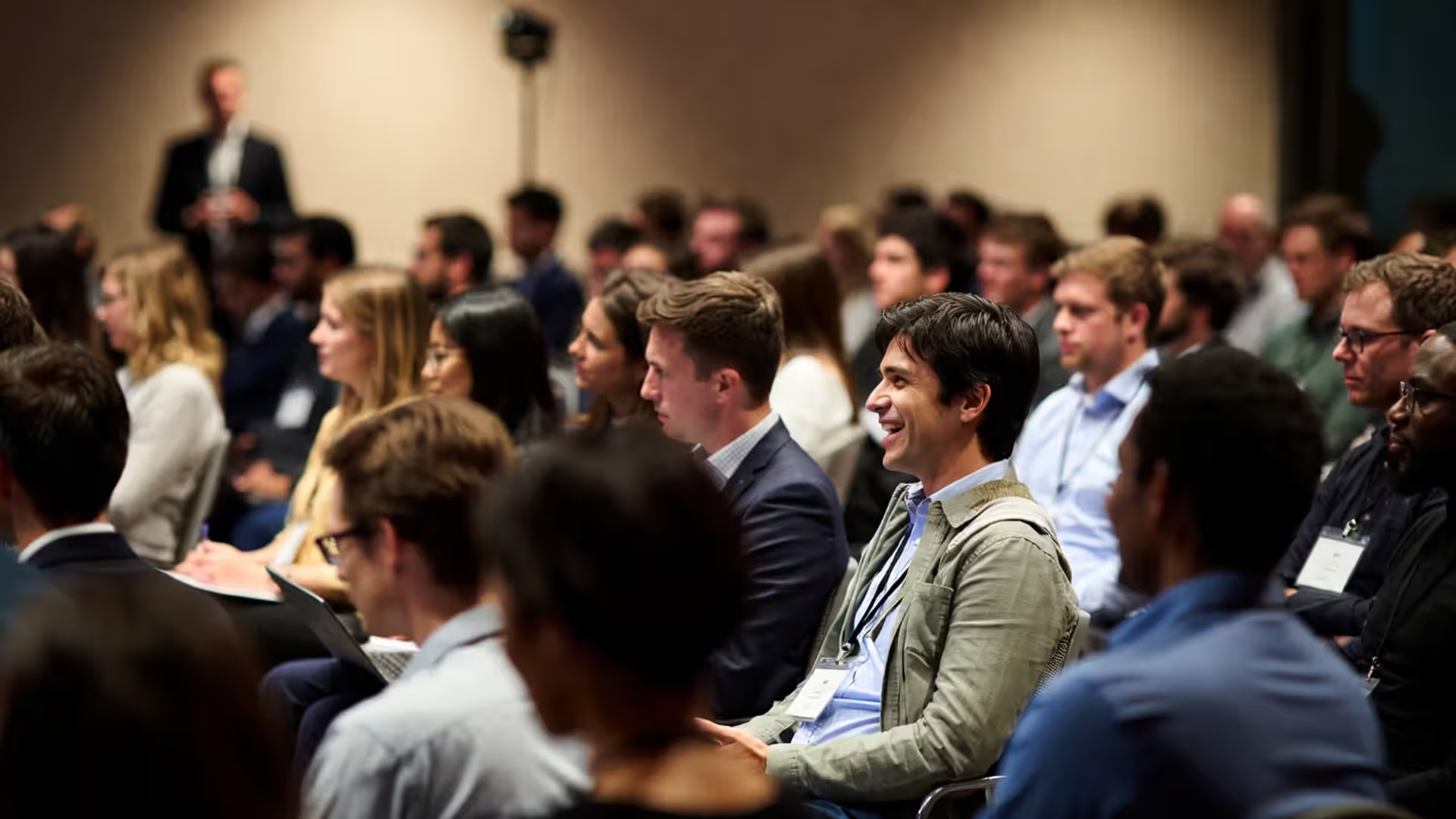
Great experiences are designed around human psychology.
Event Experience Design Guide

Content
Here's what happens at most corporate events: planners spend months negotiating contracts, coordinating AV setups, and finalizing catering orders. Everything runs smoothly. Nobody complains. And three weeks later, attendees struggle to remember why they bothered attending.
Event experience design starts from the opposite direction. Instead of building a flawless logistical machine, you design for what attendees should feel, discover, and become. The spreadsheets and vendor contracts still matter—but they serve a larger vision rather than becoming the vision itself.
What Makes Event Experience Design Different from Traditional Event Planning
Traditional planning works from checklists. Secure the venue by March. Lock down speakers by April. Finalize the catering menu by May. Success means hitting every deadline and avoiding disasters.
Experience design asks different questions first: What transformation do we want attendees to undergo? What should they be capable of on Monday that they couldn't do on Friday? How should each moment contribute to that change?
The distinction shows up in how you handle a 20-minute break between sessions. A traditional planner sees schedule buffer—time to reset the room and get people back in their seats. An experience designer sees an opportunity: maybe that's when the most valuable conversations happen, or when introverts recharge, or when a planned "accidental" encounter with the keynote speaker creates a memorable moment.
Several principles separate these approaches:
Design with intent, not just efficiency. Every touchpoint gets scrutinized: does this move people toward our goals? Registration isn't administrative overhead—it's chapter one of your story. The lunch menu isn't just food—it's either a conversation starter or a missed opportunity.
Prioritize feeling over information. Research shows people forget 80% of presentation content within a week. They remember emotional experiences for decades. A conference attendee won't recall your third breakout session's bullet points, but they'll remember the moment they realized they weren't alone in their struggles.
See one continuous arc, not discrete events. Most organizations fragment the experience: marketing handles pre-event, operations manages the live event, and someone eventually sends a survey. Experience designers recognize these as connected chapters in one story, each building on what came before.
Consider a product launch. Traditional planning delivers the presentation smoothly, feeds everyone, and wraps up on time. Experience design asks: how do we make attendees feel like pioneers? What if the venue layout physically represents the customer's journey from problem to solution? How can we create moments that make people want to tell their colleagues?
The logistics haven't disappeared. Audio still needs to work, food still needs to arrive hot, and registration lines can't snake through the parking lot. These elements just serve a purpose beyond themselves.
The Psychology Behind Attendee Engagement and Decision-Making
Brains process experiences through predictable patterns. When you understand these mechanisms, you stop guessing and start designing for how people actually think and remember.
Cognitive load theory reveals why cramming your agenda backfires. Working memory juggles maybe four new concepts at once—add more and the whole system starts dropping pieces. This explains the glazed expressions you see by 3 PM on day one. Smart designers alternate between heavy cognitive lifting (complex workshops) and lighter processing (hands-on activities, social time). The rhythm matters more than cramming in one more panel discussion.
Social proof explains why networking sessions start awkwardly. Nobody wants to be the first person approaching strangers. Once you see others engaged, joining feels natural. Some event teams plant "conversation starters"—staff or volunteers trained to initiate discussions. After about 20% of the room gets talking, organic momentum builds and your plants can step back.
Peak-end rule means attendees judge your entire event primarily on two things: the most intense moment they experienced and the final moment before leaving. A three-day conference that's merely fine but ends with an extraordinary closing session will be remembered more fondly than a consistently solid event with a forgettable conclusion. This is why the last 30 minutes of your event matter more than the middle six hours.
The events people can't stop talking about aren't necessarily the ones where everything went perfectly. They're the ones that created an emotional peak—surprise, delight, genuine connection—that triggered their brain to flag it as significant. That emotional marker determines whether they recommend your event or forget it.
— Dr. Jody Urquhart
Anticipation extends the pleasure window. Studies show people derive similar enjoyment from looking forward to an experience as from the experience itself. When you build curiosity and excitement for weeks before your event—teasers, countdown content, behind-the-scenes access—you're not just improving attendance. You're creating weeks of positive emotional connection instead of just the event days.
How Memory Formation Affects Post-Event Perception
Author: Sophie Bennett;
Source: isnvenice.com
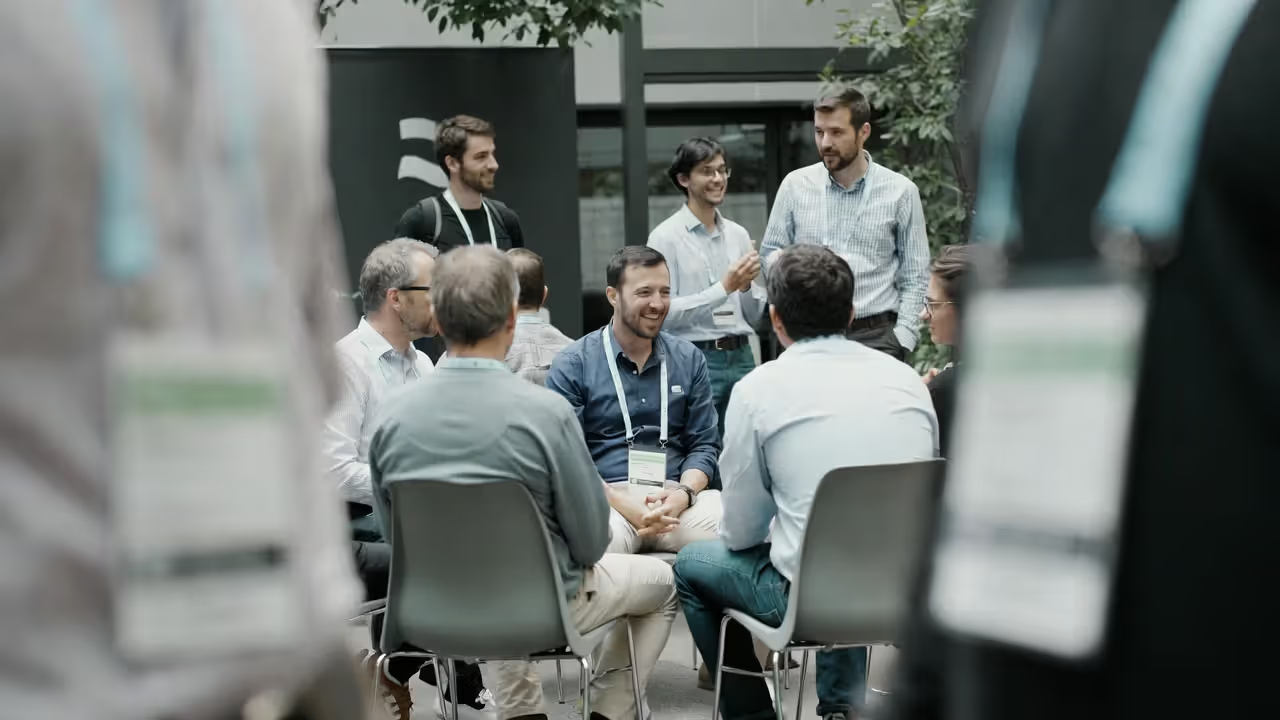
Memory doesn't record experiences like a camera. It reconstructs them later, prioritizing novelty, emotion, and personal relevance while discarding routine information.
Von Restorff effect (isolation effect) explains why the unusual sticks. Run ten similar panel discussions and attendees will remember the one you held outdoors, or the one that used an unexpected format. This doesn't mean gimmicking up every moment. Strategic contrast creates memory markers. That outdoor session becomes the reference point people use when recalling the entire day.
Recency bias gives disproportionate weight to final impressions. What happens in your closing 30 minutes shapes post-event narratives more than anything from Tuesday afternoon. Closing sessions shouldn't be throwaway housekeeping announcements—they're your highest-value real estate for reinforcing messages and creating emotional resonance.
Contextual cues help trigger recall later. Three weeks after your event, what will remind attendees of insights they gained? Generic hotel ballrooms create generic memories that blur together. Distinctive sensory elements—a specific scent, unusual music choices, unexpected spatial arrangements—create mental hooks. One technology conference commissioned a custom soundtrack for break periods. Months later, attendees reported that hearing similar music spontaneously brought back specific conversations and breakthroughs from the event.
The Role of Surprise and Delight in Creating Lasting Impressions
Predictable experiences disappear into background noise. Brains conserve energy by ignoring expected patterns. Surprise forces attention and triggers the "save this memory" function.
Effective surprise follows a formula: establish clear expectations, then violate them in ways that serve your purpose.
A pharmaceutical company typically opened their annual meeting with the CEO delivering remarks from a stage. One year, the CEO showed up unannounced during breakfast, sitting with different tables for casual conversation before being "officially introduced" for formal remarks. That expectation violation created energy and accessibility that colored the entire meeting.
Delight is surprise's cousin but different. Surprise just means unexpected. Delight means unexpectedly positive—exceeding anticipated value in ways that feel personal. Small touches often outperform expensive gestures. Learning attendee preferences during registration, then acting on that information, creates delight. So does solving problems before they surface (phone charging where people naturally gather, umbrellas appearing before rain starts).
The ratio matters. Too much surprise creates anxiety and chaos. You want about 80% reliable structure (clear schedules, dependable logistics) providing psychological safety, with 20% unexpected positive elements that create those memorable peaks.
Mapping the Complete Participant Journey: Pre-Event to Post-Event
Author: Sophie Bennett;
Source: isnvenice.com
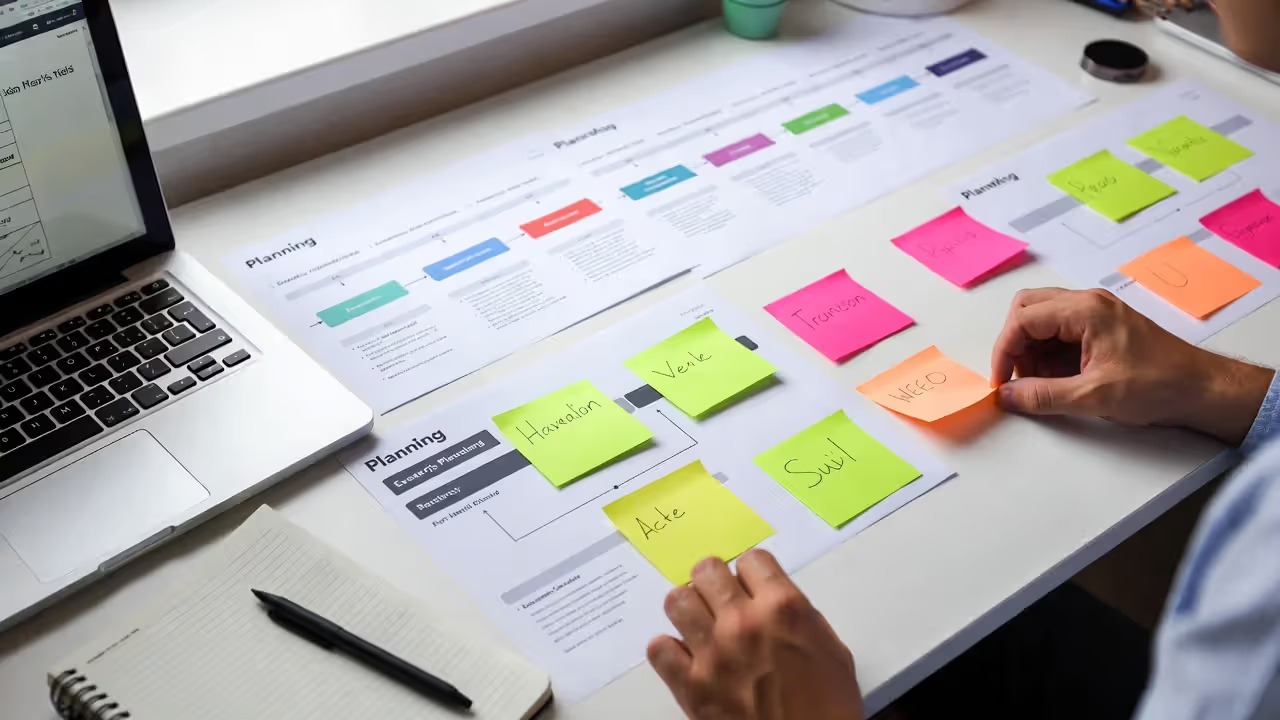
Experience mapping exposes the gap between what you think attendees encounter and what they actually experience. That gap explains most engagement failures.
List every interaction from first awareness through six months post-event. Include obvious touchpoints (confirmation emails) and invisible ones (hunting for parking, standing in bathroom lines, trying to find coffee). Each carries emotional weight and shapes overall perception.
Pre-registration starts when potential attendees first hear about your event. What hits them? A generic announcement or a compelling narrative about what they'll gain? Can they immediately grasp the value or do they need to hunt through three web pages for basic information? Every friction point drops your conversion rate.
Between registration and event day spans weeks or months. Most planners go silent after the confirmation email. Experience designers recognize this as prime territory for building anticipation, providing early value, and starting to deliver on promises. Pre-event content, community introduction, and careful preparation turn waiting time into experience rather than dead space.
Arrival and check-in establishes emotional baseline. Chaotic registration with confused volunteers signals disorganization, priming attendees to doubt everything that follows. Smooth, welcoming arrival builds confidence and optimism—that first impression becomes the lens coloring how attendees interpret subsequent moments.
The live event gets the most planning attention yet often lacks intentional pacing. Energy levels shift throughout the day. Morning sessions can handle dense content. Post-lunch slots need interactive formats or people zone out. Late afternoon requires either high energy or contemplative reflection—anything mid-level vanishes into fog.
After the event ends determines whether your gathering drives lasting change or becomes a pleasant memory that fades. The first 72 hours represent peak receptivity—attendees want to act on insights while motivation runs hot. Providing clear next steps, resources, and community connection during this window multiplies your return dramatically.
| Journey Stage | Primary Objective | Key Touchpoints | Engagement Tactics | Success Metrics |
| Pre-Registration | Generate awareness and desire | Social channels, website visits, word-of-mouth, early campaigns | Strong value proposition, testimonials and proof, urgency elements, speaker teasers | Conversion percentage, registration speed, referral sources |
| Registration to Event Day | Sustain excitement and minimize no-shows | Confirmation messages, reminder sequences, mobile platform, pre-event networking | Countdown materials, exclusive sneak peeks, attendee introductions, preparation guides | Open and click rates, platform adoption, attendance rate, pre-engagement levels |
| Arrival & Check-In | Establish positive tone and reduce anxiety | Parking experience, wayfinding, registration area, welcome space, initial orientation | Clear directional signs, efficient processing, genuine welcome, orientation support, early mingling opportunities | Processing speed, interaction quality, observed sentiment, initial session attendance |
| During Event | Facilitate transformation and forge connections | Sessions, break periods, meals, networking opportunities, activities, environment | Format variety, intentional pacing, structured networking, unexpected moments, continuous value delivery | Attendance patterns, participation intensity, connections formed, immediate feedback, social amplification |
| Post-Event Follow-Up | Cement learning and catalyze action | Thank-you messages, resource delivery, community platform, feedback requests, future announcements | Resource sharing, action frameworks, ongoing community access, feedback loops, clear next steps | Response rates, resource engagement, community activity, behavior change evidence, future registration |
Walk through your event as an attendee would—literally. Where would you feel confused, bored, or frustrated? Where would energy spike? Map these emotional shifts against your touchpoints to spot improvement opportunities.
12 Attendee Engagement Ideas Backed by Event Data

Author: Sophie Bennett;
Source: isnvenice.com
Generic tactics produce generic results. These specific approaches have demonstrated measurable impact when thoughtfully implemented.
- Structured networking with constraints. Open networking generates small talk and business card swaps. Add structure: "Find someone from outside your industry and discuss your biggest current challenge—8 minutes." Time constraints and specific prompts drive substantive conversations. Events using structured approaches report 40% higher satisfaction with networking value.
- Real-time polling with actual consequences. Polling attendees creates mild engagement. Letting poll results genuinely change what happens next creates investment. "We can take this discussion two directions—vote now and we'll follow the majority choice." Attendees pay closer attention when their input visibly matters.
- Physical elements in digital contexts. Virtual and hybrid events suffer from screen fatigue. Mailing physical components beforehand—workbooks, tactile objects, tasting samples—engages different senses and creates shared experience across locations. Hybrid events incorporating physical elements show 25% longer average participation time.
- Skill stations over passive sessions. Replace some presentations with hands-on learning stations where attendees practice specific skills with expert coaching. People retain 70% of what they actively do versus 10% of what they hear. Training events using this approach report skill application rates three times higher post-event.
- Micro-commitments throughout. Ask attendees to commit to small actions repeatedly: "Write down one insight you'll apply this week." Public micro-commitments increase follow-through. Events incorporating commitment mechanisms see 35% higher reported behavior change at three months.
- Designated collision spaces. People naturally migrate toward walls and exits. Design spaces where attendees must intersect—narrow passages with interesting displays, centralized refreshment locations, seating arrangements that encourage mingling. Strategic spatial design increases spontaneous meaningful conversations by 50%.
- Role-based tracks with crossover moments. Segment some content by role or interest, then intentionally mix different groups at specific times. This balances relevance (targeted content) with diversity (meeting people outside their bubble). Multi-track events with planned crossover report higher innovation and partnership outcomes.
- Gamification with social currency. Points and leaderboards alone feel hollow. Gamification succeeds when it rewards behaviors you want (question-asking, connection-making, exhibitor visits) with social recognition that matters to participants. B2B events using social-currency approaches see 45% higher booth traffic and session interaction.
- Curated small-group experiences. Within larger gatherings, create exclusive small-group opportunities (intimate dinners, specialized workshops, VIP sessions). Limited access creates perceived value and gives attendees something to aspire toward or share. Events with tiered access report 30% higher overall satisfaction and double the social media mentions.
- Storytelling through attendee voices. Rather than only featuring speakers and experts, spotlight attendee stories and transformations. Video interviews, live testimonials, or written case studies make the experience feel attainable and relevant. Events centering attendee narratives show 40% higher emotional connection scores.
- Strategic white space. Counter-intuitively, scheduling intentional downtime increases engagement. Overpacked agendas exhaust people and prevent processing. Building in 30-minute unstructured periods lets attendees reflect, connect, or recharge. Events with strategic breathing room report higher content retention and smaller afternoon attendance drops.
- Post-event momentum partnerships. Partner with complementary organizations to extend value after your event concludes. Exclusive offers, continued education, or community access keeps your event top-of-mind and demonstrates ongoing commitment. Events with post-event partnerships see 55% higher year-over-year retention.
Implementation quality matters as much as selection. One well-executed tactic beats five half-hearted attempts. Choose based on your specific objectives, audience preferences, and realistic resources.
Building Immersive Events: Techniques for Multi-Sensory Experiences
Author: Sophie Bennett;
Source: isnvenice.com
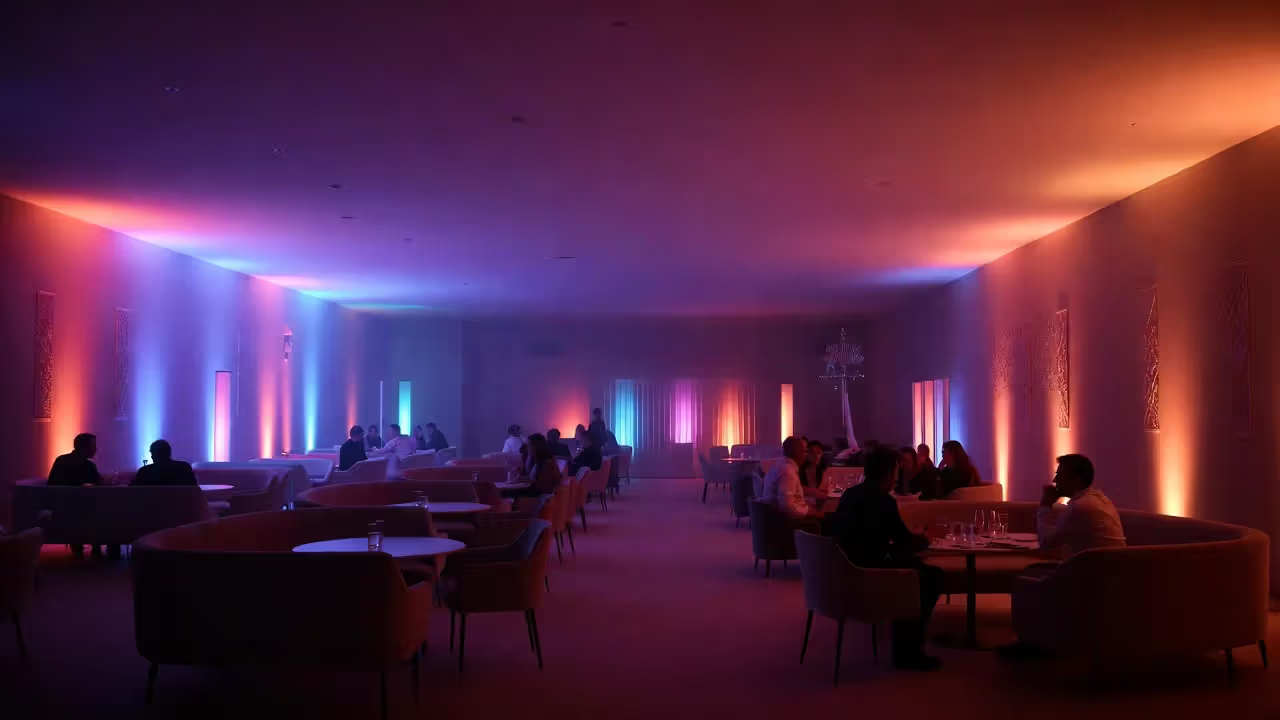
Immersive events engage multiple senses simultaneously to create environments that transport people from ordinary reality. When executed well, immersion deepens emotional connection and memory formation. When executed poorly, it becomes expensive distraction.
Environmental design provides the foundation. Lighting establishes mood—warm tones foster intimacy, cool tones signal innovation, dynamic lighting builds energy. Sound layering adds dimension: ambient music during networking, silence during reflection exercises, strategic sound effects supporting content. Temperature and air quality affect comfort and alertness but rarely receive attention until they're problematic.
Scent remains underutilized. Olfactory memory connects most strongly to emotion and recall. A subtle, distinctive scent throughout your event creates a powerful memory anchor. Hotels and retailers have leveraged this for decades; events are finally catching up. Keep it subtle—overpowering fragrances trigger headaches and complaints.
Spatial design influences behavior. Round tables encourage conversation; theater seating suggests passive reception. Creating varied spaces within your event—energetic zones, quiet zones, collaboration zones—lets attendees self-select environments matching their moment-to-moment needs. Flexible spaces that transform throughout (same room, completely different setup) create novelty without requiring multiple venues.
Storytelling integration gives immersive elements purpose. Technology and sensory design should advance a narrative, not exist for spectacle. A product launch might use environmental design to physically represent the customer journey—attendees literally walk through stages from problem awareness to solution implementation, with each zone using sensory elements reinforcing that phase.
When to Use VR, AR, and Projection Mapping
Immersive technology creates wow moments but carries significant cost and complexity. Strategic deployment beats blanket application.
Virtual reality excels for experiences impossible in physical reality: exploring microscopic environments, visualizing data in three dimensions, or simulating dangerous scenarios safely. VR demands dedicated stations, trained staff, and time—each person needs 5-10 minutes minimum. It creates bottlenecks and isolates users from the group. Deploy VR when the unique experience justifies these trade-offs, not for generic appeal.
Augmented reality overlays digital information onto physical reality, typically through smartphones or tablets. AR shines for wayfinding, interactive exhibits, and information layering. Attendees explore at their own pace without specialized equipment beyond their own devices. The technology is more accessible though less immersive than VR. Best applications include scavenger hunts, product demonstrations, or educational overlays on physical spaces.
Projection mapping transforms physical surfaces into dynamic displays. Buildings, stages, or objects become canvases for storytelling. This creates shared experiences—everyone sees the same thing simultaneously, enabling collective reactions. Cost scales with complexity and surface area. Simple projection mapping (single surface, straightforward content) is increasingly affordable. Elaborate multi-surface synchronized displays remain expensive but create unforgettable impact.
Decision framework: Does this technology deliver experiences impossible through simpler means? Does it serve your core objectives or just add flash? Can you execute it well with available budget and expertise? Yes to all three, proceed. Otherwise, invest in fundamentals.
Creating Themed Environments on Different Budget Levels
Author: Sophie Bennett;
Source: isnvenice.com
Immersion doesn't demand unlimited budgets. Resourcefulness often trumps spending.
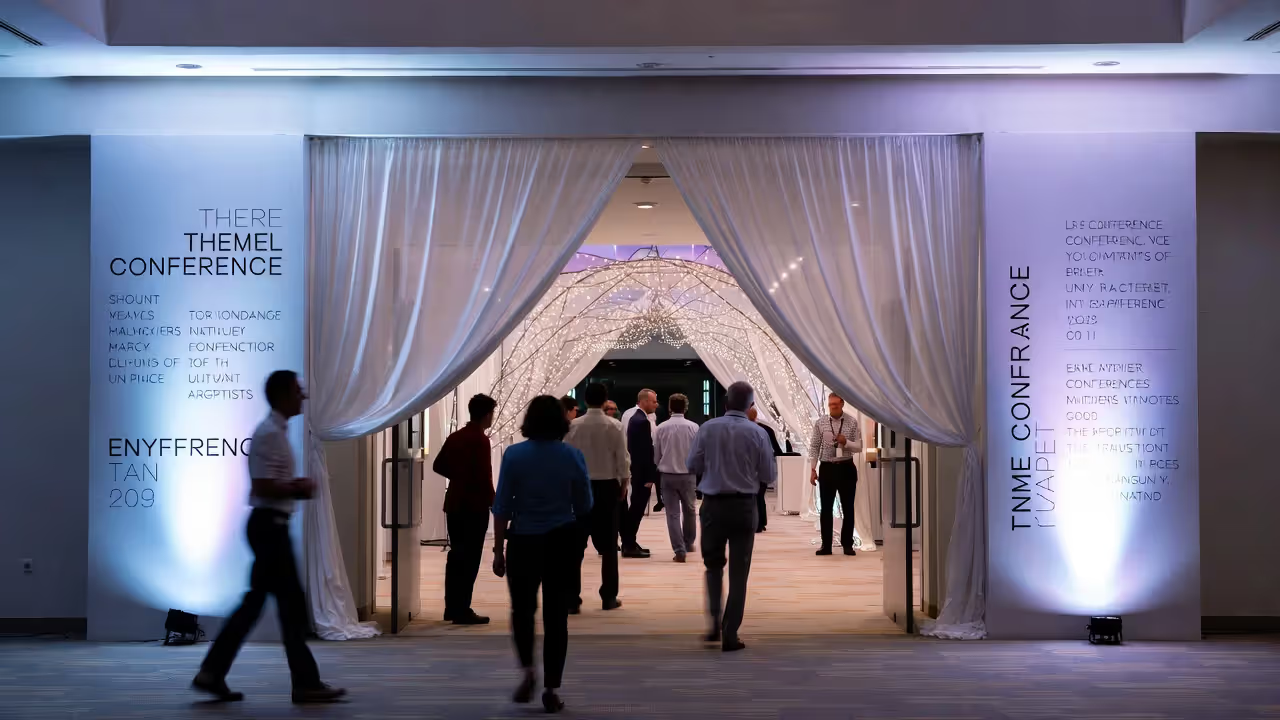
Limited budget ($500-2,000): Focus on a few high-impact elements rather than attempting to theme everything. Strategic lighting transforms spaces dramatically for minimal investment. Colored LED uplighting rented for $20-40 per fixture creates atmosphere. Fabric draping conceals ugly walls and defines spaces cheaply. Curated playlists establish mood at zero cost. Concentrate sensory investment on entry points—when the first thing attendees encounter feels special, that impression carries forward.
Moderate budget ($2,000-10,000): Add custom signage, branded environmental graphics, and modest decor elements. Projection mapping on a single surface becomes feasible. Professional lighting design creates sophisticated atmosphere. Scent machines and soundscaping add sensory layers. At this level, you can create one or two fully immersive zones within a larger event rather than theming everything.
Substantial budget ($10,000+): Complete environmental transformation becomes possible. Custom-built sets, elaborate projection mapping, professional actors or performers, coordinated multi-sensory design. The risk here involves over-designing—more isn't automatically better. The most memorable high-budget immersive events choose a clear concept and execute it flawlessly rather than cramming in every possible element.
Budget allocation rule of thumb: allocate 60% to elements attendees directly interact with, 30% to ambient environment, 10% to wow-factor moments. Direct interaction creates the most value; ambient environment supports it; wow-factor moments generate social sharing and memorability.
Common Experience Design Mistakes That Kill Engagement
Even well-intentioned experience design can backfire. These patterns appear repeatedly across events of all types and sizes.
Mistaking novelty for value. Adding interactive elements, gamification, or immersive technology without connecting them to attendee goals creates empty experiences—momentarily engaging but ultimately forgettable. A pharmaceutical conference added VR stations because competitors were doing it. Attendees waited in line, had a generic VR experience unrelated to conference content, then returned to sessions. The technology impressed nobody and diverted focus from valuable content. Novelty should amplify value, not substitute for it.
Cramming schedules wall-to-wall. Planners fear empty time, so they pack schedules relentlessly. Attendees need processing time, spontaneous conversation, and mental rest. Ten straight hours of back-to-back programming doesn't maximize value—it creates exhaustion and resentment. Post-event surveys rarely complain "not enough content" but frequently mention "no time to absorb everything or make meaningful connections."
Ignoring natural connectors. Every event has enthusiastic participants, natural connectors, and vocal advocates. These people create social proof that pulls others into engagement. Missing the opportunity to identify and activate these influencers means losing exponential impact. Smart experience designers spot potential activators during registration (past attendance, social media presence, role) and recruit them to seed engagement, initiate conversations, and model desired behaviors.
Designing for the planning team instead of attendees. Event teams spend months immersed in planning details. They forget attendees arrive cold with zero context. What seems crystal clear to planners confuses participants. Signage that makes perfect sense when you know the venue becomes gibberish to first-timers. Inside jokes and references that amuse the planning team alienate attendees. Regular reality checks with people outside the planning process catch these blind spots.
Treating post-event as an afterthought. Teams pour energy into the live experience, then send a perfunctory thank-you email and survey afterward. Reality check: post-event follow-up determines whether your gathering drives lasting change or becomes a pleasant memory that fades. Attendees leave motivated to act but often lack clear next steps, resources, or support. That motivation window closes fast—usually within 72 hours. Events that treat post-event phases as carefully as live programming see dramatically higher returns.
Creating accidental friction. Some friction is strategic—challenges that drive growth, prompts that push comfort zones. Most friction is accidental: confusing registration, unclear schedules, difficult navigation, uncomfortable venues. Attendees tolerate strategic discomfort when it serves their goals. Accidental friction just annoys them. Map your participant journey specifically hunting for unintentional obstacles, then eliminate them ruthlessly.
Tracking the wrong metrics. Attendance numbers and session ratings are easy to measure but don't indicate experience quality. An attendee can rate every session highly yet leave unchanged and unlikely to return. Better metrics include behavior change indicators, relationship formation, repeat attendance, referral rates, and time-to-value (how quickly attendees apply learnings). These require more effort to track but actually reflect experience design success.
Measuring the Success of Your Event Experience Strategy
Traditional event metrics—attendance, cost-per-attendee, session ratings—measure execution, not experience quality. Effective measurement captures whether your event achieved its transformational goals.
Net Promoter Score measures recommendation likelihood through a single question asking attendees how likely they'd recommend your event to colleagues on a 0-10 scale. Calculate this by subtracting the percentage giving scores of 0-6 from the percentage giving 9-10 (treating 7-8 as neutral). This metric predicts word-of-mouth and repeat attendance better than satisfaction surveys. Scores above 50 indicate exceptional events; above 70 is world-class.
Behavioral indicators reveal actual impact versus reported satisfaction. Track: - Application rate: What percentage implement learnings within 30 days? - Connection conversion: How many networking conversations lead to follow-up meetings or partnerships? - Community participation: Do attendees join ongoing platforms post-event? - Content engagement: How many access and use post-event resources?
These metrics require follow-up systems but provide actionable insight into real outcomes.
Real-time engagement analytics show what's working during your event. Session attendance patterns reveal which content resonates. App usage shows which features attendees value. Social media monitoring captures organic sharing and sentiment. Heat mapping (physical events) or attention tracking (virtual) shows where people focus energy. Real-time data enables adjustments on the fly—extending popular sessions, modifying formats that aren't landing, or amplifying successful elements.
Qualitative feedback adds context to numbers. Open-ended survey questions, post-event interviews, and social media comments reveal the "why" behind metrics. Someone might rate an event 8/10 but describe a transformational moment that changed their approach to work. That story provides more insight than the number alone.
Long-term tracking distinguishes temporary satisfaction from lasting value. Survey attendees at 30, 90, and 180 days post-event. What do they remember? What have they applied? How has their behavior changed? Events creating genuine transformation show increasing value over time as attendees implement learnings. Events delivering only momentary satisfaction show declining recall and impact.
ROI calculation varies by event type and goals. For revenue-generating events: (Revenue - Costs) / Costs = ROI percentage. For internal or educational events, calculate value of outcomes: behavior changes, partnerships formed, skills gained, time saved through new approaches. Assign conservative dollar values to these outcomes, sum them, and compare to event costs. This requires more estimation but provides meaningful ROI for non-revenue events.
Comparative benchmarking shows improvement over time. Track core metrics consistently across events to identify trends. Is recommendation likelihood improving? Are application rates increasing? Is cost-per-outcome declining? Year-over-year comparison reveals whether your experience design efforts are working.
Build a measurement dashboard balancing leading indicators (engagement during the event) with lagging indicators (long-term outcomes). Leading indicators enable quick course-correction; lagging indicators show true impact. Both matter.
FAQ: Event Experience Design
Event experience design transforms gatherings from logistical exercises into transformational journeys. The shift requires moving beyond checklists to intentional design of every touchpoint in the participant journey.
Start small. Map one upcoming event's participant journey from first awareness through post-event follow-up. Identify three touchpoints where you can enhance emotional resonance or reduce friction. Implement those changes and measure impact through recommendation likelihood, behavioral indicators, and qualitative feedback.
As you build experience design capability, compound effects emerge. Attendees become advocates. Retention rates climb. Events generate lasting behavior change rather than temporary satisfaction. The investment in understanding attendee psychology, mapping journeys, and designing intentional experiences pays dividends in engagement, outcomes, and organizational impact.
The most successful events aren't those with the biggest budgets or most impressive venues. They're the ones where attendees feel seen, challenged, connected, and transformed. That happens through deliberate design choices grounded in how humans actually experience and remember events.
Your next event is an opportunity to create something memorable. The framework, psychology, and tactics are here. Will you plan another event or design an experience worth remembering?